Where the Heart is

photo

Kristi called out to me in a soft whimper, “Ean?”

I responded by peering up the stairway to the third floor, whereupon I could see her right hand grasping her left wrist. Blood was visibly seeping out between her fingers.

It was Martin Luther King Jr Day. The year was 2007. And at that point, I had been living in a group home for 2 and a half years.

I had arrived home a few moments earlier, ascended the stairs to the second floor, and set my bag down outside of the small staff office. It would remain there until I returned home from the Emergency Department by myself several hours later.

Kristi heard the front door close all the way from the third floor. Perhaps her senses were exponentially heightened due to the shock of seeing blood spray from her wrist as it was sliced by a razor. Her next instinct had been to leap from her bed and into the hallway. She could only see my shoes from her vantage point to the second floor, but even such a minute bit of information gave me away.

Kristi’s decision to end her life had coincided perfectly with my return home from a peaceful day off.

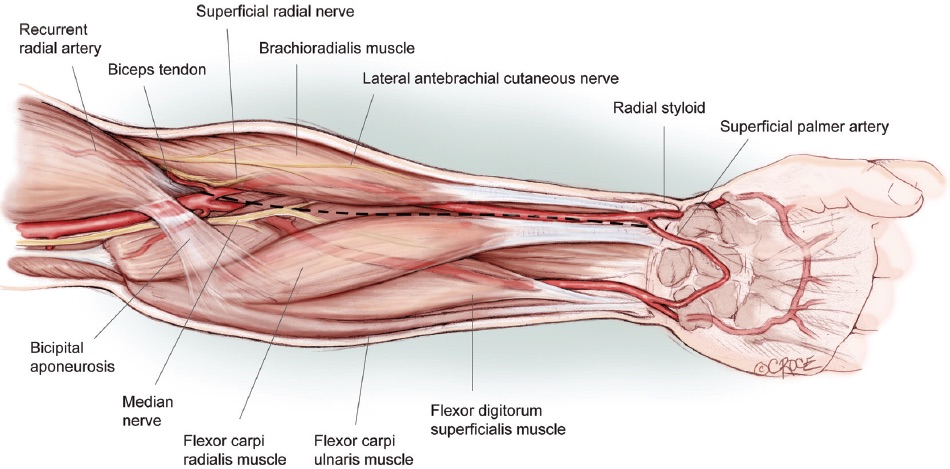
I quickly scampered up the stairs as Kristi stood outside her bedroom. I unlocked the door to my own bedroom, which was located caddy-corner to hers and grabbed a towel. Kristi was half-sobbing, half-whimpering as I pressed the dark blue hand towel on top of her right hand. Standing outside her room, I could tell that she had been seated on her bed when the razor punctured her radial artery; a fine spray of red blood was juxtaposed against the yellow wall.
 

image


She pulled her right hand from below the towel so I could apply even more direct pressure. After a moment, she made a fist and flexed at the wrist as I took a quick peek at the damage. The pressure kept more blood from squirting out, but I could tell we needed to head to the nearby Emergency Department immediately. Kristi resisted my initial suggestion to go to the hospital, but after a moment of thought, she could see the concern in my face, as well as the blood on her right hand and now the towel and agreed to go.

I knocked on one of the other staff’s bedroom door, located directly across the hall from Kristi’s, hoping she was home. Thankfully, she was. I gave her a quick synopsis of what happened and asked her to clean the wall with some bleach before Kristi’s roommate returned.

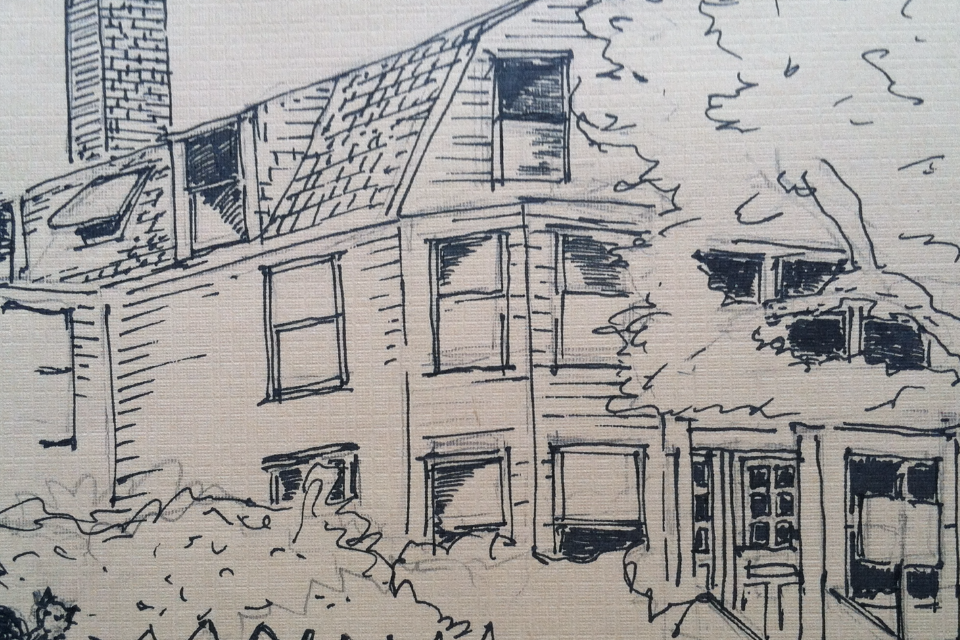
The Cambridge City Hospital was only one street over from our home, a social project developed by Harvard psychology graduate students over forty years earlier. Our close proximity meant we were in the ED only five minutes after Kristi retrieved a razor blade. Once there, Kristi was apologizing profusely every few seconds for ruining my towel; its dark blue color disguised the carnage beneath.



image


The ED was not particularly busy, especially for a holiday, but I didn’t like the idea of sitting in the waiting room any longer than necessary. Though the bleeding had almost completely subsided, my rudimentary medical knowledge in those days told me this was due mostly to the flexion of her wrist and the pressure it was causing.

However, I could not help but visualize Kristi extending her wrist and spraying blood on the backs of the family sitting in front of us. So I went up to the triage nurse and politely explained that my friend’s injury was self-inflicted and would she please move us to the front of the line so she could be evaluated.

Through the glass partition, the nurse looked out into the waiting room and saw Kristi sitting there, holding the towel against her flexed wrist and nodded at me. I called to Kristi and she stood up, took a few steps towards the door separating the waiting room from the triage bay, and grimaced.

 

image


Only fifteen minutes earlier, as I had been walking home from the YMCA in Central Square, Kristi had been on the phone talking to her older brother, who happened to be a physician. Despite his training as a psychiatrist, he had not sugar-coated his concerns about her mental health when he informed her that he didn’t feel safe leaving her alone with his young son during an up-coming visit. She began crying and hung up the phone.

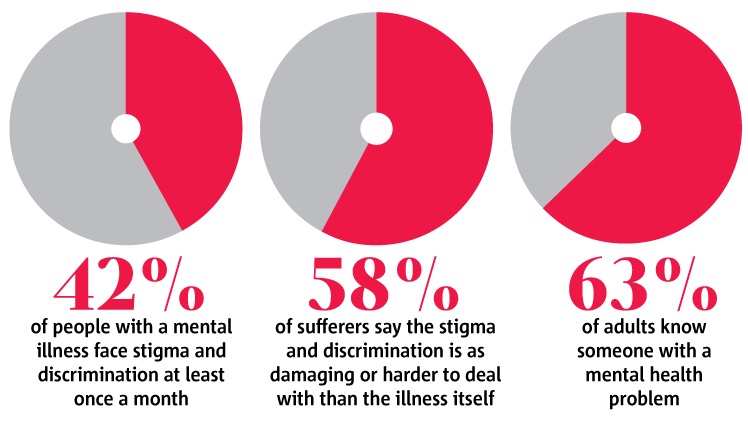
Despite Kristi’s battle with depression in her early twenties, she had graduated from law school and begun a successful professional career. But as it does with so many individuals, depression seeped back into her life and had become all-encompassing. A suicide attempt led to a hospitalization for several weeks at one of the world renowned psychiatric hospitals in Boston.
 

image


Upon her discharge in the fall of 2006, she joined our group home after a week-long communal interview process that was required for all residents and staff. The first few months had been difficult for Kristi, due to her inability to find a steady job in the legal field again. When a reliable temp position opened up a few weeks earlier, she began to thrive.

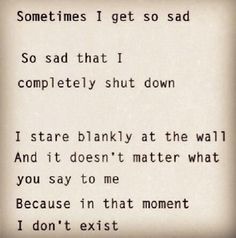
But that call, and the message therein, drew out her self-hatred and the fury of “helplessness and hopelessness” which characterizes depression. Unbeknownst to myself and the other staff, who lived in the home with the residents, Kristi had been prepared for this desperate last act. When she returned from the Emergency Department several hours after I had departed, she asked me to remove the box of razor blades hidden in one of her drawers.
 

image


Over the course of three years, I lived in two group homes belonging to the same organization in Cambridge, MA; first as a counselor, then as the director of the home where I lived with Kristi. Focused on helping high-functioning individuals transition from in-patient hospitalization (for mental health issues) back to independent living, the opportunity to be a part of this unique program had brought me to Cambridge from Ohio in my pursuit of becoming a clinical psychologist.

But in the fall of 2004, after only a few short months of living in one of the homes and participating in the project as a counselor for its residents, my purpose in life was irrevocably transformed. I had come to get hands-on experience by living within the mental health population, learning how to best serve their health needs, but I was shocked to see how pathetic the basic medical care is within this portion of our community; a chance encounter with another young professional who was going back to school to become a physician set my wheels in motion.

 

image


The three years I spent living with over 60 incredible people, those who were trying to conquer their illness and others like myself who wanted to help, transformed my life and gave me the strength and perspective to survive my own trials and tribulations.

My experience as a medical student, my failures and successes therein, the friends I made, the colleagues I cherished, the patients I cared about and for… all of them were a direct result of my life in a group home.

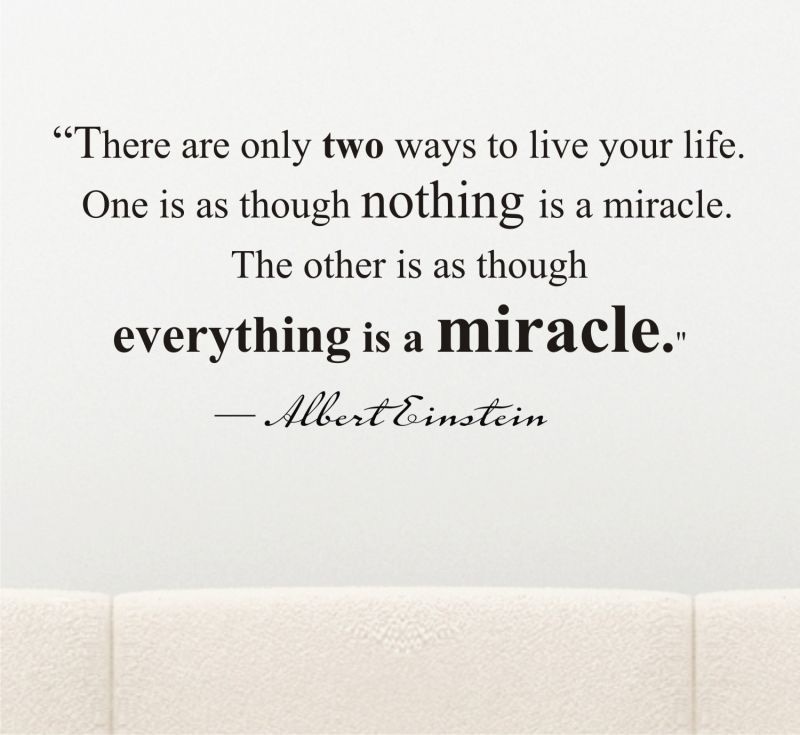
Home.  Truly, where the heart is.
 

image


Man & Machine

image

—–

The most difficult course I took as a college undergrad at Miami University was entitled “Robots and Humans.” It was a “senior capstone”; the purpose of “capstone” courses was to bring together several divergent subject matters in the realm of the major course of study of a student.

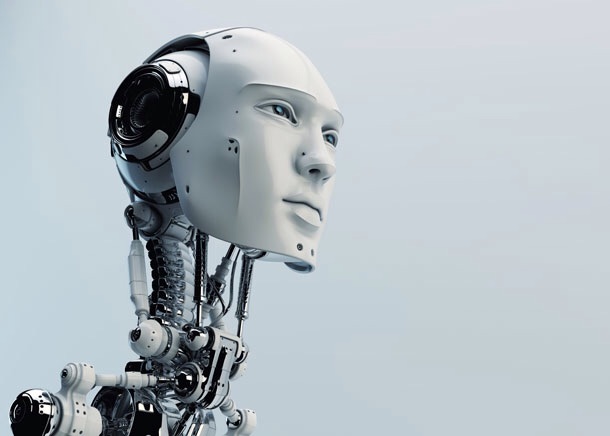
As a psychology major, the general idea of a capstone was to filter some idea through a psychological lens. “Robots and Humans” focused on the idea of technology, in the form of robots, and how psychology could understand the role of robots in human society and the potentiality of robots becoming human, or at the very least, human-like.

—–

image

—–

The difficulty of this course was in the wide scope of subject matter that was included: mathematics, philosophy, electronics, neural networks, sociology, economics, etc. But the basic premise of the course was to examine the questions of “what does it mean to be human?” and “can we blur the line between humans and robots so that they are indistinguishable?”

At the time, it was some pretty heady stuff and it required me to do the required readings at least twice in every case in order to fully grasp the subject matter. Obviously, the question “what does it mean to be human?” is limitless, but as a class we were legitimately trying to derive an answer to that question through conversation, readings, and experimentation.

I don’t believe we ever really “answered” the question, but I have recently found myself analyzing recent losses in my life through this same lens.

—–

image

—–

Over the course of the last weekend, I suffered two losses that were significant to my life. One was human [a cherished friend]. The other was a robot [my computer of nearly 4 years]. In some ways, the loss of both in the course of two days was quite poetic, as I had “known” both for almost the same amount of time.

These simultaneous losses allowed me to revisit the two major questions presented in “Robots and Humans” over the past week and to finally derive an answer to them.

The demise of my friend Broadway, as he was known to his friends in Cambridge, was a difficult, protracted, and confusing ordeal. The demise of my computer, a Dell Inspiron 2200, was a much shorter, but just as difficult and confusing ordeal.

—–

image

—–

Broadway was a 71-year-old gentleman whom I knew through the program that brought me to Cambridge. He was beloved by all who knew him because of his self-less attitude, charm, and love of music. I met Broadway my first day in Cambridge and made it a point of visiting him routinely even after I moved to the other side of town.

We usually spoke about sports, particularly the local teams, but he also told me about his days as a younger man and the varied experiences he had lived. As I’ve written about before, I don’t have any grandparents, so to have this wizened perspective was quite fulfilling.

—–

image

—–

Over the last 4.5 years, I had several enlightening experiences with Broadway, including a favorite where he and I caught the bus to the Asics factory store to find the best deals on high-quality athletic shoes [one of his specialties was finding the highest quality goods at the most affordable prices].

Inspiron 2200 arrived at my door nearly 8 months after I arrived in Cambridge, a replacement for my college laptop that had become too slow to run the latest programs and was too cumbersome to realistically take anywhere.

As a sleeker and faster model, it immediately improved my quality of on-line cabailities, software use, and mobility. It easily held all of the documents that had existed on my previous hard drive (I named one folder on it “old computer”), allowed me to effectively use the latest software necessary for work and play, and made me feel like I had purchased a new car in the level of care I gave it.

—–

image

—–

These two entities filled my life with innumerable joy and greatly improved my quality of life. One was a cherished friend who helped me understand my place in the world and motivated me to pursue my calling of becoming a physician. The other was a cherished assistant with whom I entrusted my most private secrets and most public of desires.

Both succumbed to a mysterious illness.

Broadway had been a model of health for the 70+ crowd. A wiry former-athlete, he used to tell me how he was a master on the hardwood back in the day, used to do hundreds of crunches a day, and did his very best to avoid processed sugars. His body was confirmation of those boasts.

—–

image

—–

When he began feeling a little ill seven months ago, I don’t think anyone who knew him felt that it was anything more than a cold. But he began sleeping more than usual. And his doctors’ visits concluded with more questions than answers.

Eventually, he had to leave his home to get more focused care in a rehabilitation hospital. The last time I saw him, he was a shell of the man I first met nearly 5 years ago. He was no longer the spry individual who would carry multiple gallons of milk several blocks to get some extra exercise or simply go out for a stroll to all corners of Cambridge. At this point, I was deeply concerned for his long-term welfare.

When he passed away last weekend, there still had been no determination as to what had begun the tortuous path to his demise.

—–

—–

Inspiron 2200 had been more than serviceable over the past 4 years. We had spent countless hours together and performed innumerable tasks for both work and leisure. Of course there had been minor hiccups here and there, but it could always handle the updated software, the multitude of simultaneous tasks I asked it to perform, and the occasional ride in an un-padded backpack before I got it its own neoprene sleeve.

Then, about three weeks ago, after updating my music service provider, it began to show alarming signs of a downturn. The Internet began to run slow. Then it wouldn’t boot up in its normal fashion. A few days later I got the dreaded “Safe Mode” warning. I could see the writing on the wall when I tried to run virus software or perform a “system restore.”

—–

image

—–

Inspiron 2200 was circling the drain; something had infected it terminally. I immediately transferred all of my pertinent documents and files onto a thumb drive and prepared for the worst.

When I awoke last Friday morning and tried to boot it up nothing happened. I powered it down and rebooted; again, nothing happened. Inspiron 2200 had flat-lined at 7AM that morning. I went to work knowing that Inspiron 2200 had performed its last task.

—–

image

—–

It might seem misguided to compare the final moments of Broadway and Inspiron 2200, but as I mentioned earlier, their simultaneous demises have allowed me to once again consider the questions first posed in my “Robots and Humans” class seven years ago.

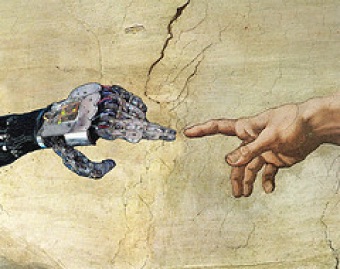
The difference between man and machine lies in the same difference that separates humans from almost every other animal on the planet: emotions. No matter the increased technology, the faster the processors, the more complicated programs, the more human-like exteriors, robots will not be able to express emotions.

—–

—–

Some individuals who are on the cutting edge of robotic technology would probably disagree with that statement, but what they often neglect to consider is that humans themselves do not have a firm grasp on emotions. How could we instill emotions in a fabricated machine when we don’t even understand them?

In “Robots and Humans”, our professor made the argument that emotions could be boiled down to a simple software program, allowing for certain “emotional” responses dependent on the underlying circumstances. But the determination we made as a class was that emotions are so widely varied across individual experience and situation that no program could be written to encompass such possibilities.

—–

image

—–

I believe those on the cutting edge of robotics would disagree with our assessment. However, the underlying issue at hand is that humans themselves do not truly understand what causes some to differ in their emotional responses to similar situations. Experiences are too widely varied, histories too complex, and beliefs too individualized to accurately make an algorithm that would depict emotional responses.


I didn’t think I would cry when the rabbi read the sermon for Broadway; I teared up when he made mention of his nickname and I remembered first meeting him as he carried a box of things into my new home.

When Inspiron 2200 couldn’t be booted up on a Friday morning, I didn’t think twice about it, except that I’d have to check my e-mail at work.

I thought it would be uncomfortable to toss a shovel of dirt on top of the casket at Broadway’s burial site. Instead, I simply thrust the shovel into the mound of dirt and reflexively deposited it on top of the casket.

When I comfortably placed Inspiron 2200 in its leather carrying case and shipped it off on Saturday to be used for spare parts, I thought it was a fitting end.

—–

image

—-

The essential difference between man and machine is embodied in the comparison between Broadway and Inspiron 2200. There were no emotions involved in the demise of Inspiron 2200.  I had certainly spent countless more hours with it than Broadway over the last 4 years, but it had not provided me with anything that my next computer will not.

Broadway provided me with a relationship that words can not fully express.

—–

image

—–

The day a robot provides a human with the same relationship as another human we should all be worried. It will not be due to our ability to create a technology thatidentical and indistinguishable from humanity. Rather, it will be due to the fact that humans have devolved emotionally to the point of being indistinguishable from a computer program.