Two and a Half Men

winning

In a drug-induced state of psychosis, Charlie Sheen once famously said, “WINNING!” in reference to how his life was turning out post “Two and a Half Men.”

Having starred as the playboy uncle to the father-son duo who shared billing with him, Charlie was now an outcast from his on-screen role.  So an urge to assume the real life playboy role of his younger years seemed to envelop him, resulting in the now-famous quote.

—–

—–

I found myself in a similar role during the three months I lived with my friends, The Mastersons, during the summer/fall of 2013. And by similar role, I mean, broke pseudo-uncle who needs a place to live and decides not to leave.

#WINNING, indeed.

While my initial reasons for accepting The Masterson’s offer for a place to stay revolved around me being a broke medical student, my reasons for staying quickly evolved around the relationship between two members of the family, Matt and his son, Nathaniel. [Props to Jo and Lyla for putting up with me too.]

—–

I’ve written before about my experiences with playing “dad” in When I had a Son, but in the midst of The Masterson home, I found myself settling in to a hybrid role of uncle-playmate-curious observer.

In the case of the father and son in Two and Half Men, they constantly find themselves in the midst of Charlie’s high-jinks, womanizing, and tom-foolery. I’m guessing Matt and Jo were thankful my character, Me, brought none of those into their home. Especially since my bedroom doubled as Jo’s office during the day.

“Eaaaaaaaaaaaaaaaaaaaannnnnnn!!!”

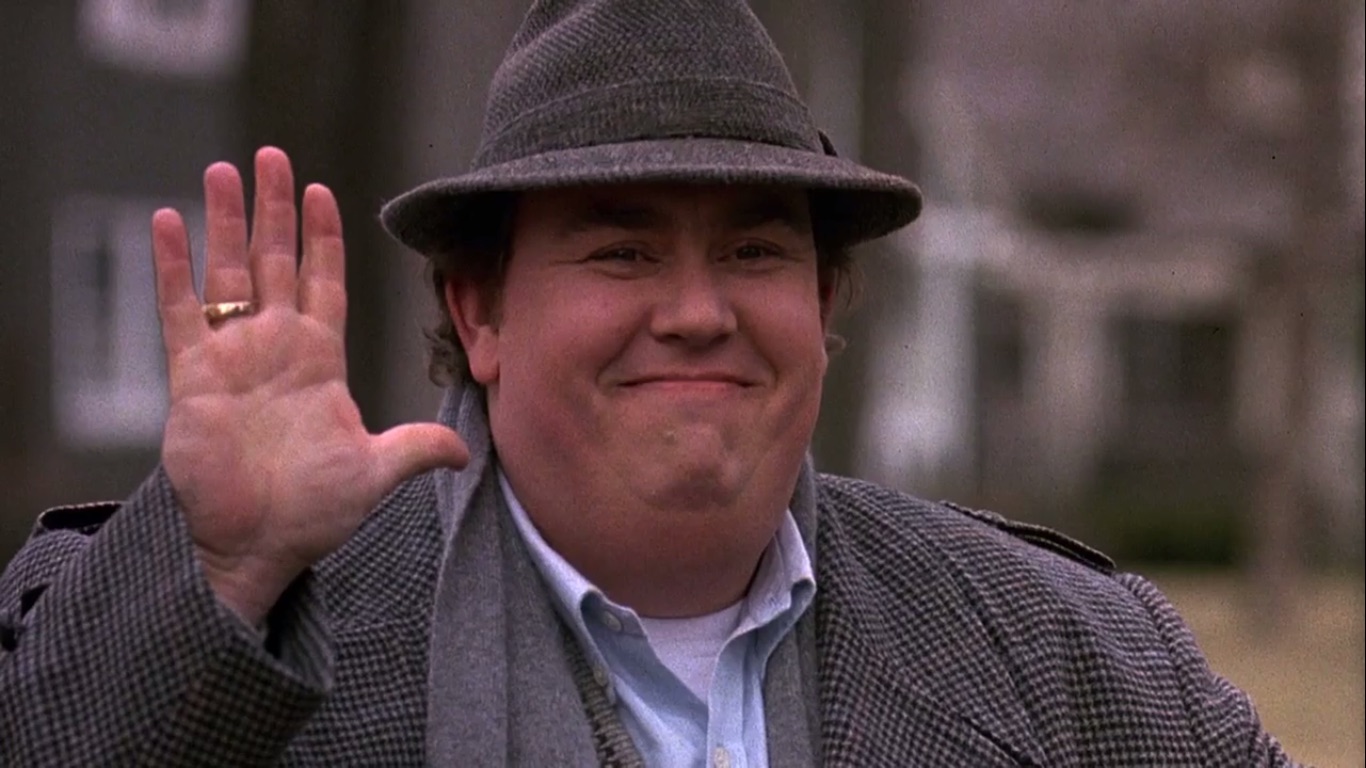
As long as he was still awake when I returned home, Nathaniel would screech my name when I strolled through the garage door and into the kitchen. In his three-year-old mind, I must have seemed a like a walking, talking, ball-tossing, live-in playmate. Not that I minded his interpretation of my place in the Masterson home. I reveled in the role of “Uncle Charlie.”

—–
image

—–

While I thoroughly enjoyed chasing Nathaniel around the house, playing with fighter jets in the living room, or eating dinner with him at the dining room table, it was fascinating to see his personality change, his capabilities increase, and his interests broaden from one day to another. Every day he was growing in mind, body, and spirit.

I have several other close friends with young children, but I may go several months between seeing them, making the changes in their behavior and capabilities more pronounced. In the case of Nathaniel, it was rare that I would go a day without seeing him, even if only for a few minutes. From this new perspective, I could observe his advancing development as subtle, but apparent, on close reflection.

—–

—–

The opportunity of being “Uncle Charlie” with Nathaniel was enriching, but I was also carefully observing how Matt and Nathaniel’s relationship was developing. My observations with other friends and their sons are short-lived, never on such a daily basis, and typically revolve around celebrations of some sort.

But we all know that things could be different behind the closed doors of one’s own home.

In my opinion, the responsibility of a parent is to be an role model, while also being someone who’s willing to address incorrect behavior when necessary.

When one day Nathaniel went from playfully crawling on the floor with Lyla (who wasn’t yet crawling) to playfully sticking her fingers in his mouth and chomping down, Matt sprung from doting father into “Jesus Christ my son just bit my daughter’s fingers” mode.

—–

image

—–

Nathaniel’s intent wasn’t to cause pain or disfigurement, but Matt had to make sure Nathaniel’s three-year-old brain would remember this was a bad thing the next time a finger came close to his mouth. So Matt raised his voice, alerting Nathaniel to his father’s watchful eye, and then removed Lyla from close proximity. He completed the parenting “Triple Crown” by explaining to Nathaniel how and why he had done wrong.

Charlie’s “Triple Crown” likely would have been to make a Triple Crown and Coke afterwards, but Matt resisted the urge to make a drink and instead continued playing with his son.

—–

—–

Over the course of 3 months, there were many opportunities to witness the father-son bond growing between Matt and Nathaniel, from the aforementioned act of parenting, their Saturday morning Starbucks journeys, Matt reading and re-reading Nathaniel’s favorite books, and the two of them making dinner together.

Matt was the loving, doting father and Nathaniel, the lovable, huggable, curious son. Few things are more marvelous to observe.

But all good things do come to an end, as did even Charlie’s run on Two and a Half Men.

—–
image

—–

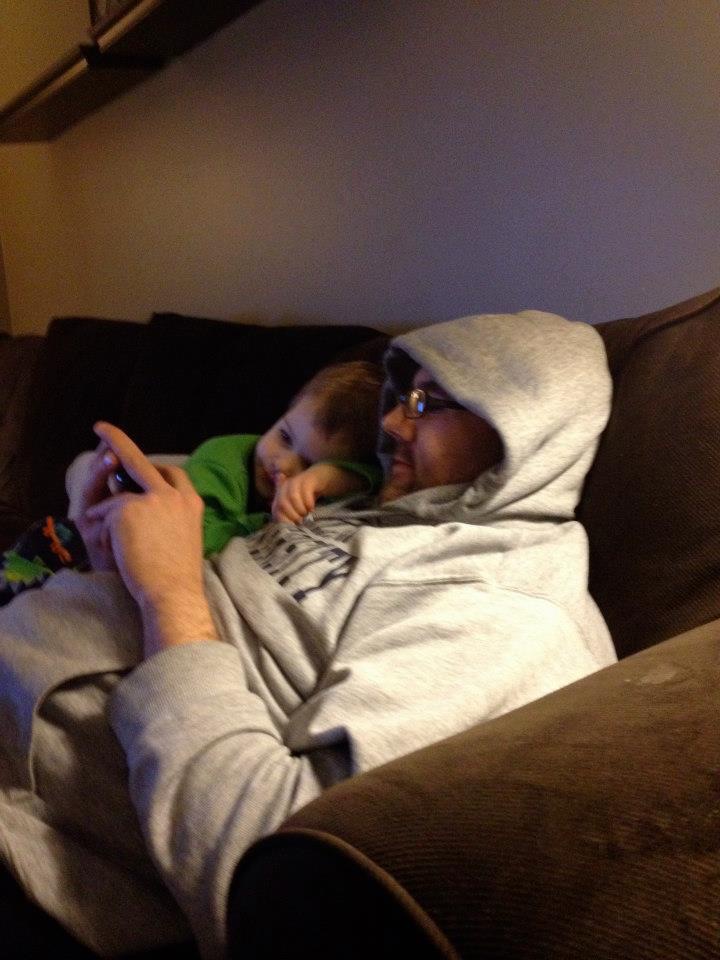
When I only had a few days left in Columbus, Nathaniel and I were playing on the couch and I hadn’t yet told him I would be leaving soon.

I wasn’t quite sure how to tell him I wouldn’t be around every day anymore, so I simply said, “Buddy, in a couple of days I’m gonna go live with my mom just like you live with your mommy and daddy.”

Nathaniel tilted his head slightly, crumpled his nose, and replied, “Why do you want to go live with your mom?”

The real answer was a convoluted mess, so I answered, “that’s what people do sometimes.” Never deterred from playing, he went back to wrestling on the couch.

—–
image

—–

I’m pretty sure in Two and a Half Men Charlie’s character was killed off, so I’m grateful that fate didn’t become Me when it came time to leave The Mastersons.

Instead, I was able to drive off into the sunset and on to another adventure.

WINNING, indeed.
Trauma E

Trauma-Team-4

—–

My final clerkship of medical school was a Trauma Surgery rotation in Columbus, OH. As a “Level 1” Trauma Center, I was certain to see all sorts of medical traumas. From horrific car accidents, penetrating stab wounds and life-ending gun shots, to suicide attempts, both successful and unsuccessful, sporting injuries, and the aftermath of violent beatings.

Rather than leaving Columbus and heading to Worcester, MA for a radiology clerkship where I could stay with some of my dearest friends and put in 4 hour days, I decided to stick around Columbus, have a 4:30A wake-up call, 9P bed-time, and expose myself to an aspect of medicine that I was unlikely to encounter in my future practice as a Family Medicine physician.

—–

image

—–

And that is exactly what happened, as the four weeks I was on the Trauma Service was the busiest month in the history of the hospital.

Anyone who knows me well, or has spoken to me about my experiences in medical school, knows that I typically don’t care for the attitudes of surgeons. While it is a profession that requires its practitioners to be exquisitely skilled, the god-like aura that typifies a surgeon, especially towards students, is enraging. (And completely unnecessary.)

—–

image

—–

But despite this behavior, I wanted to be a part of the care of patients who present to the hospital after a traumatic accident… Or as I was resoundingly corrected by one of the trauma surgeons when speaking of a motor vehicle accident (MVA), “it was a motor vehicle collision, as we don’t really know if it was an accident.” Thanks a**hole.

On the student’s first day of any clerkship, the other students, residents, and physicians will ask about the new student’s future career aspirations. This is done to determine the level of shit the student should be given over the course of the next four weeks.

If the student is interested in becoming a member of that medical profession, they will be held to a higher standard, given more grunt work, asked to work longer hours, and expected to know a ton more than someone who’s professional aspirations are 180 degrees different.

—–

image

—–

Thus I found myself having the following exchange with the Chief Resident two minutes into the rotation: “So what year are you?”

Me: “I’m a fourth year. And this is my last rotation of medical school.”

CR: “Are you going into Surgery?”

Me: “No. Family Medicine.”

CR: “What the hell are you doing here?”

Despite this inauspicious beginning to our medical relationship, the Chief Resident ended up being a terrific teacher, physician, and all-around good guy.

His “Surgeon’s Aura” was usually absent. In regards to surgeons, this guy was the proverbial medical zebra that you are taught to stop looking for… But in his defense, it’s simply not common place to see a 4th year medical student sign up for a grueling clerkship as their last hurrah of medical school. Typically, it’s something like… Radiology.

—–

—–

Several of the Family Medicine residents with whom I worked previously had suggested the clerkship, so I went into it with a positive attitude. I figured, if anything, that I could bring some humanity into the trauma bay… as by-in-large, the trauma bay is one of the least “human” experiences in medicine.

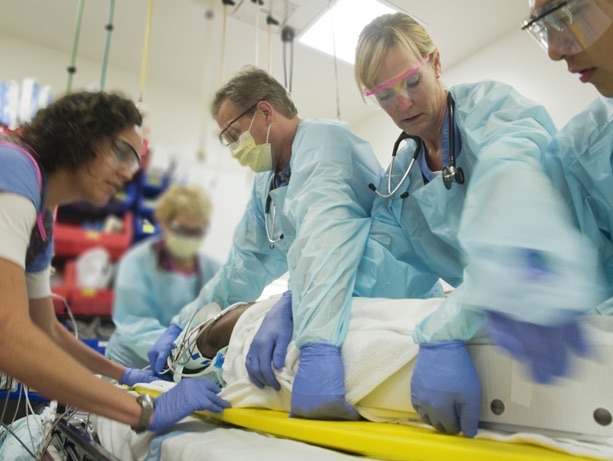
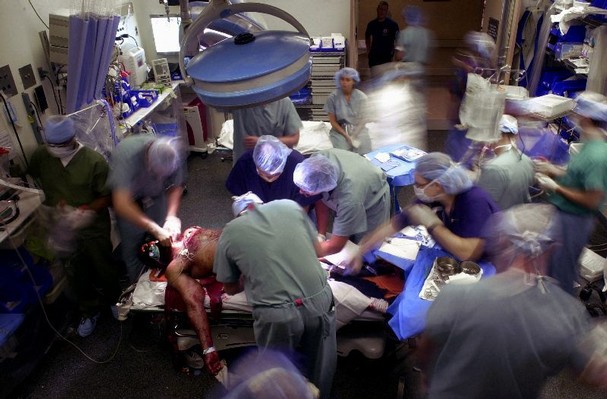
Upon a patient’s arrival, multiple people are poking, prodding, screaming, shouting, slicing, sticking, cutting, and tearing… at the life and limb of this latest entrant to the trauma bay.

—–

image

—–

Depending on their level of consciousness, the patient may or may not be screaming and shouting. If they are unconscious, the distractions are seemingly less, but the situation is quite significantly more dire. I preferred the screaming and shouting patients because it meant they were more likely to survive.

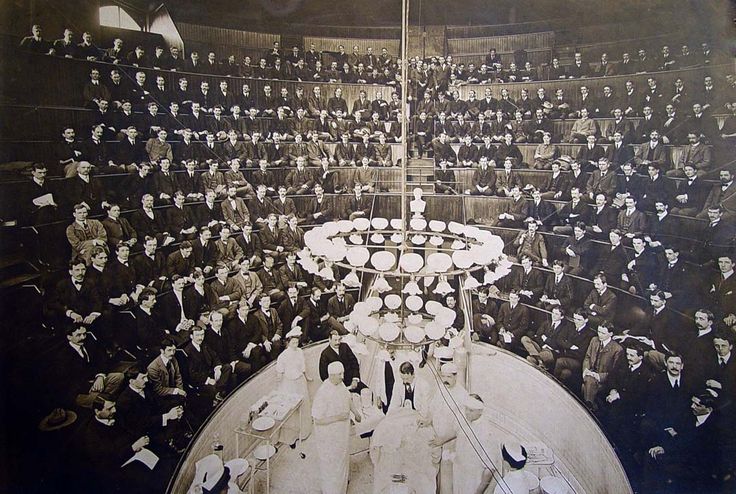
But the surgeons, they prefer the deafening silence of the patient because the stakes are raised, the opportunity to transport them to the surgical theater more likely, and their god-like skills are soon to be exercised.

—–

54cfd02ad5c02_-_heartsurgery-01-0611-xln

—–

Over the course of four weeks, I cut off my fair share of pants and underwear, placed innumerable Foley catheters [a tube into the urethra of both men and women], and stuck a gloved and lubed finger into the rectum of more people than I care to admit… but that was all done so that I could say to the patient, “We are going to take care of you”… and to mean it.

In a nutshell, that is the humanity that is absent from the trauma bay. It is a rarity for someone to ask for a patient’s name; no one states a desire to care for you; no one even thinks of doing either of those until the patient is either on the way to the CT scanner, surgical theater, or morgue.

—–

surgicaltheater

—–

But one of the clinical psychologists I encountered during a previous rotation had mentioned a quick anecdote that stuck with me. His father had recently been in an accident and while laying on his back, with numerous people he didn’t know poking and prodding him, he had some of the terrifying fear, anxiety, and uncertainty removed by someone who immediately stated upon his arrival in the trauma bay, “We are going to take care of you.”

—–

2X5_7306

—–

I carried that anecdote with me each time another Trauma was called over the hospital’s intercom system.

I think this kind of humanity becomes absent as a defense mechanism from the care-providers.

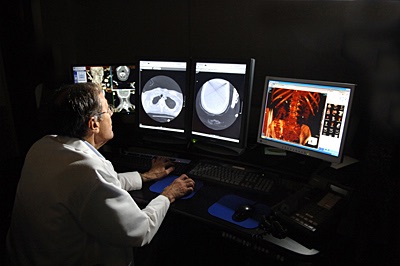
Because when someone is wheeled into the trauma bay, their next destination may be the CT scanner to determine the extent of their injury.

Or the surgical theater as a last-ditch effort to save their nearly life-less body.

Perhaps the morgue, because the extent of their injury was too great for even a god to cure.

—–

physiciangod

—–

And when the outcome could be either of the last two, I would imagine it becomes difficult to not simply view each new patient as a body on whom your craft can be practiced… until your craft has provided a life-sustaining result.

Then, after all is said and done, and the patient is alert and speaking to you, their worst day behind them, only then can you entertain the idea of knowing their name; Or offering to care about/for them. Until then, they are simply Trauma [A, B, C, D, etc].

—–

—–


But what if that next day never comes.

And in their final moments no one is calling their name.

No one is telling them that they care about them.

Then what?

—–

image