A Week in April

image

I had four patients die within one week.

When the totality hit me, I nearly lost control of my emotions.


On the Obstetrics service, a majority of all patient encounters are joyous and professionally reaffirming.

Each antepartum heart tone heard via ultrasound brings a sense of wellness and anticipation, both to the expectant mother and the caring physician.

But not every delivery has a pleasant outcome. Not every parent has a sense of anticipation. And not every physician can cope with those competing forces.
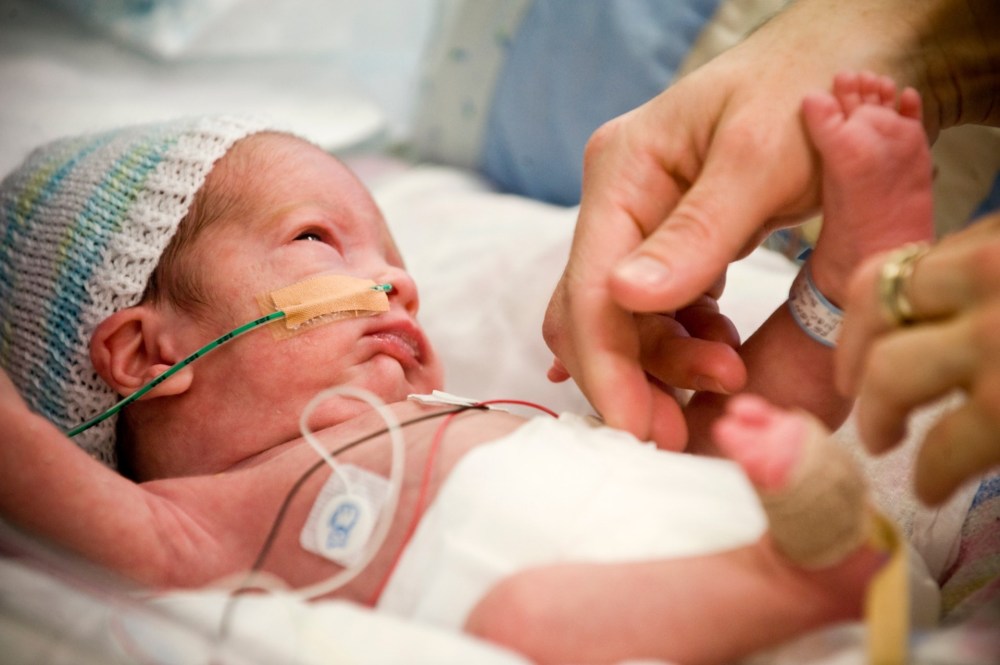

image.jpg

I delivered a 33-week-old neonate who precipitously declined within the first 24 hours of life. It had been an easy delivery, with the mother having given birth five times previously, and the fetus not yet having reached the period of greatest growth.

With one deep breath from her mother and a hearty push of the abdominal and pelvic musculature, the baby arrived, opening her eyes and taking her first breath while still cradled in my left arm.

She looked right at me. Deep into my eyes as she let out her first cry.


image


But despite our medical technologies and painstaking care, not every newborn baby survives.

She died in the neonatal intensive care unit 7 days later, an infection having made its way from the vaginal mucosa of her mother into her lungs and from there into her bloodstream.

The most aggressive antibiotics and procedures did not save her; there was nothing more we could have done.

Her death was unsettling. It came as the last of the four, but the one which nearly encompassed my entire being in darkness.
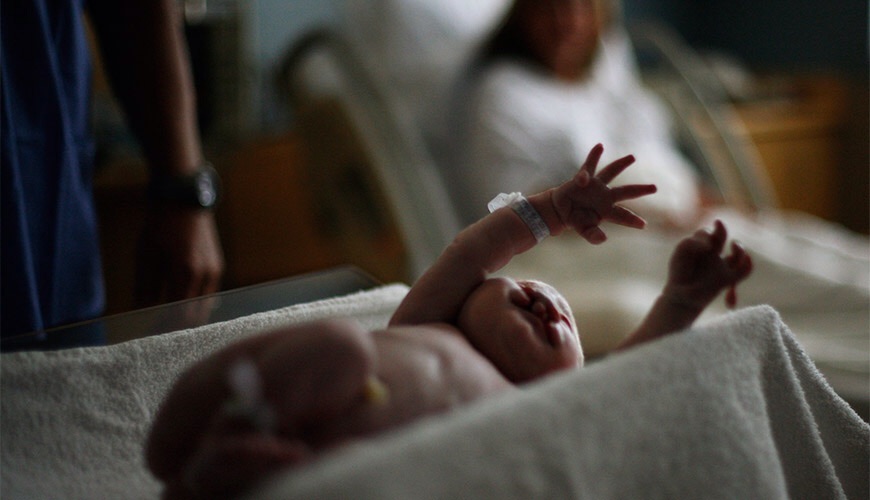
image.jpg


Two days after her birth, while awaiting another delivery on a quiet Friday night, the Code Blue alarms, indicating a cardiac arrest somewhere in the hospital, sounded overhead in the lecture hall.

My colleague, Dr O, was on medicine call that evening; she jumped from her seat across from me, immediately ending our conversation.

I glanced at my other colleagues remaining at the table and dutifully indicated I would join Dr O in case she needed back-up so they could complete sign-out.


image

The Code was called to a room at the furthest point possible from where we were seated, so rather than assuming I would eventually arrive to find Dr O having resuscitated the patient, I broke into a full sprint, clasping my stethoscope around my neck with my right hand to prevent it from flying off mid-stride, in case something went awry.

When I arrived a minute later, all hell was breaking loose, despite Dr O and a more senior physician, Dr B,  deftly providing and directing life resuscitating efforts.

The woman, a 31-year-old mother of 6, who was admitted for nausea two days earlier, was accompanied in the room by her distressed and screaming 6-year-old son and her husband, who was shouting hysterically from her bedside, begging her to come back.



image.jpg

I stepped into hell incarnate and helped guide the husband and son to an adjoining room.

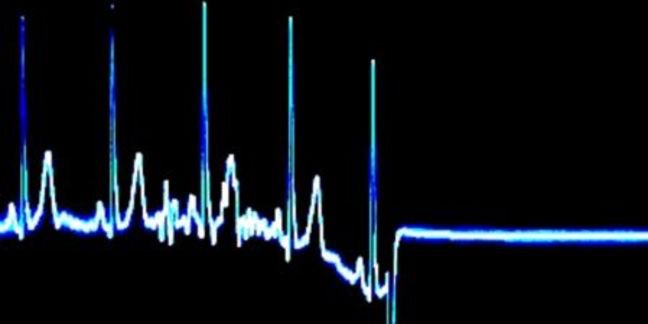
When I returned moments later, nothing had changed. She was still unresponsive. No heart beat was palpable; no rhythm identified on the cardiac monitor.

A deep sense of distress was evident in the room, despite the aggressive nature of our efforts.



image


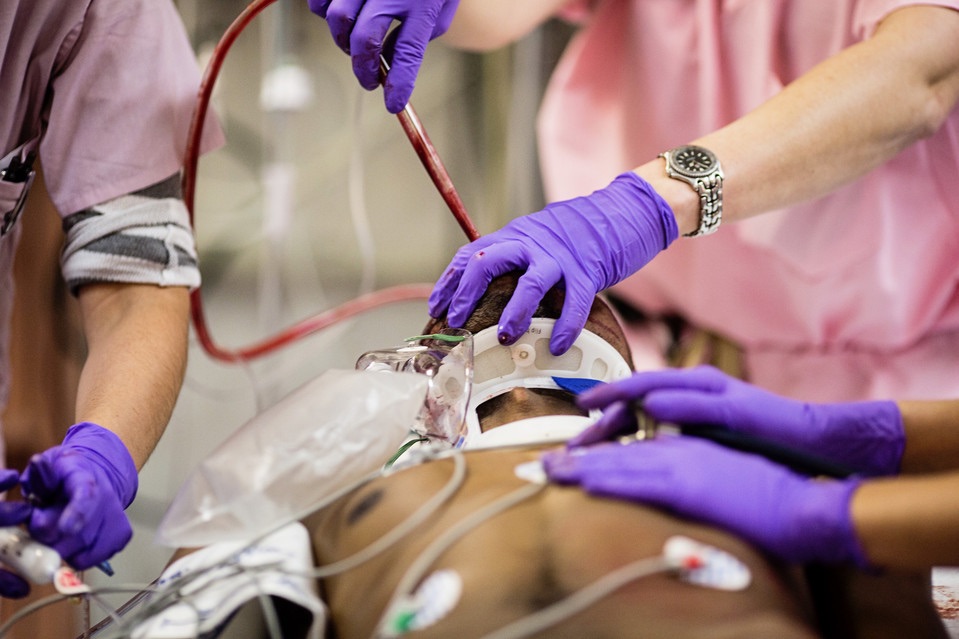
The next hour lasted for an eternity, as Dr O, Dr B, and myself assisted the nurses in providing chest compressions, giving medications to stimulate cardiac contractility, and delivering electrical shocks to bring her back to life.

Nothing worked.

Her heart did not regain electrical activity. Her lungs did not attempt another breath.

Once we determined further efforts were futile, the husband, increasingly hysterical, was guided back into her room, to kiss the cheek of a lifeless body once belonging to the mother of his 6 children.

He begged us to try more. The despair in his eyes pierced everyone’s souls.

His son was sitting quietly in the adjoining room.

Physicians, nurses, security guards, and the chaplain cried; our emotions audible throughout the hallway.

image


I returned to the Obstetric floor after embracing my colleagues in a moment of silence. I stopped in the locker room to take off my sweat and tear-soaked scrubs and replace them with a new pair.

I delivered a healthy baby boy an hour later. His parents thanked me incessantly before I left the room.


I left the hospital the following Saturday morning having delivered several newborn girls and boys into this world.

All the while knowing a loving mother had unexpectedly died and another child’s life was being sustained in the Neonatal Intensive Care Unit.

When I returned to the hospital on Sunday night, I quickly scoured the electronic charts awaiting my signature.

A new electronic tab had appeared in the toolbar for me to click on. It read “Death Notice.”

image


I anticipated having to re-read the harrowing and emotional report of the unexpected death of the mother from Friday night.

Instead, I was blindsided by the account of another of my patient’s death, whom I had seen only a few weeks previously in the office.

He had been brought to my hospital’s Emergency Department on Saturday night, lifeless, despite the heroic efforts of the EMS and subsequent attempts by the Trauma Surgeons.
 

image


In the early evening hours of Saturday night, he had been found lying in a pool of his own blood, a trail of that blood following him for a reported 50 yards.

A bullet had pierced his femoral artery, the largest blood-carrying vessel in the leg; it had shredded the artery, leaving behind a capable exit path for the blood to flow from his body.


image


With each beat of his heart, more blood would gush from the wound in his leg, causing the heart to beat faster as it attempted to compensate for the missing blood.

Instead of a life-continuing effort, in its paradoxical nature, the heart beckoned the same death it hoped to avoid.

After scouring the internet for more information, I learned the 50-year-old man had been minding his own business in the parking lot of his apartment building when a man and woman approached him. They pointed a gun at him and demanded his wallet.

Having had several colorful conversations with him in the office, I could easily visualize him telling them to “Fuck Off”, his East Coast upbringing shining bright.

The following morning I received a phone call from my Program Director. She had also received notification of his death and wanted to check in with me.

I expressed my thanks for her concern. I did not tell her about the lifeless mother or the neonate only a few breaths from death.

 

image


A third patient died in the next 48 hours.

Honestly, I can not recall the details. None of them.

They have seemingly been erased from my memory, perhaps in a fitful effort to suppress the emotions death has brought to the forefront of my medical training so that I do not throw my heart up in the air and declare all is lost.

But I know another patient, someone for whom I cared, whose family loved them, succumbed to the only outcome known to our species.

Death.
 

image


So I will document that death here; despite my brain’s greatest efforts to forget it, I will forever know the impact it has had upon me.


When I received the call, I let out a deep sigh. I hung up as my eyes swelled with tears.

The fourth death. A seven-day-old child whose eyes I had stared into while holding in my left arm as she took her first breath.

Until the day I die, I hope to not forget the look I gave her. One of awe. And love. Excitement. And fear.

A gamut of human emotions, packed into one soul-penetrating experience.

I hope, despite her struggle for life, that in her final moments, the neurons in her brain grasped onto the emotions I transferred to her with our brief encounter.

That in the last beat of her heart and breath of her lungs, her mind went to the moment we shared; the look of awe and love and excitement drowning out the fear lurking deep in my eyes.
 

Black Betty

image


At 2:17AM on a recent Friday morning I couldn’t sleep.

Not in the sense that I was laying awake in bed, thinking about the cosmos, or wondering how “The Walking Dead” Season Finale would play into any future cross-over series that might be developed, or anxiously awaiting the sun to rise again.

I was actually physically not able to sleep.

As my body was beginning to shut down at the cellular level, the efflux of potassium and phosphorus from every cell beginning to overwhelm my blood stream, the pager holstered upon my left hip started chiming again.

The pager transmitted electrical energy, similar to that of a defibrillator, into my body; the potassium and phosphorus blasted back into the cells, preventing a super-saturated metabolic derangement which would have caused my cardiac activity to cease.

Simultaneously, the loudspeaker in the Emergency Department blared, “Septic Shock Alert, ED 47.”

“Septic Shock Alert, ED 47.”

image

I unholstered the pager from my hip, quicker than Doc Holliday when he penetrated Ringo’s brain with a lead slug, and glanced down at the message awaiting me.

As I swiveled and rose from the stool I had been atop for only a matter of moments, I read the message. Thankfully, it only read “Septic Shock Alert, ED 47”, the electrical companion to the overheard communication, instead of 555-9095.

Or 555-9030.

Or 555-9494.

Those numbers belonged to the Hospitalist medicine service, the Intensive Care Unit, and the ED Nursing desk, respectively.


Responding to any of those calls would have meant either another patient was waiting for me to admit them to the hospital or an already admitted patient was trying to die in the ICU.

If any of those three numbers had been present, I would have needed to take over the care of the actively dying patient in the Septic Shock Alert, while simultaneously trying to:

1) figure out how in god’s name I would possibly get all of the work done I still had to do

2) supervise my junior resident

3) not lose my mind.

I also probably would have taken the pager and rifled it into the closest wall, hoping to have it explode in a wave of energy like the Death Star in Episode IV.

image.jpg

My Junior Resident sat beside me, near catatonic from Night Call’s siren song; I tugged at his scrub top, motioned for him to follow along, and let out a long sigh.

I could not sleep.

I was the Senior Resident on Night Call.

Or as I prefer to call her, Black Betty.


image.jpg

Black Betty is the anthropomorphic representation of Night Call, the overnight shift when physician staffing drops to a skeleton crew and the statistical probability of all hell breaking loose starts creeping up on 100%.

As the sun begins setting on a hard day’s work for most of the physicians, nurses, and ancillary staff in the hospital, Betty begins to rear her ugly head.

Her darkness requires the fortitude of a special type of physician.

image

Unless you are a Resident like me. Then you are required to show up to spend some time with Black Betty as a part of your training.

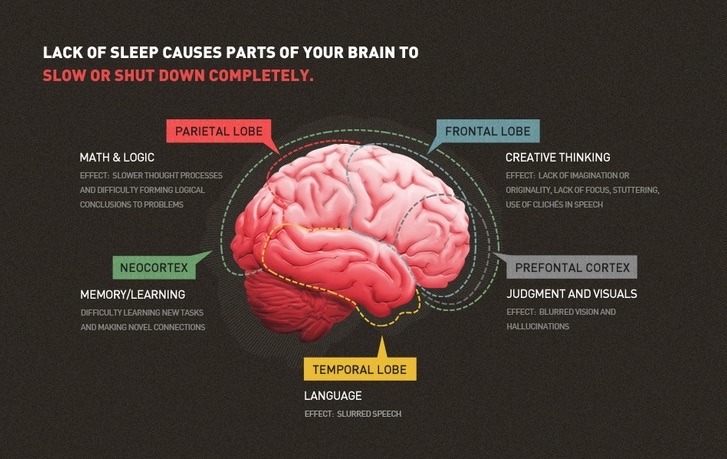
You are not a special physician. You are a Resident. And the only thing special about you is your ability to not spontaneously combust from the lack of sleep you have sustained.

Every Resident dates Black Betty. Some for a night here and there, with no specific frequency or expectation. She does not discriminate.

Others join her for a two week stretch; where her smooth skin becomes chapped and dry by the third night, her velvety caressing hands become stiff and arthritic by the seventh, and her formerly gentle kisses become vicious flesh-tearing wounds as the sun rises on the tenth.

image

Black Betty invites the denizens of the night to start shuffling into the Emergency Department.

And the critically ill whose lives are sustained by technological marvels in the ICU to begin their physiologic derangements.

They are joined by the sickly and elderly who become unpleasantly delirious as a result of her rancor.

—–

To this point in my Residency, I have spent over 20 weeks with Black Betty. A majority of those weeks have come in two week chunks, spread over In-patient Medicine, Surgery, and Obstetrics.

But as a now as a PGY-2, the Senior Resident, I have also had more than my fair share of random Saturday date nights with ‘ol Betty.

She and I have been intimate more times than I would care to admit.


image


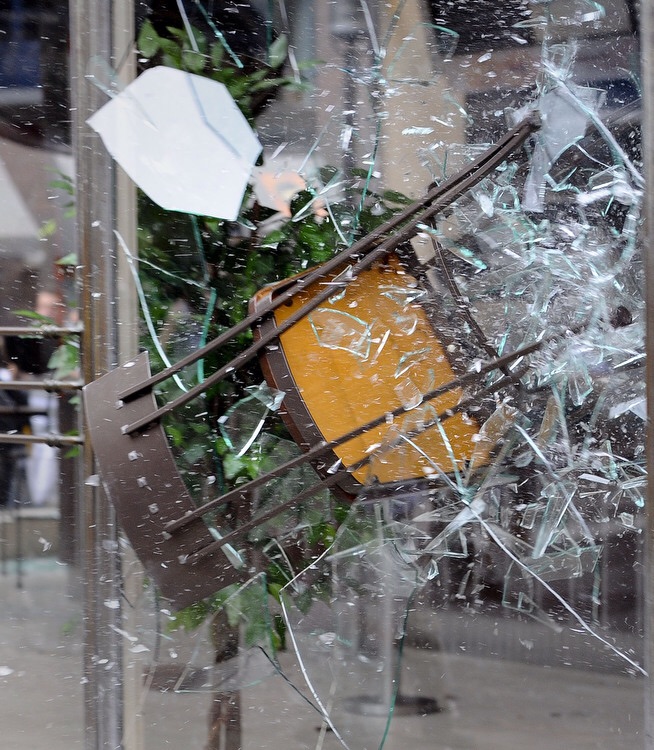
Each date brings about something unique, whether it’s a patient hurtling a chair through a 7th-story window, a near-dead woman’s heart beating in full view of the audience in the trauma bay, or stabbing a needle into a man’s chest to hear the whoosh of air escape and provide his lung the opportunity to re-inflate.

She is fertile with opportunities for us to perform our duties as physicians.

Black Betty had a child, the damn thing gone wild.

dont-scare-your-kids


At 2:43AM on a recent Friday morning I exited ED 47 with my Junior Resident in tow.

Black Betty had provided us an opportunity to exercise our clinical judgement, initiate resuscitative measures, and stabilize an elderly gentleman who had tangoed with the Grim Reaper several times in the past two months.

The Reaper’s grasp had tried to choke off the man’s air supply. But we would have none of that.

Black Betty didn’t care. She shrugged it off.

She knew other opportunities awaited.

And my Junior Resident and I would be there. Waiting.

I would not sleep.


image


Not when Black Betty has anything to say about it.

Where the Heart is

photo

Kristi called out to me in a soft whimper, “Ean?”

I responded by peering up the stairway to the third floor, whereupon I could see her right hand grasping her left wrist. Blood was visibly seeping out between her fingers.

It was Martin Luther King Jr Day. The year was 2007. And at that point, I had been living in a group home for 2 and a half years.

I had arrived home a few moments earlier, ascended the stairs to the second floor, and set my bag down outside of the small staff office. It would remain there until I returned home from the Emergency Department by myself several hours later.

Kristi heard the front door close all the way from the third floor. Perhaps her senses were exponentially heightened due to the shock of seeing blood spray from her wrist as it was sliced by a razor. Her next instinct had been to leap from her bed and into the hallway. She could only see my shoes from her vantage point to the second floor, but even such a minute bit of information gave me away.

Kristi’s decision to end her life had coincided perfectly with my return home from a peaceful day off.

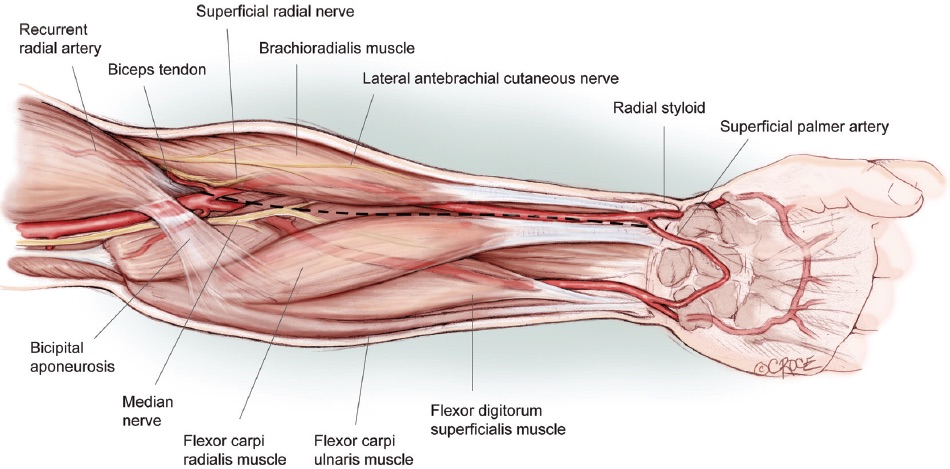
I quickly scampered up the stairs as Kristi stood outside her bedroom. I unlocked the door to my own bedroom, which was located caddy-corner to hers and grabbed a towel. Kristi was half-sobbing, half-whimpering as I pressed the dark blue hand towel on top of her right hand. Standing outside her room, I could tell that she had been seated on her bed when the razor punctured her radial artery; a fine spray of red blood was juxtaposed against the yellow wall.


image


She pulled her right hand from below the towel so I could apply even more direct pressure. After a moment, she made a fist and flexed at the wrist as I took a quick peek at the damage. The pressure kept more blood from squirting out, but I could tell we needed to head to the nearby Emergency Department immediately. Kristi resisted my initial suggestion to go to the hospital, but after a moment of thought, she could see the concern in my face, as well as the blood on her right hand and now the towel and agreed to go.

I knocked on one of the other staff’s bedroom door, located directly across the hall from Kristi’s, hoping she was home. Thankfully, she was. I gave her a quick synopsis of what happened and asked her to clean the wall with some bleach before Kristi’s roommate returned.

The Cambridge City Hospital was only one street over from our home, a social project developed by Harvard psychology graduate students over forty years earlier. Our close proximity meant we were in the ED only five minutes after Kristi retrieved a razor blade. Once there, Kristi was apologizing profusely every few seconds for ruining my towel; its dark blue color disguised the carnage beneath.


image


The ED was not particularly busy, especially for a holiday, but I didn’t like the idea of sitting in the waiting room any longer than necessary. Though the bleeding had almost completely subsided, my rudimentary medical knowledge in those days told me this was due mostly to the flexion of her wrist and the pressure it was causing.

However, I could not help but visualize Kristi extending her wrist and spraying blood on the backs of the family sitting in front of us. So I went up to the triage nurse and politely explained that my friend’s injury was self-inflicted and would she please move us to the front of the line so she could be evaluated.

Through the glass partition, the nurse looked out into the waiting room and saw Kristi sitting there, holding the towel against her flexed wrist and nodded at me. I called to Kristi and she stood up, took a few steps towards the door separating the waiting room from the triage bay, and grimaced.


image


Only fifteen minutes earlier, as I had been walking home from the YMCA in Central Square, Kristi had been on the phone talking to her older brother, who happened to be a physician. Despite his training as a psychiatrist, he had not sugar-coated his concerns about her mental health when he informed her that he didn’t feel safe leaving her alone with his young son during an up-coming visit. She began crying and hung up the phone.

Despite Kristi’s battle with depression in her early twenties, she had graduated from law school and begun a successful professional career. But as it does with so many individuals, depression seeped back into her life and had become all-encompassing. A suicide attempt led to a hospitalization for several weeks at one of the world renowned psychiatric hospitals in Boston.


image


Upon her discharge in the fall of 2006, she joined our group home after a week-long communal interview process that was required for all residents and staff. The first few months had been difficult for Kristi, due to her inability to find a steady job in the legal field again. When a reliable temp position opened up a few weeks earlier, she began to thrive.

But that call, and the message therein, drew out her self-hatred and the fury of “helplessness and hopelessness” which characterizes depression. Unbeknownst to myself and the other staff, who lived in the home with the residents, Kristi had been prepared for this desperate last act. When she returned from the Emergency Department several hours after I had departed, she asked me to remove the box of razor blades hidden in one of her drawers.


image


Over the course of three years, I lived in two group homes belonging to the same organization in Cambridge, MA; first as a counselor, then as the director of the home where I lived with Kristi. Focused on helping high-functioning individuals transition from in-patient hospitalization (for mental health issues) back to independent living, the opportunity to be a part of this unique program had brought me to Cambridge from Ohio in my pursuit of becoming a clinical psychologist.

But in the fall of 2004, after only a few short months of living in one of the homes and participating in the project as a counselor for its residents, my purpose in life was irrevocably transformed. I had come to get hands-on experience by living within the mental health population, learning how to best serve their health needs, but I was shocked to see how pathetic the basic medical care is within this portion of our community; a chance encounter with another young professional who was going back to school to become a physician set my wheels in motion.


image


The three years I spent living with over 60 incredible people, those who were trying to conquer their illness and others like myself who wanted to help, transformed my life and gave me the strength and perspective to survive my own trials and tribulations.

My experience as a medical student, my failures and successes therein, the friends I made, the colleagues I cherished, the patients I cared about and for… all of them were a direct result of my life in a group home.

Home.  Truly, where the heart is.


image


Am I Going to Die?

David_-_The_Death_of_Socrates

[The Death of Socrates, 1787, by Jacques-Louis David]

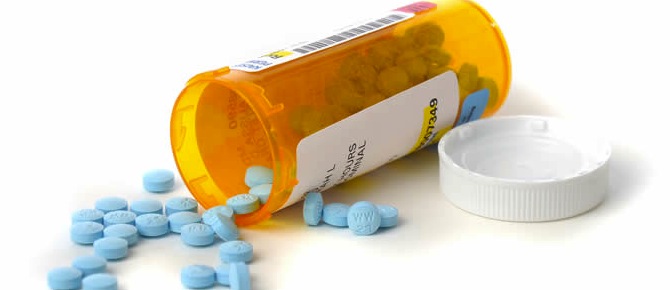
After only a few instances in the Emergency Department of seeing someone hopped up on meth, crashing from a heroin overdose, or complaining their heart is about to burst from their chest because of cocaine use, most medical care providers quickly lump them all together.

Drug abusers.

To the general public, there are few groups of people more repugnant than drug abusers. The prevailing view is that the damage is largely self-inflicted and the efforts and treatment going towards helping these people is often unwanted and unsuccessful.

—–

effects-of-drug-abuse-1

—–

Even physicians, who are trained to take every medical situation seriously, get annoyed when drug abusers show up in the ED, clinic, or office.

Those feelings develop because the damage IS self-inflicted. The treatments ARE often unsuccessful. And the efforts CAN be unwanted.

Then why do we go through such great measures to help those who do not want it? Even the medical determination that these individuals have a disease is often brushed aside when a known junkie arrives in the ED for the 20th time in a year.


The reason we go through such great measures is that none of us are truly far from a similar existence.

No.

Even you are not immune to addiction and the perilous spiral your life would become if a moment of weakness crossed paths with an opportune chance.

Some of us are insulated from having weakness and opportunity cross paths by an unrelenting fear of the consequences, from the wrath of the almighty God that would befall us, an emotionally privileged upbringing, or a will that would be unbent by the hottest solar flare.

—–


Prescription-Drug-Addiction

—–

But a moment of weakness and opportunity is all it takes for the disease of addiction to grab hold and attempt to wrestle your life from you…

—–

The last time I saw Aaron, he was in the Intensive Care Unit (ICU) for the 2nd time in what had now been a five-week hospital stay. Completely unconscious, he was hooked back up to the ventilator and had tubes draining fluid from either side of his chest.

As I approached, adorned in scrubs and nearing the end of a 24-hour shift, the ICU nurse asked, “Is this your patient?” She was patting his head and adjusting his pillow, ever careful to not change the positioning of the tube protruding from his mouth and leading back to the ventilator.

The day before, he and I had spent 20 minutes on our daily pow-wow, talking about how he was feeling and looking. Two weeks earlier, during his first stay in the ICU, I was certain he would be dead by now. But the interceding two weeks had seen him make remarkable improvement. Though he was needing dialysis three times a week, his kidney function was slowly returning to normal, he had begun a liquid diet, and he was able to walk a short distance. His initial presentation, nearly five weeks earlier, had now become a secondary concern.

“No, technically he is not my patient. But I met him the first day he was in the hospital. And, I wish I wasn’t seeing him here again.”

The nurse nodded. All I could do was grasp his right hand and wish I weren’t leaving the hospital in a few hours, unlikely to ever return to his side, whether he lived or died.


http://www.youtube.com/watch?v=jDvIkqapC84


—–

I met Aaron five weeks earlier while on the cardiology consult service. The physician caring for him called asking for guidance on his next course of action. Knowing nothing about Aaron, other than his name and medical record number, I pulled up his file from the safety of computer in a different wing of the hospital. I quickly scrolled through the course of events that brought him to the hospital as well as the events that transpired overnight.

He had been carried into the hospital by his father the previous night, so weak and sick, that he couldn’t do it himself. He had been suffering from periodic fevers and worsening shortness of breath over the past two weeks, but had not wanted to seek out medical care.

—–

278130-33218-21

—–

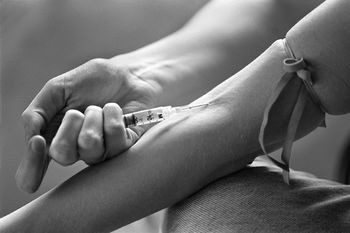
Aaron had a long history of heroin abuse, spanning 13 of his 27 years of life, and despite the efforts of his father, and the prospect of leaving his 7 children fatherless, he never could overcome his addiction.

What was found over the course of his work-up in the Emergency Department was not shocking. He had a bacterial infection in his blood, bringing on the fevers, chills, and weakness. He was septic.

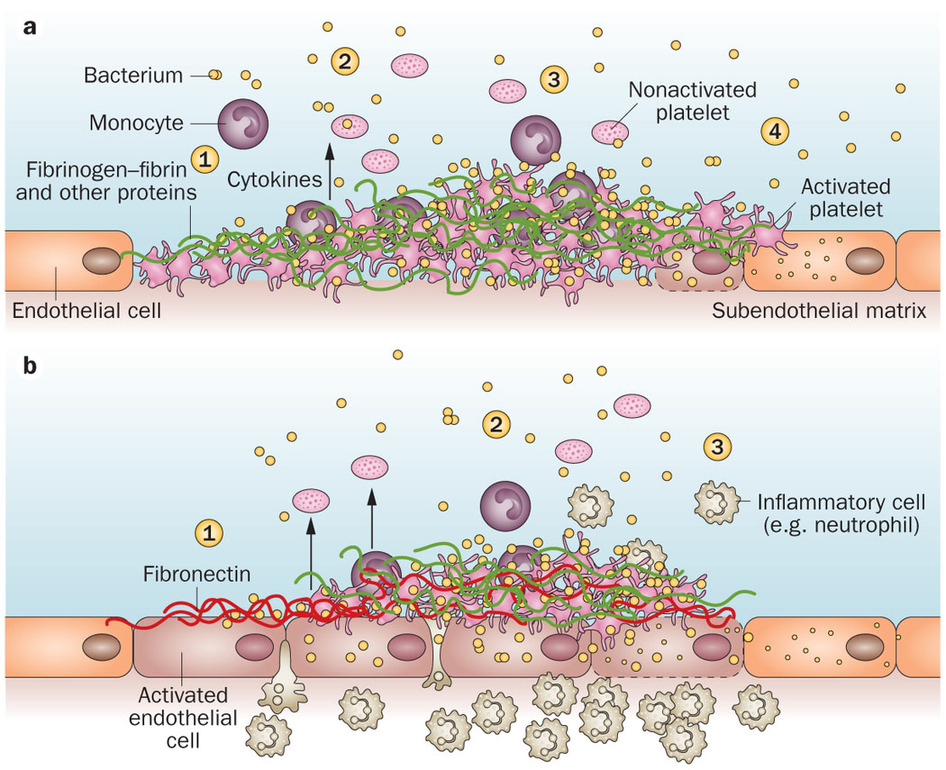
Even worse, an echocardiogram of his heart revealed that his shortness of breath was being caused by an accumulation of gunk on one of his heart valves. This gunk was likely a build-up of the same bacteria that was causing him to be septic. It was so thick that blood could not adequately flow through it and become oxygenated in the lungs. {The gunk is more appropriately described as a heart valve “vegetation” and was unquestionably caused by his IV heroin use.}

—–

nrcardio.2013.174-f2

—–

His story, what had brought him to the ED, was real life emerging from a textbook. Unfortunately, there is no text-book for real life, despite the best efforts of many physicians to describe it; Variables and algorithms go hay-wire outside of the vacuum of medical texts.

By the time I reached his room, he had been notified of his dire situation. He had been told about his vegetation and the need for heart surgery. He was terrified.

I could sense that he was overwhelmed. As he lay there, his facial expression gave away the disappointment in himself. I am certain  he wished to be able to get up out of the bed and march out of the hospital under his own power.


Knowing other physicians had already spoken to him, but wanting to give a thorough report to my attending, I decided to start our interaction by asking what he understood about what was going on.

He asked, “Am I going to die?”

The fear visibly swept over him as his lip trembled. His fear jumped off the bed and landed directly on my white coat. My chest tightened as if someone had buttoned the coat a little too tightly.

—–


975937300c186e2b320b6e59a465a071

—–

He began to softly sob. I sat down beside him and offered him my hand. He clutched it with both of his.

His nurse entered the room, saw I was there with him, nodded to me, and turned right back around.

He began collecting himself and his sobbing subsided.

“Why do you think you are going to die?”

In the section of the medical textbooks reserved for instructing future physicians on how to interview patients, I had clearly veered off course. However, such a question turned out to be paramount to uncovering the genesis of Aaron’s own demon.

He revealed that his mother had died during open-heart surgery, 13 years earlier, when he was only a teenager. This information was not lost on me;  I had read in his ED notes about the use of heroin since the age of 14.

—–

grief

—–

I would guess suffering such a catastrophic loss must have left him an unmanageable amount of grief. And when the opportunity to leave grief behind and enter a world without it, even if only for the length of a high, he took it… and his own life had begun spiraling out of control since then.

I can not imagine such a level of grief and loss. No amount of reading in a book can prepare you for it or provide you with the skills to overcome it. I believe it is something that can only be understood when you are in the heat of it, facing it, and hoping to not be swept under by it.

—–

Honestly, I am no different from the other medical providers I alluded to earlier. I can become easily annoyed by the behavior and drama arising from drug abusers.

But I’m also careful to quickly remind myself that there is something awful and tragic behind their behavior and drama. Perhaps a situation so dire and all-consuming that I would not be able to resist if a moment of weakness intersected with opportunity.

I don’t know if Aaron is alive or dead.

I hope that the tubes drained the fluid from his chest. I hope they removed the ventilator from his room. I hope his kidneys are working properly again. I hope the surgeon removed the vegetation from his heart. And I hope he is at home, playing with his children, filling the grief that sent him into a downward spiral with the love of his family.

—–

alive

—–

I hope Aaron is alive.