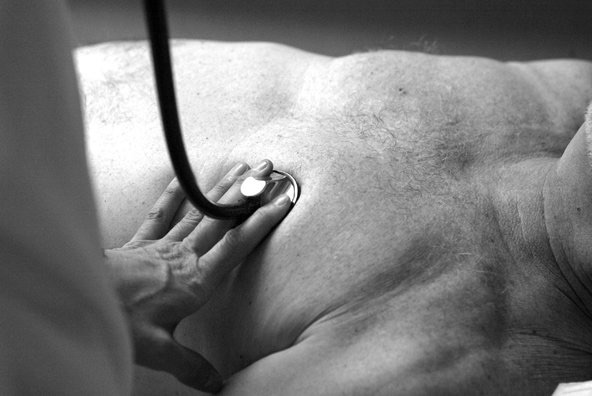
When I Grow Up

image


One of the most common questions I have received in Residency has been, “What do you want to be when you grow up?

I have heard it from every level of the medical machine in which I have existed for the last two-and-a-half years.

Attending physicians have asked me.

Nurses in the ICU.

Respiratory therapists in the ED.

Janitorial staff in the hallway.

Pharmacists in the trauma bay.

Senior residents on a multitude of services.

What do you want to be when you grow up?


image

It has been the most infuriating question I have received in Residency; I’ve been asked it more times than I can count.

And it is not as if the question has been some derivative thereof; the wording has been exactly that.

It hasn’t been “When you have finished your medical training, is there a specific focus you would like to have?”

Or “what made you decide to choose Family Medicine?”

Grown adults have asked me, “What do you want to be when you grow up?

I have grey hairs in my beard. If that weren’t a dead giveaway that I’m an adult, I don’t know what is…


image

For all except one of the occurrences, I have politely responded with something about my desire to provide primary care in the Behavioral Health patient population.

In the lone outlier, I made reference to my age, as I was clearly older than the person asking me and unbelievably sleep deprived, which kept me from overriding my primordial desire to psychologically eviscerate them.

I apologized after my verbal carnage ended.

My ego has been kept in check for most of Residency, mostly due to my need to survive without making a multitude of personal and professional enemies, despite my innate desire to respond with an exasperated,

Do you realize how condescending of a question that is?”


image

It’s not meant to be a condescending question. Perhaps it has simply infiltrated the ice-breaking vernacular of the medical field.

Perhaps it is appropriate, as a fair number of medical school graduates are still coming straight from an undergraduate campus without an iota of life experience with which to share their patients, much less their colleagues.

Maybe I look young? But I know I don’t. I’ve seen pictures of me before I grew up. And I certainly don’t look as young as I did when I was 24.



image

When I showed up to the first day of Residency, I was 34 years old.

While it’s true that every single senior resident in my Residency had a far superior grasp on medical knowledge and patient care than me, a vast majority were four to six years younger than me.

Embedded in that seemingly trivial age difference, are the fruits of my labor.

If I conservatively look back on the six years from when I moved to Boston at 24 and when I turned 30, I wouldn’t know where to start in order to describe the multitude of amazing things I experienced.

Perhaps I sound like an incredible asshole by saying that. You may not be wrong. But for the most part it is true.

image

I came to Residency with an open mind about being taught by men and women with far fewer life experiences from which to draw upon than me.

The converse could not be said to be true.

For each successful completion of one year of Residency, it is as if a Purple Heart has been awarded by the Surgeon General.

image

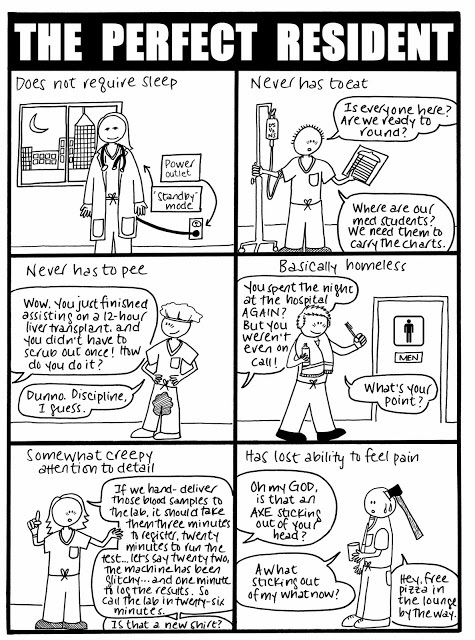
Without a year under your belt, the Medical Degree for which you worked so hard was like a Participation Certificate a child would receive for making an exploding volcano at the Science Fair.

Respect is based solely on your capability to perform the medical task set before you as a resident; everything else about you be damned.

It didn’t matter if every other person outside of the medical field who knows you would explain with awe in regards to what you had created for yourself; no one within medicine could care less.

image

Medicine is a hierarchical beast. It has been that way for the past century since the dawn of modern medicine.

I am not perfect.  I have fallen into that trap a few more times than I would care to admit during Residency, but I believe for the most part I have awarded everyone of my colleagues a Purple Heart for just making it to Residency.

Surviving the four years of Medical school without becoming disenfranchised, burned out, or overwhelmed by the cesspool of obstacles inherent in medical training, is an incredible achievement unto itself.

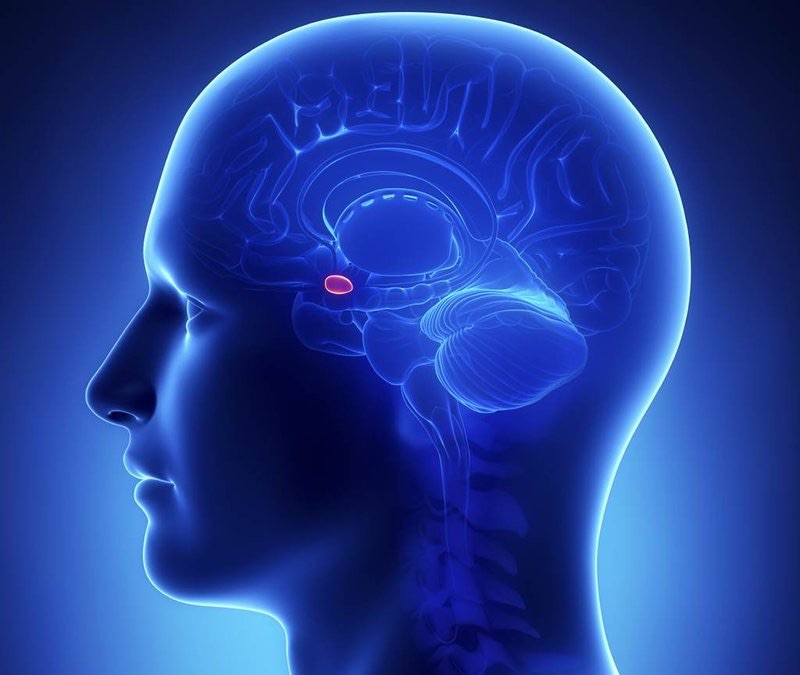
So each time I am asked “What do you want to be when you grow up?”, the part of my amygdala that houses my Pride, is set aflame.
image

I can imagine a  PET scan of my brain glow bright red as each neuron would be firing at full tilt.


A sparkling fireworks display of my life flashes before my eyes:

I grew up a long time ago.

I’ve been taking care of myself for the past 20 years.

I worked at the #5 University in the world. I attended the #6 University in the world.

I worked at the #3 Hospital in the US.

I’ve presented my own research at Columbia University.

I traveled all over the world with an amazing woman at my side.

I have lived in Boston, Chicago, Miami, and New York City.

I’ve sat on the Board of Directors of a Non-profit organization.

I spent two years living on an island in the Caribbean.

I have grown up.


image


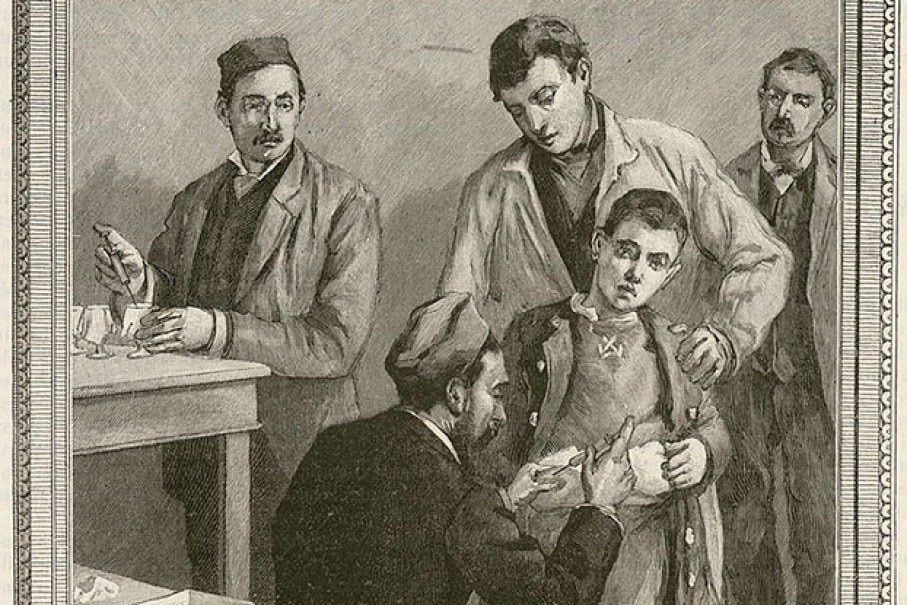
I did all of these things before taking one breath as a physician.

Each of them was critical in my development. Each of them have allowed me to make connections with people all over the world.

Each of them brought me closer to my patients and colleagues than I ever could have otherwise.

And my pride, which allowed me to overcome every barrier I found in front of me while transitioning from a 24-year-old Midwesterner to a 36-year-old world traveled physician, can’t help but take offense to the assertion that I have yet to grow up.

What do you want to be when you grow up?


image

I want to be who I already am. I’m comfortable in knowing that I have been fortunate to live a charmed life; a life that I created, despite getting knocked down a few times.

I don’t want to grow up.

I did that years ago.

As I transition from a Third Year Resident to an Attending physician, the number of times I have been asked the aforementioned question has picked up steam.

Each time, my Id screams, my Ego broods, and my SuperEgo kindly responds: “I plan to provide primary care to the Behavioral Health population.

And now that I have my first job after Residency lined up, contract signed, and start date on the calendar, I can respond with an actual job title.

But I still wonder if people will expect to me grow up. Unknowingly overlooking everything that brought us to the moment where they felt it appropriate to ask:

What do you want to be when you grow up?

A Week in April

image

I had four patients die within one week.

When the totality hit me, I nearly lost control of my emotions.


On the Obstetrics service, a majority of all patient encounters are joyous and professionally reaffirming.

Each antepartum heart tone heard via ultrasound brings a sense of wellness and anticipation, both to the expectant mother and the caring physician.

But not every delivery has a pleasant outcome. Not every parent has a sense of anticipation. And not every physician can cope with those competing forces.


image.jpg

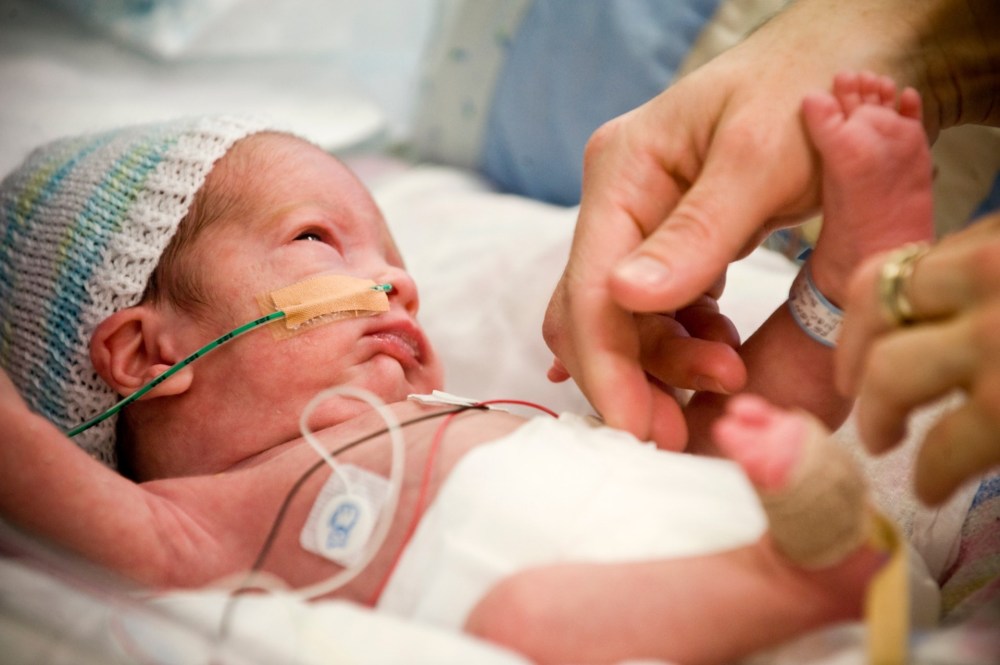
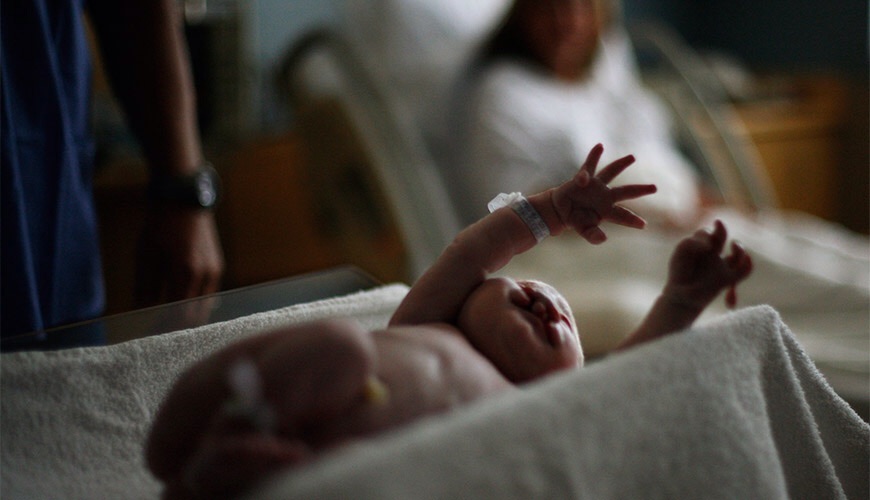
I delivered a 33-week-old neonate who precipitously declined within the first 24 hours of life. It had been an easy delivery, with the mother having given birth five times previously, and the fetus not yet having reached the period of greatest growth.

With one deep breath from her mother and a hearty push of the abdominal and pelvic musculature, the baby arrived, opening her eyes and taking her first breath while still cradled in my left arm.

She looked right at me. Deep into my eyes as she let out her first cry.


image


But despite our medical technologies and painstaking care, not every newborn baby survives.

She died in the neonatal intensive care unit 7 days later, an infection having made its way from the vaginal mucosa of her mother into her lungs and from there into her bloodstream.

The most aggressive antibiotics and procedures did not save her; there was nothing more we could have done.

Her death was unsettling. It came as the last of the four, but the one which nearly encompassed my entire being in darkness.

image.jpg


Two days after her birth, while awaiting another delivery on a quiet Friday night, the Code Blue alarms, indicating a cardiac arrest somewhere in the hospital, sounded overhead in the lecture hall.

My colleague, Dr O, was on medicine call that evening; she jumped from her seat across from me, immediately ending our conversation.

I glanced at my other colleagues remaining at the table and dutifully indicated I would join Dr O in case she needed back-up so they could complete sign-out.


image

The Code was called to a room at the furthest point possible from where we were seated, so rather than assuming I would eventually arrive to find Dr O having resuscitated the patient, I broke into a full sprint, clasping my stethoscope around my neck with my right hand to prevent it from flying off mid-stride, in case something went awry.

When I arrived a minute later, all hell was breaking loose, despite Dr O and a more senior physician, Dr B,  deftly providing and directing life resuscitating efforts.

The woman, a 31-year-old mother of 6, who was admitted for nausea two days earlier, was accompanied in the room by her distressed and screaming 6-year-old son and her husband, who was shouting hysterically from her bedside, begging her to come back.


image.jpg

I stepped into hell incarnate and helped guide the husband and son to an adjoining room.

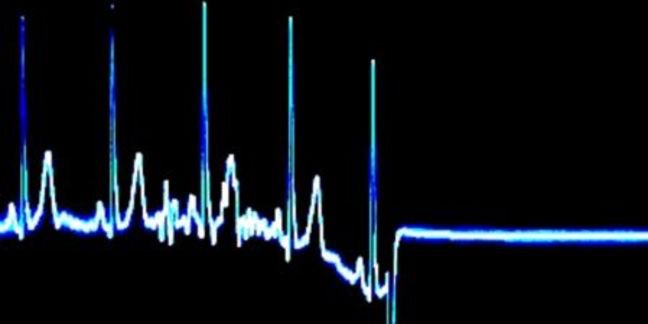
When I returned moments later, nothing had changed. She was still unresponsive. No heart beat was palpable; no rhythm identified on the cardiac monitor.

A deep sense of distress was evident in the room, despite the aggressive nature of our efforts.


image


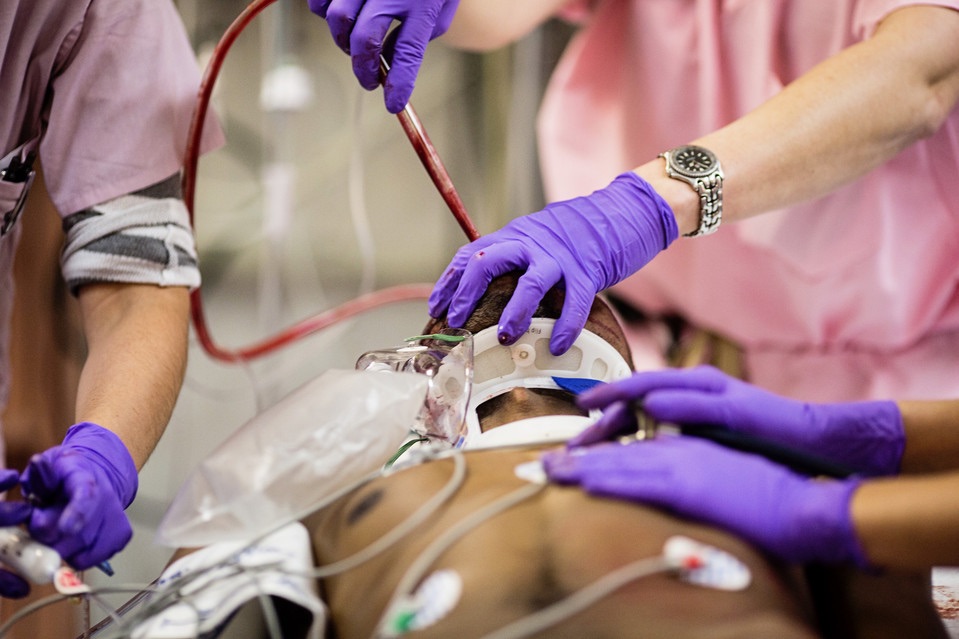
The next hour lasted for an eternity, as Dr O, Dr B, and myself assisted the nurses in providing chest compressions, giving medications to stimulate cardiac contractility, and delivering electrical shocks to bring her back to life.

Nothing worked.

Her heart did not regain electrical activity. Her lungs did not attempt another breath.

Once we determined further efforts were futile, the husband, increasingly hysterical, was guided back into her room, to kiss the cheek of a lifeless body once belonging to the mother of his 6 children.

He begged us to try more. The despair in his eyes pierced everyone’s souls.

His son was sitting quietly in the adjoining room.

Physicians, nurses, security guards, and the chaplain cried; our emotions audible throughout the hallway.

image


I returned to the Obstetric floor after embracing my colleagues in a moment of silence. I stopped in the locker room to take off my sweat and tear-soaked scrubs and replace them with a new pair.

I delivered a healthy baby boy an hour later. His parents thanked me incessantly before I left the room.


I left the hospital the following Saturday morning having delivered several newborn girls and boys into this world.

All the while knowing a loving mother had unexpectedly died and another child’s life was being sustained in the Neonatal Intensive Care Unit.

When I returned to the hospital on Sunday night, I quickly scoured the electronic charts awaiting my signature.

A new electronic tab had appeared in the toolbar for me to click on. It read “Death Notice.”

image


I anticipated having to re-read the harrowing and emotional report of the unexpected death of the mother from Friday night.

Instead, I was blindsided by the account of another of my patient’s death, whom I had seen only a few weeks previously in the office.

He had been brought to my hospital’s Emergency Department on Saturday night, lifeless, despite the heroic efforts of the EMS and subsequent attempts by the Trauma Surgeons.


image


In the early evening hours of Saturday night, he had been found lying in a pool of his own blood, a trail of that blood following him for a reported 50 yards.

A bullet had pierced his femoral artery, the largest blood-carrying vessel in the leg; it had shredded the artery, leaving behind a capable exit path for the blood to flow from his body.


image


With each beat of his heart, more blood would gush from the wound in his leg, causing the heart to beat faster as it attempted to compensate for the missing blood.

Instead of a life-continuing effort, in its paradoxical nature, the heart beckoned the same death it hoped to avoid.

After scouring the internet for more information, I learned the 50-year-old man had been minding his own business in the parking lot of his apartment building when a man and woman approached him. They pointed a gun at him and demanded his wallet.

Having had several colorful conversations with him in the office, I could easily visualize him telling them to “Fuck Off”, his East Coast upbringing shining bright.

The following morning I received a phone call from my Program Director. She had also received notification of his death and wanted to check in with me.

I expressed my thanks for her concern. I did not tell her about the lifeless mother or the neonate only a few breaths from death.


image


A third patient died in the next 48 hours.

Honestly, I can not recall the details. None of them.

They have seemingly been erased from my memory, perhaps in a fitful effort to suppress the emotions death has brought to the forefront of my medical training so that I do not throw my heart up in the air and declare all is lost.

But I know another patient, someone for whom I cared, whose family loved them, succumbed to the only outcome known to our species.

Death.


image


So I will document that death here; despite my brain’s greatest efforts to forget it, I will forever know the impact it has had upon me.


When I received the call, I let out a deep sigh. I hung up as my eyes swelled with tears.

The fourth death. A seven-day-old child whose eyes I had stared into while holding in my left arm as she took her first breath.

Until the day I die, I hope to not forget the look I gave her. One of awe. And love. Excitement. And fear.

A gamut of human emotions, packed into one soul-penetrating experience.

I hope, despite her struggle for life, that in her final moments, the neurons in her brain grasped onto the emotions I transferred to her with our brief encounter.

That in the last beat of her heart and breath of her lungs, her mind went to the moment we shared; the look of awe and love and excitement drowning out the fear lurking deep in my eyes.


The Rise of Magneto


image

The Birth of Magneto

—–

Since their inception, movies and television have glamorized the life of a physician, often intertwining personal stories of said physicians with the heroic acts they perform and the inherent braininess required therein.

This is only a mild reality.

—–

image.jpg

—–

Sure, physicians are by-and-large smarter than the average bear, but it is our tireless work ethic, attention to detail, and self-loathing which provides us the ability to make such a significant impact in the lives of our patients.

There is little glitz, even less glamour, and only the occasional heroic act in the life of a physician. But the combination of these traits keeps many of us going back to work every day.

No. I mean EVERY day. As in… working EVERY. SINGLE. DAY.

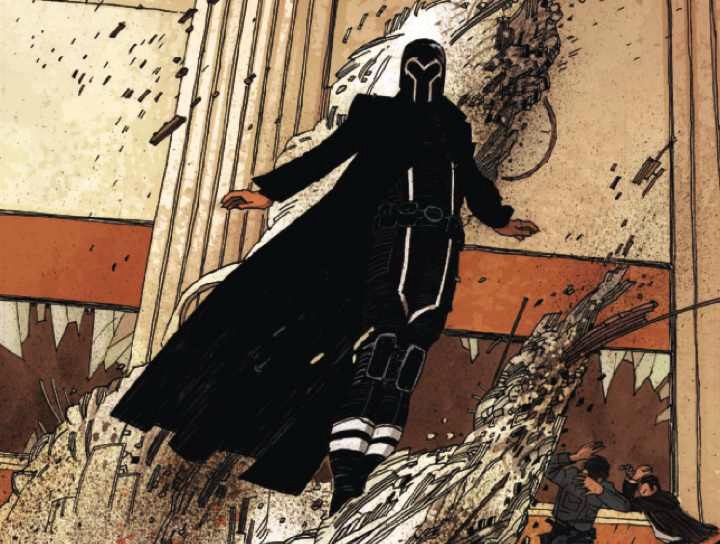
In case you can’t tell I’m currently smack dab in the middle of my second year of Residency (aka PGY-2)… a time I have affectionately termed, “The Rise of Magneto.”

—–

Man-of-Steel-Trailer-Images-Henry-Cavill-as-Clark-Kent

—–

Though some more recent medical dramas have included the lives of Residents, this middle ground in the hierarchy of medicine is poorly understood and recognized.

After completing medical school, newly-minted physicians in the US must complete a Residency before becoming a physician capable of practicing on their own.

In the US, simply completing medical school is not sufficient to become a physician; no hospitals or physician groups will hire you; no insurance will reimburse you.

—–

image.jpg

—–

Instead, you must prove your worth, knowledge, and skills by completing a Residency in the specialty of your choice.

Alas, the general public is not fully aware of this transitional stage in the professional life of a physician. There is either “you are a doctor” or “you are not a doctor”.

And if the patient is sitting in a gown, on an exam table or on a hospital gurney, while asking for medical help and you identify yourself as their physician, “you are a doctor.”

Which, in fact, you are.

Confused yet?

Well, I am too.

Because now that I’m half-way through my Residency, I am starting to find myself straddling the line between being a naive Intern and a full-fledged Attending.

—–

image

—–

The major reason Residencies exist in the US is due to the wide swath of information and skills needing to be honed in order to provide adequate medical care in the 21st century (and the 20th century before it.)

The sheer breadth of knowledge acquired during these training programs is paramount to fully understanding the capabilities, pit-falls, and intricacies of the human body.

It also introduces physicians to the longitudinal aspects of caring for patients and their families.

—–

image

—–

One night while I was an Intern (PGY-1), I responded to an overhead page from the Emergency room; my assistance was requested in the care of a critically ill patient.

Not exactly “my” assistance per se, but by being the Intern on-call, I was part of the team responding to patients who have such a severe infection as to be called “Septic“.

The woman was non-responsive, cool to the touch, and seemingly every square centimeter of her body was swollen with fluid.

Her vital signs on the monitor were tenuous. A quick scan of her body revealed a tube protruding from her pelvis, most likely a surgically placed catheter to drain urine from her bladder.

The daughter sat at the bedside, quickly describing the course of actions she believed could have led to the current predicament.

Despite her seated position at the bedside, her fear was palpable.

I thanked her for the explanation and informed her we would need to pursue aggressive measures to save her mother’s life. Without hesitation, she consented.

Over the next several days, her mother remained unresponsive in the Intensive Care Unit, her life supported by machines to keep her lungs delivering oxygen to her swollen body; medications kept her heart pumping that same oxygen to every fragile cell.

—–

image.jpg

—–

But one day shortly thereafter, I arrived in the ICU and the mother was no longer in the room.

The bed was barren, immaculately cleaned, and prepared for the next critically ill patient.

She had died overnight, her body unable to sustain life despite the most aggressive medical interventions, all while I attempted to regain my cellular integrity through several hours of sleep in my own poorly-cared-for apartment.

—–

image

—–

Six months later, I was working in the office of an Oncologist (a doctor who treats patients with cancer) preparing to see his next patient. While thumbing through her chart, he described the course of events leading her to seek his care.

When we entered the room, I saw a familiar face. The daughter of the non-responsive woman I just described. She smiled and greeted me, though I instantaneously recognized her palpable fear.

The Oncologist was surprised and said, “you two know each other?”

I responded, “yes, I cared for her mother.”

—–

There were no heroic acts which changed the outcome of the mother’s life. Unfortunately, there were no heroic acts to perform for the daughter either.

—–

In our current “illness-based” medical system, which more handsomely rewards interventions while people are ill, even Family Medicine docs like myself tend to more commonly encounter patients when they are in need, rather than when they are well.

{This is more a by-product of when people tend to seek out care, rather than a desire on most physicians part, as Family Medicine is predicated on prevention of illness.}

And sometimes the wellness and illness intersect.

—–

image

—–

Having completed two months of Obstetrics and Gynecology during my intern year, as a PGY-2 I have become “eligible” to work 24-hour shifts on the Obstetrics service.

The Rise of Magneto, indeed.

{By eligible, I mean the cap on my consecutive hours able to be worked is now 24… And I am assigned to work said shifts based on my availability. Which is truly, whenever. But that is Residency. So be it.}

Within the first hour of working my first OB-24, I delivered the baby of a woman I had never met, which is common on the Labor & Delivery service.

After ascertaining the baby’s general health and wellness while identifying the absence of suturing opportunities in the woman’s vaginal canal, I calmly congratulated her, welcomed her son to the world, and exited the room to tend to another pregnant woman.

—–

baby-after-being-born

—–

One week later I was working in the Pediatric Emergency Department, my latest assignment as a PGY-2, when my eyes were drawn to a patient’s Chief Complaint on the Patient Tracking Board.

It read “fever, decreased PO intake”. I scanned over to the patient’s age and read, “7 days.”

On my first night in the Pediatric ED I had seen another 7-day-old with fever and decreased PO (oral) intake. I ended up performing a lumbar puncture that night on that child due to a concern for meningitis.

Thankfully, the test results came back showing that the child did not have meningitis.  It recovered quickly and was home within two days.

—–

image

—–

But that experience had quickly alerted me to the need to act quickly and decisively in order to prevent a dire outcome.

So I clicked my name next to this latest 7-day-old child and quickly proceeded to the patient room to evaluate him.

When I opened the door and introduced myself, the mother and I instantaneously recognized each other. She was gently rocking the boy I had delivered only 7 days previously.

Doctor, please help him.”

—–

image

—–

I had only a week before assisted his exit from his mother’s womb. I assured his mother we would care for him and made my way back to the area where an Attending physician was awaiting my assessment and plan.

While I alerted my Attending to the intimate relationship I possessed with this child and his mother, a few of the other Residents and Attendings happened to overhear the predicament.

They all began to listen in as I outlined my plan to perform a Lumbar puncture to assure he was not rapidly deteriorating at the hands of a bacterial foe.

My Attending agreed, looked at me intently, all the while recognizing my whole-hearted investment in this patient.

—–

image.jpg

—–

There are few instances in medicine as intimate as the delivery as a child, and to have that same child fall ill and somehow end up back within your care in a completely different hospital on a completely different medical service only a few days later, is the essence Family Medicine.

We can be seemingly ubiquitous.

Thankfully, the young boy, only a week into his life, tolerated the Lumbar puncture; his cerebrospinal fluid was absent of life-eradicating bacteria or virus; he was sleeping comfortably in his own crib again within two days.

—–

image

—–

The transition from “medically knowledgeable but clinically deficient Intern” to “clinically seasoned and seemingly knowledgeable Senior Resident” is one fraught with pitfalls: sleep deprivation, anxiety-producing clinical scenarios, life-and-death struggles, and glaring holes in medical knowledge.

But at the moment of greatest despair, when the chips are down, the night can’t end, the day can’t come soon enough, and the struggle to become a good physician seems out-of-reach, the Intern becomes a Senior Resident.

And reflects back on the do-or-die nights, the life-and-death days, the thankful patients, the grateful families, the new-born babies first squeel, and the meaningful and life-long relationships created in the cauldron of uncertainty…

… bringing on The Rise from Intern to Senior Resident.

In my case, The Rise of Magneto.


The Birth of Magneto

image

—-

After hurriedly caring for two newly admitted patients, while receiving pages from nurses about the other patients already admitted to my service, I took a moment to “run my list.”

At 2AM on a Thursday morning, my brain required a succinct “to do” checklist to assure nothing of importance had been forgotten. Fortunately, I simultaneously happened upon my senior resident, Jacob.

He calmly asked how things were going, having left me hours before, in a trial by fire, to go about the business of running an in-patient service on Nightcall. Not that he had abandoned me, but rather, he had given me the reigns of our service and asked that I not make any decisions which caused him to question my ability as a soon-to-be second year resident.

—–

image

—–

I collected my thoughts and began rattling off updates, allowing both of us to check off a multitude of things on our list. As I made my way to the middle of our list, I let out a quick a deep sigh.

He gave me a quizzical look, to which I responded, “I need to go check on Ms. Smith’s EKG. I was supposed to do that two hours ago.”

—–

Jacob and I had been paired to work together for these two weeks since our schedule for the year had been published months earlier. It was likely intentional, as Jacob had been identified as a leader within our program, and thus someone from whom I could learn to become a solid second year resident.

Though several years my junior in age, I respected Jacob’s work ethic and pride in our residency. Despite the long hours, occasionally ungrateful patients, and stress of balancing work and a family life, he kept a positive attitude and welcoming countenance. I could easily imagine him becoming a Chief Resident, one of the designated leaders of our program who toiled in an effort to provide stability in a world of chaos.

—–

My response prompted his characteristic comforting Arkansas twang, “Oh, don’t worry, Magneto. Ms. Smith is just fine.”

—–

image

—–

As a part of friendships, work relationships, and familial bonding, nicknames are a nearly ubiquitous part of life. Having been given a multitude throughout my years, I quickly realized Jacob had provided me the latest in a long line. But unlike most of them, which were derivations of my first or last name, and typically of little creativity, “Magneto” provided me a cache not previously recognized.

I let out a quiet chuckle as Jacob informed me he had wandered up to Ms. Smith’s room at midnight, the time I had told him an EKG would be performed to determine if her pacemaker had been deactivated, allowing her to pass into death comfortably. Once there, he learned of my own creativity, which christened the birth of Magneto.

—–

I first met Ms. Smith three weeks earlier, when I was working during the day as one of the interns on our in-patient service, Clin Med. At that time, Ms. Smith was struggling with advanced heart disease, a quartet of pathologies which I termed the “Unholy Alliance”; her heart provided her four diagnoses, which together carried a high level of morbidity and mortality: congestive heart failure, atrial fibrillation, coronary artery disease, and pulmonary hypertension.

Each of these diagnoses were intimately intertwined with the others, but I had yet to see any one person carry all four. During our initial encounter, Ms. Smith was easily conversive, despite her need for supplemental oxygen, and seemed ready to battle her disease and proceed well beyond her 63 years of life. On that day, she was flanked by one of her adult sons who reflected her success as a mother.

—–

image

—–

The night I earned my nickname, Ms. Smith was flanked by that same son, as well as her two adult daughters, several grandchildren, and a couple friends. They wished to be present in her final moments.

Between these two days, Ms. Smith had a brief, but meaningful improvement in her clinical status, allowing her to return home. But her heart quickly worsened and she ended up admitted to our service again, this time in more dire circumstances. It was immediately recognized that her final days were upon her and the one daughter who did not live in Columbus was summoned from California.

—–

—–

The final daughter’s arrival from California harkened a transition in care for Ms. Smith. She had made it known if she were to have a decompensation in her status, she would not want to be maintained indefinitely.

So while her mental status waned as a result of her poorly functioning heart, we provided her some medication to prevent it from going haywire, and more importantly, did not deactivate the pacemaker embedded in her chest. Her heart kept pumping despite the malignant nature it now carried.

When the daughter arrived earlier in the day, a decision was made to stop the medications and turn off the pacemaker, allowing Ms. Smith a nearly painless transition into death.

—–

image

—–

But when I arrived to work that evening, I was notified Ms. Smith’s pacemaker was still quite functional. The nurse paged me, reporting she had waved a magnet over Ms. Smith’s chest, performed an EKG to determine if her heart was still receiving the electrical impulses from the pacemaker, and found the characteristic pacemaker spikes on the EKG print out.

Only five minutes earlier, I was informed our Clin Med service would be directly admitting two patients; these two individuals would not be coming up from the Emergency Department, where an initial assessment had been completed, but rather were being either transferred from an outside hospital or being sent in from home by one of our colleagues.

This would require assessing the patients while they were already on the floor being cared for and simultaneously providing orders by which the nurses could care for them.

Dealing with one of these would be a trial in and of itself, but dealing with two simultaneously, while responding to pages about other patients on our service, would be quite a task. Jacob asked if I could handle it, to which I responded in the affirmative.

—–

The lone impedance I saw was Ms. Smith’s pacemaker. So I hurried up to the 6th floor, walked into her room, greeted her family, and confirmed I would be deactivating her pacemaker. They thanked me for our team’s care and focused their attention on their dying mother.

I excused myself for a moment, proceeded to the nurses station, rifled through a drawer beneath a bay of computers showing the electrical activity of every heart on the 6th floor, and grabbed a large, doughnut-shaped magnet, measuring 8cm in diameter.

—–

image

—–

Having been informed the nurse had attempted to deactivate it earlier and realizing the two direct admits were awaiting my care, my eyes began searching the nurses station for something I could use to secure the heavy magnet to Ms. Smith’s chest.

I found a strap with which I felt I could secure the magnet and walked back into Ms. Smith’s room. I greeted her family again, proceeded to her bedside, and lowered the gown from her left shoulder.

I intertwined the strap in the middle of the doughnut-shaped magnet and secured it around her shoulder, resting it snuggly against her upper left chest wall. I raised the gown back over her shoulder, informed her family I would return in a few hours to check on her, and proceeded from the room.

—–

After leaving Ms. Smith’s room, I found her nurse, asked her to perform an EKG at midnight, and informed her I would return shortly thereafter to assess Ms. Smith.

When Jacob christened me “Magneto”, it was two hours after I had planned to see Ms. Smith again. He had made his way to the 6th floor at midnight to check on Ms. Smith’s heart.

He informed me the EKG had, in fact, shown the pacemaker to have been deactivated, as I (and Ms. Smith) had wished. But deactivating her pacemaker was not like pulling the batteries from the back of a remote control, leaving her lifeless. It had simply removed the support needed to keep her heart beating more than 60 beats per minute, the lower level of “normal”.

—–

image

—–

Jacob relayed she was still alive, with a slowly beating heart, when he had gone to see her. We proceeded to run the rest of the list, I informing him of the status of our two directly admitted patients, and he of Ms. Smith imminent demise.

I left him and grabbed the elevator to the 6th floor. I slowly walked towards Ms. Smith’s room, the lights in the hallway dimmed appropriately for the time of night.

I knocked on the door, entered, and found her family members still gathered at her bedside, though overtaken with fatigue. They had made her room a makeshift resting place, blankets on the ground, tired bodies resting amongst each other, each of them soundly asleep.

And there was Ms. Smith, laying peacefully in her bed, continuing to have slow, agonal breathing, her heart surely winding down.

—-

As I quietly left the room, careful to not disturb her children and grandchildren, I took a deep breath and let out a sigh of relief.

I strolled through the darkened hallway, making my way towards the nurses’ station, but ran into her nurse before reaching my destination. She was on her way to assess Ms. Smith herself.

I informed her of my findings and asked her to keep me updated.

Five minutes later, I received a call from the nurse stating she entered the room, found Ms. Smith’s agonal breathing to have ceased, and was unable to feel a pulse. She had died.

—–

image

—–

I returned to her room some time later, having made another round through the Intensive Care Unit to assess the health, or lack there of, of the patients who were there. Her family was all awake, having been alerted to her passing, and profusely thanked me for our team’s care.

They thanked me by name and title, but were not aware of The Birth of Magneto.