When I Grow Up

image


One of the most common questions I have received in Residency has been, “What do you want to be when you grow up?

I have heard it from every level of the medical machine in which I have existed for the last two-and-a-half years.

Attending physicians have asked me.

Nurses in the ICU.

Respiratory therapists in the ED.

Janitorial staff in the hallway.

Pharmacists in the trauma bay.

Senior residents on a multitude of services.

What do you want to be when you grow up?


image

It has been the most infuriating question I have received in Residency; I’ve been asked it more times than I can count.

And it is not as if the question has been some derivative thereof; the wording has been exactly that.

It hasn’t been “When you have finished your medical training, is there a specific focus you would like to have?”

Or “what made you decide to choose Family Medicine?”

Grown adults have asked me, “What do you want to be when you grow up?

I have grey hairs in my beard. If that weren’t a dead giveaway that I’m an adult, I don’t know what is…


image

For all except one of the occurrences, I have politely responded with something about my desire to provide primary care in the Behavioral Health patient population.

In the lone outlier, I made reference to my age, as I was clearly older than the person asking me and unbelievably sleep deprived, which kept me from overriding my primordial desire to psychologically eviscerate them.

I apologized after my verbal carnage ended.

My ego has been kept in check for most of Residency, mostly due to my need to survive without making a multitude of personal and professional enemies, despite my innate desire to respond with an exasperated,

Do you realize how condescending of a question that is?”


image

It’s not meant to be a condescending question. Perhaps it has simply infiltrated the ice-breaking vernacular of the medical field.

Perhaps it is appropriate, as a fair number of medical school graduates are still coming straight from an undergraduate campus without an iota of life experience with which to share their patients, much less their colleagues.

Maybe I look young? But I know I don’t. I’ve seen pictures of me before I grew up. And I certainly don’t look as young as I did when I was 24.



image

When I showed up to the first day of Residency, I was 34 years old.

While it’s true that every single senior resident in my Residency had a far superior grasp on medical knowledge and patient care than me, a vast majority were four to six years younger than me.

Embedded in that seemingly trivial age difference, are the fruits of my labor.

If I conservatively look back on the six years from when I moved to Boston at 24 and when I turned 30, I wouldn’t know where to start in order to describe the multitude of amazing things I experienced.

Perhaps I sound like an incredible asshole by saying that. You may not be wrong. But for the most part it is true.

image

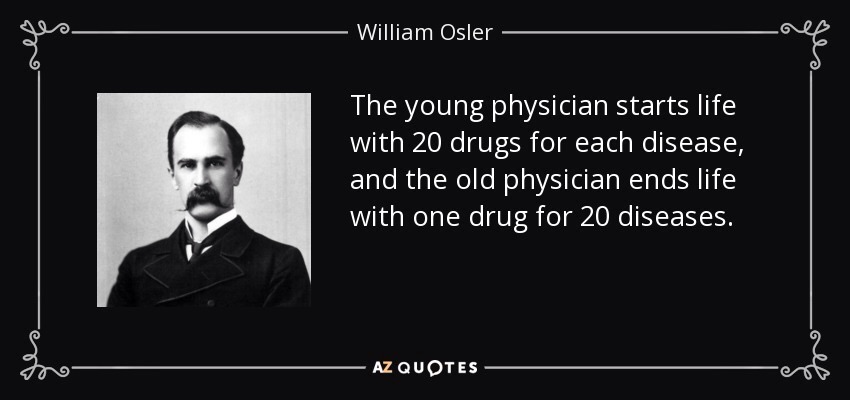
I came to Residency with an open mind about being taught by men and women with far fewer life experiences from which to draw upon than me.

The converse could not be said to be true.

For each successful completion of one year of Residency, it is as if a Purple Heart has been awarded by the Surgeon General.

image

Without a year under your belt, the Medical Degree for which you worked so hard was like a Participation Certificate a child would receive for making an exploding volcano at the Science Fair.

Respect is based solely on your capability to perform the medical task set before you as a resident; everything else about you be damned.

It didn’t matter if every other person outside of the medical field who knows you would explain with awe in regards to what you had created for yourself; no one within medicine could care less.

image

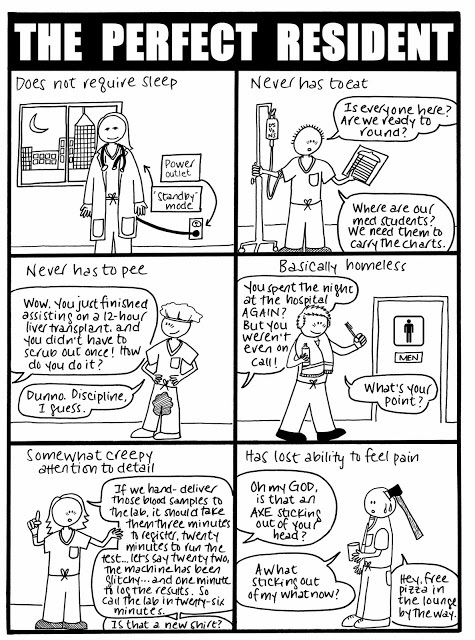
Medicine is a hierarchical beast. It has been that way for the past century since the dawn of modern medicine.

I am not perfect.  I have fallen into that trap a few more times than I would care to admit during Residency, but I believe for the most part I have awarded everyone of my colleagues a Purple Heart for just making it to Residency.

Surviving the four years of Medical school without becoming disenfranchised, burned out, or overwhelmed by the cesspool of obstacles inherent in medical training, is an incredible achievement unto itself.

So each time I am asked “What do you want to be when you grow up?”, the part of my amygdala that houses my Pride, is set aflame.

image

I can imagine a  PET scan of my brain glow bright red as each neuron would be firing at full tilt.


A sparkling fireworks display of my life flashes before my eyes:

I grew up a long time ago.

I’ve been taking care of myself for the past 20 years.

I worked at the #5 University in the world. I attended the #6 University in the world.

I worked at the #3 Hospital in the US.

I’ve presented my own research at Columbia University.

I traveled all over the world with an amazing woman at my side.

I have lived in Boston, Chicago, Miami, and New York City.

I’ve sat on the Board of Directors of a Non-profit organization.

I spent two years living on an island in the Caribbean.

I have grown up.


image


I did all of these things before taking one breath as a physician.

Each of them was critical in my development. Each of them have allowed me to make connections with people all over the world.

Each of them brought me closer to my patients and colleagues than I ever could have otherwise.

And my pride, which allowed me to overcome every barrier I found in front of me while transitioning from a 24-year-old Midwesterner to a 36-year-old world traveled physician, can’t help but take offense to the assertion that I have yet to grow up.

What do you want to be when you grow up?


image

I want to be who I already am. I’m comfortable in knowing that I have been fortunate to live a charmed life; a life that I created, despite getting knocked down a few times.

I don’t want to grow up.

I did that years ago.

As I transition from a Third Year Resident to an Attending physician, the number of times I have been asked the aforementioned question has picked up steam.

Each time, my Id screams, my Ego broods, and my SuperEgo kindly responds: “I plan to provide primary care to the Behavioral Health population.

And now that I have my first job after Residency lined up, contract signed, and start date on the calendar, I can respond with an actual job title.

But I still wonder if people will expect to me grow up. Unknowingly overlooking everything that brought us to the moment where they felt it appropriate to ask:

What do you want to be when you grow up?

Veritas

ExtensionFlag

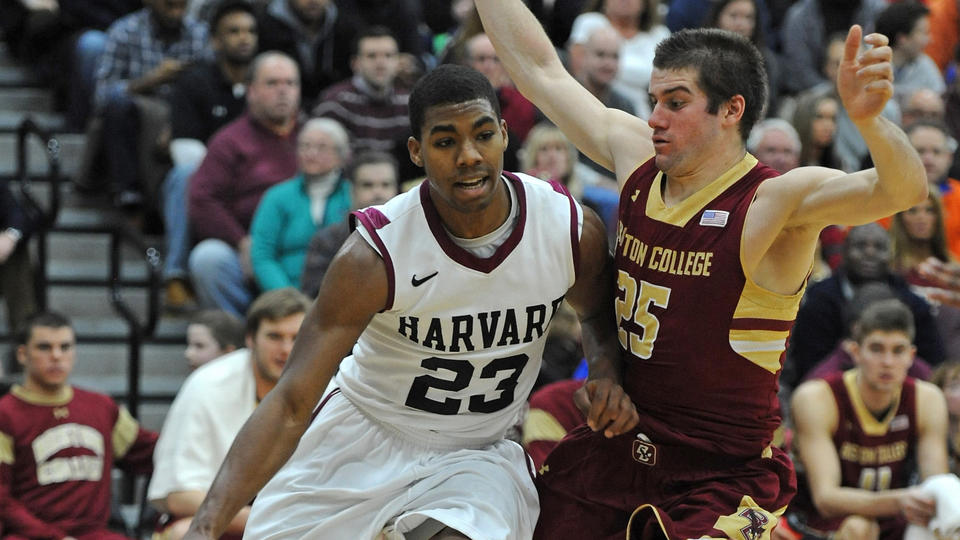
During a heated text message exchange back in March, a college roommate of mine took umbrage with me cheering on Harvard in a basketball game. But this wasn’t just any other basketball game. It was the 2nd round of the NCAA tournament known as March Madness. The Ivy League champions, having defeated a more well-respected and well-known opponent in the 1st round, were in the midst of a furious comeback against a perennial title contender, the Spartans of Michigan State.

Alas, the brains of Harvard succumbed to the muscle of MSU in a game for the ages. The Harvard Crimson, a band of super intellectual b-ballers made a name for themselves with that showing, along with their back-to-back-to-back NCAA tournament appearances. Veritas.

harvard-upsets-new-mexico-2013-ncaa-tournament-

Veritas is Latin for “Truth” and appears on Harvard’s coat of arms. Thus, I typically refer to Harvard as simply, Veritas. And I think I’m allowed to refer to Harvard as Veritas. After all, I went to school there.

No, seriously. I did. I went to Veritas. Not in a Matt Damon in “Good Will Hunting” attends MIT type of way; I wasn’t cleaning the bathrooms and scribbling unintelligible theorems on blackboards.


I actually attended Harvard. Excuse me, Veritas.

From 2006 to 2008 I attended Veritas as a part-time student in order to complete my pre-medicine requirements.

My association with the most world-renowned academic institution is a bit convoluted thought… I must clarify that I attended the University, not “The College.”

The University includes “The College”, the medical school, the law school, the divinity school, the Kennedy school of government, and various other entities that do not fall under the umbrella of the undergraduate education.

001940b5_medium

I attended the Extension School, an entity designed for working stiffs who want to take Harvard-level courses in a variety of academic areas. The courses meet in the evenings and on weekends so students can torture themselves at work all day and then try to pass Organic Chemistry by attending lectures two times a week for 4 hours apiece. I get heart palpitations and a migraine simply recalling those days.

[Note: the Coat of Arms for the Extension School displays two bushels of wheat and a burning lamp. The two bushels of wheat represent the original cost of attendance of the Extension School’s precursor, the Lowell Institute. The burning lamp signified the “learning by night” philosophy of the School. Let me tell you, I paid by credit card due to my inability to harvest wheat and I studied by overhead lamp; as you may know, fire codes have been updated since the early 20th century.]

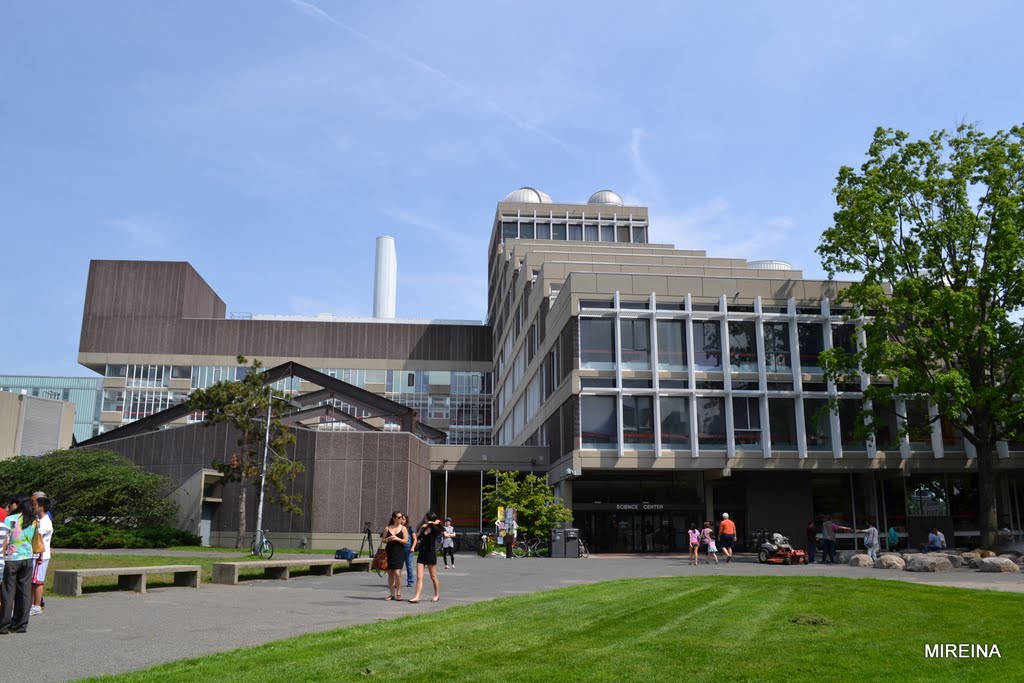
While I completed my coursework at Veritas, I mingled with many undergraduates in the Science Center and around campus. During those instances, I never heard anyone refer to themselves as a student of “The College.” I even dated a graduate of “The College” while I was living in nYc. She never once referred to it as “The College”, only as Harvard.

Harvard_shield-University

Yet, during my return visits to Boston and Cambridge over the past several years, my attendance at Veritas has arisen in casual conversation. On these occasions, I have been asked if I attended “The College” or the University.

It seems that the undergraduates at Harvard have become even more snooty in the past half-decade.

One such incident occurred while I was volunteering overnight at a homeless shelter in Cambridge. This particular shelter was run by Veritas undergrad students, which in and of itself, I thought was pretty cool.

Before our shift started, we went around in a circle and discussed how we came to be volunteering that night. Each of the undergrads pointed out that they attended “The College” when introducing themselves. I made sure to indicate I had gone to the Extension School.


Obviously, I wouldn’t want them to think I’d scored a 1600 on my SAT’s… Oh, it’s out of 2400 now? Thank you for informing me dearest student of “The College.” Go to hell.

Though I wasn’t trying to impress any of these scions of intelligence, I made sure to slip in the fact that I was about to begin my third year of medical school. It didn’t faze them.

Oh, you aren’t impressed because you go to “The College” and will be starting your own NGO in Zamibia when you graduate? Have fun! Watch out for Malaria!

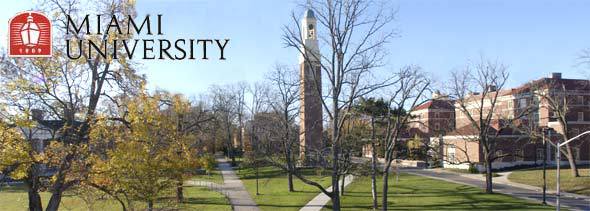
During the aforementioned text exchange, my former roommate made sure to point out that I had graduated from Miami University, commonly referred to as “The Harvard of the Midwest“, not the actual Harvard University. It was for this reason that he insisted I could not claim allegiance to Veritas.

large_2853h

[Note: The administration at Miami liked pushing the idea of “The Harvard of the Midwest” during my undergraduate years. They often cited the ivy-laden brick buildings on campus and the focus on undergraduate education as a reason to make such a comparison. Let me set the record straight: Miami is no Veritas. It would be accurate to say there are super intelligent people at Miami who are on par with students attending Harvard. However, the sheer number of people on Harvard’s campus of  incredible intelligence transforms it into a verifiable cesspool of academic excellence. Miami could never match the transformative properties inherent in such a place. Though, I must say, Love and Honor.]

Other than his undergraduate and graduate degrees from Miami, this roommate also received his MBA from Boston College, so he tried rebuffing my intense interest in the basketball game by reminding me he actually has a degree from a Boston-based university. I quickly pointed out that Boston College didn’t make the NCAA tournament and has been slaughtered by Veritas the last two times they played. In. Your. Face.

CE1_4472.JPG

I was steadfast in my allegiance to Veritas, despite his repeatedly insisting I have no such claim.

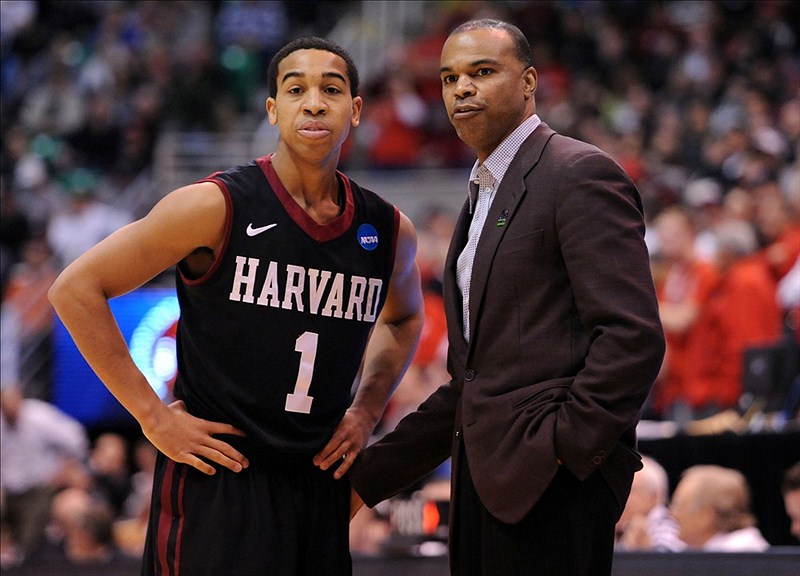
My allegiance goes further than burning the midnight oil at the Science Center; I watched Jeremy Lin carve a hole into the heart of the Cornell defense before anyone outside of Cambridge had ever heard of “Linsanity.” I made scathing and disparaging social media remarks when Tommy Amaker was hired to be the Veritas head coach in 2007 and summarily dismissed half of his senior class a week before school started because he didn’t think they were good enough to play for him.


And I have routinely attended their games when I return to Cambridge, cheering them on despite Amaker’s questionable recruiting. I even watched them get diced to pieces by a rabid Columbia team in nYc in the winter of 2013; Veritas would go on to win the Ivy League Championship as well as their first March Madness game, just as this year’s 2014 team did.

So I feel justified in claiming allegiance to Veritas for a myriad of reasons. I’m certainly more aligned with Veritas than any number of people who claim another university or college they never attended, but wear a hoodie, sweatshirt or baseball cap on which the schools logo is emblazoned. Though, for the record, I do own a Veritas baseball cap and crimson t-shirt with “Harvard” across the chest.

science

But I think I’m allowed to wear such things. I did go to Veritas. I mean, Harvard. No, I really did.

Where the Heart is

photo

Kristi called out to me in a soft whimper, “Ean?”

I responded by peering up the stairway to the third floor, whereupon I could see her right hand grasping her left wrist. Blood was visibly seeping out between her fingers.

It was Martin Luther King Jr Day. The year was 2007. And at that point, I had been living in a group home for 2 and a half years.

I had arrived home a few moments earlier, ascended the stairs to the second floor, and set my bag down outside of the small staff office. It would remain there until I returned home from the Emergency Department by myself several hours later.

Kristi heard the front door close all the way from the third floor. Perhaps her senses were exponentially heightened due to the shock of seeing blood spray from her wrist as it was sliced by a razor. Her next instinct had been to leap from her bed and into the hallway. She could only see my shoes from her vantage point to the second floor, but even such a minute bit of information gave me away.

Kristi’s decision to end her life had coincided perfectly with my return home from a peaceful day off.

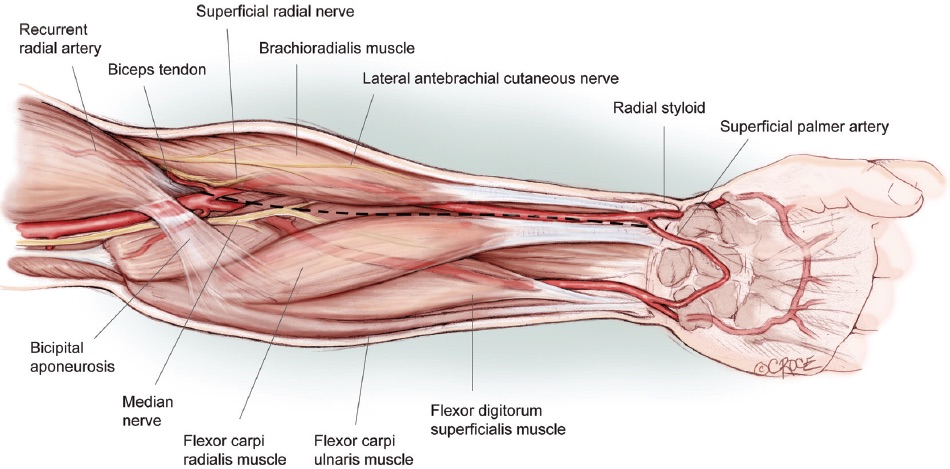
I quickly scampered up the stairs as Kristi stood outside her bedroom. I unlocked the door to my own bedroom, which was located caddy-corner to hers and grabbed a towel. Kristi was half-sobbing, half-whimpering as I pressed the dark blue hand towel on top of her right hand. Standing outside her room, I could tell that she had been seated on her bed when the razor punctured her radial artery; a fine spray of red blood was juxtaposed against the yellow wall.


image


She pulled her right hand from below the towel so I could apply even more direct pressure. After a moment, she made a fist and flexed at the wrist as I took a quick peek at the damage. The pressure kept more blood from squirting out, but I could tell we needed to head to the nearby Emergency Department immediately. Kristi resisted my initial suggestion to go to the hospital, but after a moment of thought, she could see the concern in my face, as well as the blood on her right hand and now the towel and agreed to go.

I knocked on one of the other staff’s bedroom door, located directly across the hall from Kristi’s, hoping she was home. Thankfully, she was. I gave her a quick synopsis of what happened and asked her to clean the wall with some bleach before Kristi’s roommate returned.

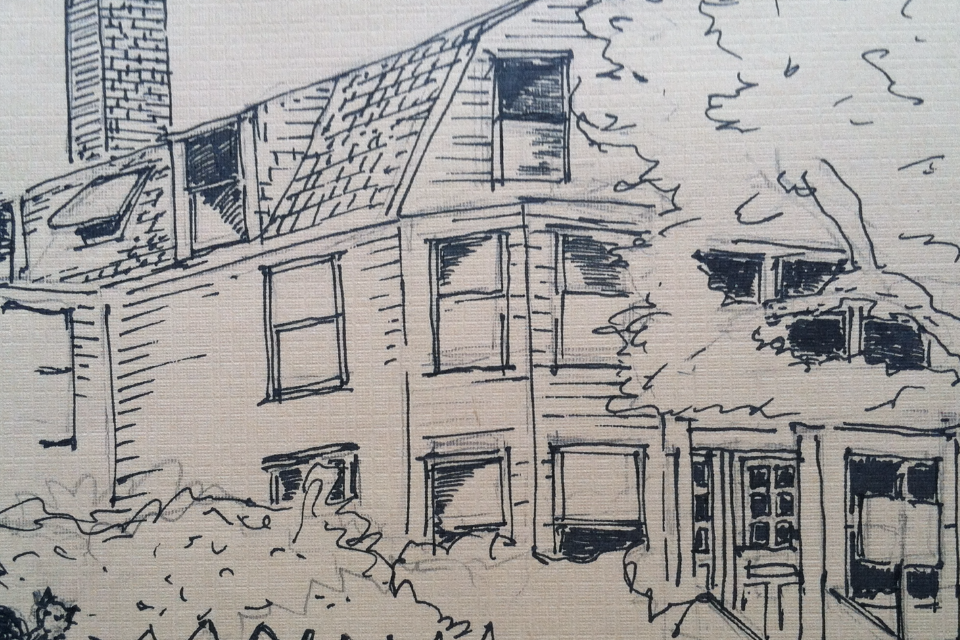
The Cambridge City Hospital was only one street over from our home, a social project developed by Harvard psychology graduate students over forty years earlier. Our close proximity meant we were in the ED only five minutes after Kristi retrieved a razor blade. Once there, Kristi was apologizing profusely every few seconds for ruining my towel; its dark blue color disguised the carnage beneath.


image


The ED was not particularly busy, especially for a holiday, but I didn’t like the idea of sitting in the waiting room any longer than necessary. Though the bleeding had almost completely subsided, my rudimentary medical knowledge in those days told me this was due mostly to the flexion of her wrist and the pressure it was causing.

However, I could not help but visualize Kristi extending her wrist and spraying blood on the backs of the family sitting in front of us. So I went up to the triage nurse and politely explained that my friend’s injury was self-inflicted and would she please move us to the front of the line so she could be evaluated.

Through the glass partition, the nurse looked out into the waiting room and saw Kristi sitting there, holding the towel against her flexed wrist and nodded at me. I called to Kristi and she stood up, took a few steps towards the door separating the waiting room from the triage bay, and grimaced.


image


Only fifteen minutes earlier, as I had been walking home from the YMCA in Central Square, Kristi had been on the phone talking to her older brother, who happened to be a physician. Despite his training as a psychiatrist, he had not sugar-coated his concerns about her mental health when he informed her that he didn’t feel safe leaving her alone with his young son during an up-coming visit. She began crying and hung up the phone.

Despite Kristi’s battle with depression in her early twenties, she had graduated from law school and begun a successful professional career. But as it does with so many individuals, depression seeped back into her life and had become all-encompassing. A suicide attempt led to a hospitalization for several weeks at one of the world renowned psychiatric hospitals in Boston.


image


Upon her discharge in the fall of 2006, she joined our group home after a week-long communal interview process that was required for all residents and staff. The first few months had been difficult for Kristi, due to her inability to find a steady job in the legal field again. When a reliable temp position opened up a few weeks earlier, she began to thrive.

But that call, and the message therein, drew out her self-hatred and the fury of “helplessness and hopelessness” which characterizes depression. Unbeknownst to myself and the other staff, who lived in the home with the residents, Kristi had been prepared for this desperate last act. When she returned from the Emergency Department several hours after I had departed, she asked me to remove the box of razor blades hidden in one of her drawers.


image


Over the course of three years, I lived in two group homes belonging to the same organization in Cambridge, MA; first as a counselor, then as the director of the home where I lived with Kristi. Focused on helping high-functioning individuals transition from in-patient hospitalization (for mental health issues) back to independent living, the opportunity to be a part of this unique program had brought me to Cambridge from Ohio in my pursuit of becoming a clinical psychologist.

But in the fall of 2004, after only a few short months of living in one of the homes and participating in the project as a counselor for its residents, my purpose in life was irrevocably transformed. I had come to get hands-on experience by living within the mental health population, learning how to best serve their health needs, but I was shocked to see how pathetic the basic medical care is within this portion of our community; a chance encounter with another young professional who was going back to school to become a physician set my wheels in motion.


image


The three years I spent living with over 60 incredible people, those who were trying to conquer their illness and others like myself who wanted to help, transformed my life and gave me the strength and perspective to survive my own trials and tribulations.

My experience as a medical student, my failures and successes therein, the friends I made, the colleagues I cherished, the patients I cared about and for… all of them were a direct result of my life in a group home.

Home.  Truly, where the heart is.


image