The Opposition to Magneto

 

image


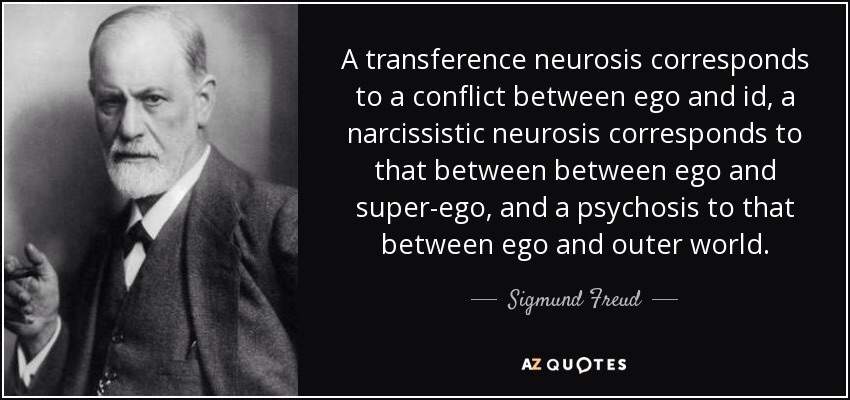
Almost 100 years ago, the world-renowned psychologist Sigmund Freud unleashed his theory of the human psyche. He theorized our being to be composed of three parts, each of which develops at different but early stages of our life; eventually, each is meant to interact simultaneously to help us navigate our world.

If Freud’s theory is accurate, my Id, Ego, and Superego completed their development nearly 30 years prior to my first day as a Resident Physician. But in the course of reflecting on the end of my second year of Residency, I have discovered a new wrinkle to Freud’s century-old theory.
 

image


In The Rise of Magneto, I thought about:

The transition from “medically knowledgeable but clinically deficient intern” to “clinically seasoned and seemingly knowledgeable Senior Resident” is fraught with pitfalls: sleep deprivation, anxiety-producing clinical scenarios, life-and-death struggles, and glaring holes in medical knowledge.

Nearly six months have passed since I described the The Rise of Magneto, the alter-ego bestowed upon me in the heat of a tussle with Black Betty (Night Float), and I have found the term “alter-ego” to be a slight misnomer; Magneto is my new Ego, not simply an alternate.

Freud described the Ego as ‘that part of the id which has been modified by the direct influence of the external world.’ In my case, Magneto is the result of my Id having experienced the responsibility, stress, failures, and successes of becoming a physician.

If Magneto is my Ego, then the other components of my psyche, the Id and Superego, are somewhere, developed and competing amongst the other experiences of Residency. If Freud’s theory is accurate, they are, in effect, The Opposition to Magneto.

 

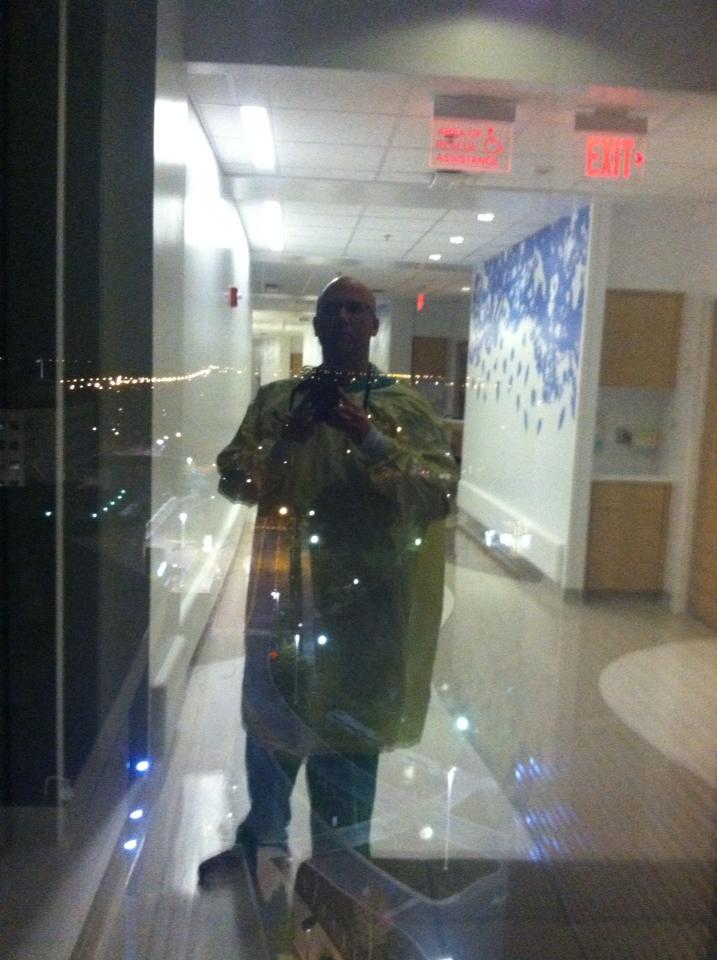
image.jpg


My Id was the primitive and instinctive component of who I was before Residency: Ean, a 34-year-old grown man who had completed medical school as part of a greater mission.

In his initial introduction to the responsibility of being a physician, Ean the Intern could engage in what Freud described as primary process thinking; an amalgamation of my primitive, illogical, irrational, and fantasy-oriented beliefs emboldened in medical school. (Ex. Engaging in a tit-for-tat with my senior Resident on my first go-round of Black Betty.)

 

image


As Ean the Intern’s experiences in Residency began to mold him, Magneto developed to mediate the unrealistic Id and the external world. No longer was I left to the primary process thinking of Ean the Intern, relegated to the impulsive and unconscious desires of a newly-minted physician.

Instead, Magneto brought secondary process thinking, which is rational, realistic, and oriented towards problem-solving. (Ex. Strapping a magnet to the chest of a dying woman to deactivate her pacemaker so I could carry on with the multitude of other patients awaiting my care).

 

image


Now, as I become a PGY-3, my Superego, the last bastion of development per Freud, is taking shape in the form of Dr. Bett the Attending. My psyche’s most mature aspect, the Superego serves two purposes:

1) control the impulses of the Id (Ean, the primitive and fantasy-oriented Intern)
2) persuading my Ego (Magneto, the Senior Resident) to turn to moralistic goals and to strive for perfection

According to Freud, Dr. Bett the Attending incorporates the learned values and morals of medical society into the completed psyche, previously only constructed by Ean the Intern and Magneto, in order to create a fully-functional physician.

 

image


During this second year of Residency, Magneto has struggled to fulfill his obligations to the psyche; it is a constant uphill battle, trying to work out realistic ways of satisfying Ean the Intern’s demands, while simultaneously trying to live up to the expectations of Dr. Bett the Attending.

Freud made the analogy of the Id being a horse while the Ego is the rider. The Ego is ‘like a man on horseback, who has to hold in check the superior strength of the horse.’

In my case, Magneto, the Senior Resident, has to hold in check the primitive and unbridled passion, rage, joy, and false-beliefs of Ean the Intern. While harnessing the emotional energy of Ean the Intern, Magneto must institute a plan of action to carry forth the solution to whatever problem arises.

 

image


In the horse and rider analogy, Freud believed the Ego to be weak relative to the headstrong Id, simply doing its best to stay on; in effect, Magneto simply pointing Ean the Intern in the right direction, trying to claim some credit for the successes therein.

Meanwhile, in Freud’s psyche construct, the Superego, Dr. Bett the Attending, watches Magneto try to control Ean the Intern from afar, via his two components: The conscience and the ideal self.

Dr. Bett’s conscience can punish Magneto when he gives in to Ean the Intern’s demands by creating feelings of guilt.

Simultaneously, Dr. Bett’s ideal self exists as an imagined construct of who he should be, representing career aspirations and how to behave as an established member of the medical society.

 

image


Magneto is nearly constantly trying to live up to the expectations of Dr. Bett while attempting to prevent Ean the Intern from derailing Dr. Bett’s ideal self. And when successful, Dr. Bett rewards Magneto with feelings of pride.

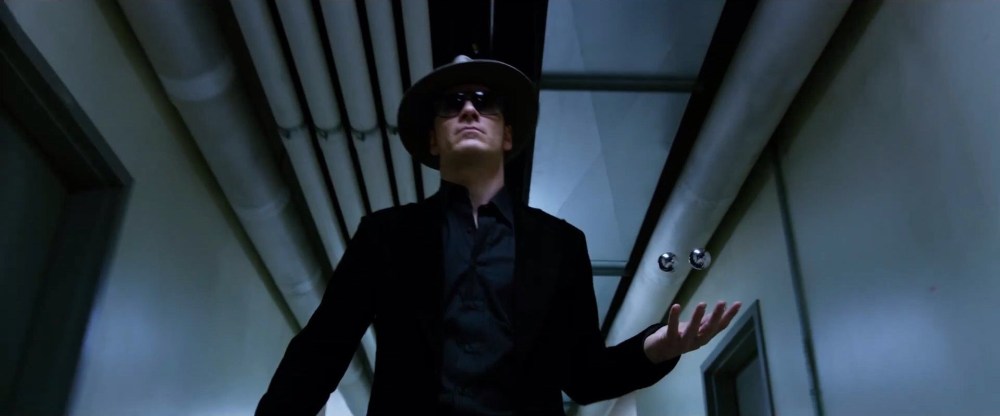
In nearly every action, Magneto, the Senior Resident, reflects back on the do-or-die nights, the life-and-death days, the thankful patients, the grateful families, the new-born babies first squeal, and the meaningful and life-long relationships created in the cauldron of uncertainty that brought on his own existence…
 

image


The Id. The Ego. The Superego.

Each acting in concert, for perpetuity; the Id and Superego, tugging at Magneto, drawing on his energy, forever acting as the Opposition to Magneto.
Black Betty

image


At 2:17AM on a recent Friday morning I couldn’t sleep.

Not in the sense that I was laying awake in bed, thinking about the cosmos, or wondering how “The Walking Dead” Season Finale would play into any future cross-over series that might be developed, or anxiously awaiting the sun to rise again.

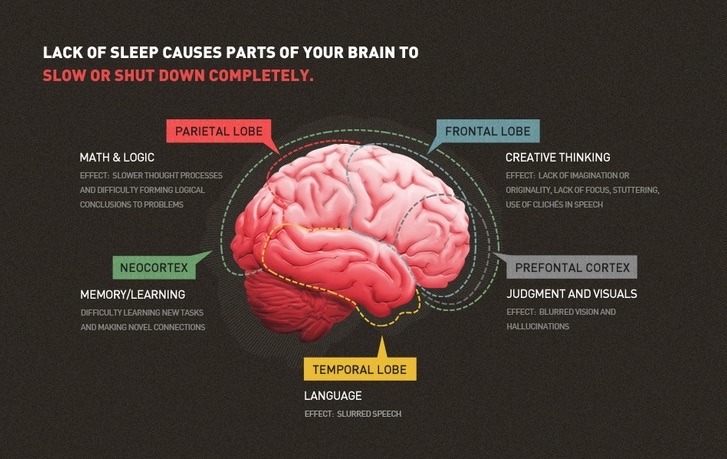
I was actually physically not able to sleep.

As my body was beginning to shut down at the cellular level, the efflux of potassium and phosphorus from every cell beginning to overwhelm my blood stream, the pager holstered upon my left hip started chiming again.

The pager transmitted electrical energy, similar to that of a defibrillator, into my body; the potassium and phosphorus blasted back into the cells, preventing a super-saturated metabolic derangement which would have caused my cardiac activity to cease.

Simultaneously, the loudspeaker in the Emergency Department blared, “Septic Shock Alert, ED 47.”

“Septic Shock Alert, ED 47.”

image

I unholstered the pager from my hip, quicker than Doc Holliday when he penetrated Ringo’s brain with a lead slug, and glanced down at the message awaiting me.

As I swiveled and rose from the stool I had been atop for only a matter of moments, I read the message. Thankfully, it only read “Septic Shock Alert, ED 47”, the electrical companion to the overheard communication, instead of 555-9095.

Or 555-9030.

Or 555-9494.

Those numbers belonged to the Hospitalist medicine service, the Intensive Care Unit, and the ED Nursing desk, respectively.


Responding to any of those calls would have meant either another patient was waiting for me to admit them to the hospital or an already admitted patient was trying to die in the ICU.

If any of those three numbers had been present, I would have needed to take over the care of the actively dying patient in the Septic Shock Alert, while simultaneously trying to:

1) figure out how in god’s name I would possibly get all of the work done I still had to do

2) supervise my junior resident

3) not lose my mind.

I also probably would have taken the pager and rifled it into the closest wall, hoping to have it explode in a wave of energy like the Death Star in Episode IV.

image.jpg

My Junior Resident sat beside me, near catatonic from Night Call’s siren song; I tugged at his scrub top, motioned for him to follow along, and let out a long sigh.

I could not sleep.

I was the Senior Resident on Night Call.

Or as I prefer to call her, Black Betty.


image.jpg

Black Betty is the anthropomorphic representation of Night Call, the overnight shift when physician staffing drops to a skeleton crew and the statistical probability of all hell breaking loose starts creeping up on 100%.

As the sun begins setting on a hard day’s work for most of the physicians, nurses, and ancillary staff in the hospital, Betty begins to rear her ugly head.

Her darkness requires the fortitude of a special type of physician.

image

Unless you are a Resident like me. Then you are required to show up to spend some time with Black Betty as a part of your training.

You are not a special physician. You are a Resident. And the only thing special about you is your ability to not spontaneously combust from the lack of sleep you have sustained.

Every Resident dates Black Betty. Some for a night here and there, with no specific frequency or expectation. She does not discriminate.

Others join her for a two week stretch; where her smooth skin becomes chapped and dry by the third night, her velvety caressing hands become stiff and arthritic by the seventh, and her formerly gentle kisses become vicious flesh-tearing wounds as the sun rises on the tenth.

image

Black Betty invites the denizens of the night to start shuffling into the Emergency Department.

And the critically ill whose lives are sustained by technological marvels in the ICU to begin their physiologic derangements.

They are joined by the sickly and elderly who become unpleasantly delirious as a result of her rancor.

—–

To this point in my Residency, I have spent over 20 weeks with Black Betty. A majority of those weeks have come in two week chunks, spread over In-patient Medicine, Surgery, and Obstetrics.

But as a now as a PGY-2, the Senior Resident, I have also had more than my fair share of random Saturday date nights with ‘ol Betty.

She and I have been intimate more times than I would care to admit.


image


Each date brings about something unique, whether it’s a patient hurtling a chair through a 7th-story window, a near-dead woman’s heart beating in full view of the audience in the trauma bay, or stabbing a needle into a man’s chest to hear the whoosh of air escape and provide his lung the opportunity to re-inflate.

She is fertile with opportunities for us to perform our duties as physicians.

Black Betty had a child, the damn thing gone wild.

dont-scare-your-kids


At 2:43AM on a recent Friday morning I exited ED 47 with my Junior Resident in tow.

Black Betty had provided us an opportunity to exercise our clinical judgement, initiate resuscitative measures, and stabilize an elderly gentleman who had tangoed with the Grim Reaper several times in the past two months.

The Reaper’s grasp had tried to choke off the man’s air supply. But we would have none of that.

Black Betty didn’t care. She shrugged it off.

She knew other opportunities awaited.

And my Junior Resident and I would be there. Waiting.

I would not sleep.


image


Not when Black Betty has anything to say about it.

The Rise of Magneto


image

The Birth of Magneto

—–

Since their inception, movies and television have glamorized the life of a physician, often intertwining personal stories of said physicians with the heroic acts they perform and the inherent braininess required therein.

This is only a mild reality.

—–

image.jpg

—–

Sure, physicians are by-and-large smarter than the average bear, but it is our tireless work ethic, attention to detail, and self-loathing which provides us the ability to make such a significant impact in the lives of our patients.

There is little glitz, even less glamour, and only the occasional heroic act in the life of a physician. But the combination of these traits keeps many of us going back to work every day.

No. I mean EVERY day. As in… working EVERY. SINGLE. DAY.

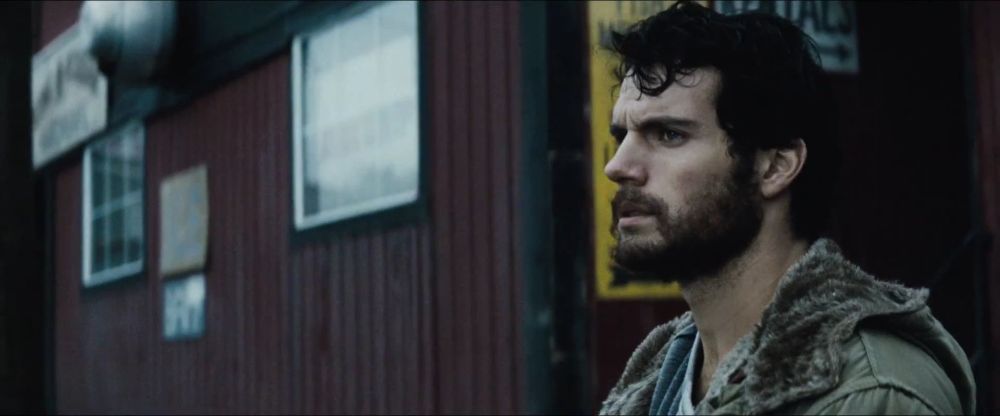
In case you can’t tell I’m currently smack dab in the middle of my second year of Residency (aka PGY-2)… a time I have affectionately termed, “The Rise of Magneto.”

—–

Man-of-Steel-Trailer-Images-Henry-Cavill-as-Clark-Kent

—–

Though some more recent medical dramas have included the lives of Residents, this middle ground in the hierarchy of medicine is poorly understood and recognized.

After completing medical school, newly-minted physicians in the US must complete a Residency before becoming a physician capable of practicing on their own.

In the US, simply completing medical school is not sufficient to become a physician; no hospitals or physician groups will hire you; no insurance will reimburse you.

—–

image.jpg

—–

Instead, you must prove your worth, knowledge, and skills by completing a Residency in the specialty of your choice.

Alas, the general public is not fully aware of this transitional stage in the professional life of a physician. There is either “you are a doctor” or “you are not a doctor”.

And if the patient is sitting in a gown, on an exam table or on a hospital gurney, while asking for medical help and you identify yourself as their physician, “you are a doctor.”

Which, in fact, you are.

Confused yet?

Well, I am too.

Because now that I’m half-way through my Residency, I am starting to find myself straddling the line between being a naive Intern and a full-fledged Attending.

—–

image

—–

The major reason Residencies exist in the US is due to the wide swath of information and skills needing to be honed in order to provide adequate medical care in the 21st century (and the 20th century before it.)

The sheer breadth of knowledge acquired during these training programs is paramount to fully understanding the capabilities, pit-falls, and intricacies of the human body.

It also introduces physicians to the longitudinal aspects of caring for patients and their families.

—–

image

—–

One night while I was an Intern (PGY-1), I responded to an overhead page from the Emergency room; my assistance was requested in the care of a critically ill patient.

Not exactly “my” assistance per se, but by being the Intern on-call, I was part of the team responding to patients who have such a severe infection as to be called “Septic“.

The woman was non-responsive, cool to the touch, and seemingly every square centimeter of her body was swollen with fluid.

Her vital signs on the monitor were tenuous. A quick scan of her body revealed a tube protruding from her pelvis, most likely a surgically placed catheter to drain urine from her bladder.

The daughter sat at the bedside, quickly describing the course of actions she believed could have led to the current predicament.

Despite her seated position at the bedside, her fear was palpable.

I thanked her for the explanation and informed her we would need to pursue aggressive measures to save her mother’s life. Without hesitation, she consented.

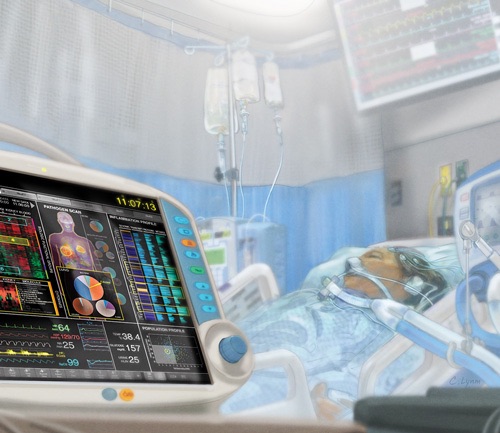
Over the next several days, her mother remained unresponsive in the Intensive Care Unit, her life supported by machines to keep her lungs delivering oxygen to her swollen body; medications kept her heart pumping that same oxygen to every fragile cell.

—–

image.jpg

—–

But one day shortly thereafter, I arrived in the ICU and the mother was no longer in the room.

The bed was barren, immaculately cleaned, and prepared for the next critically ill patient.

She had died overnight, her body unable to sustain life despite the most aggressive medical interventions, all while I attempted to regain my cellular integrity through several hours of sleep in my own poorly-cared-for apartment.

—–

image

—–

Six months later, I was working in the office of an Oncologist (a doctor who treats patients with cancer) preparing to see his next patient. While thumbing through her chart, he described the course of events leading her to seek his care.

When we entered the room, I saw a familiar face. The daughter of the non-responsive woman I just described. She smiled and greeted me, though I instantaneously recognized her palpable fear.

The Oncologist was surprised and said, “you two know each other?”

I responded, “yes, I cared for her mother.”

—–

There were no heroic acts which changed the outcome of the mother’s life. Unfortunately, there were no heroic acts to perform for the daughter either.

—–

In our current “illness-based” medical system, which more handsomely rewards interventions while people are ill, even Family Medicine docs like myself tend to more commonly encounter patients when they are in need, rather than when they are well.

{This is more a by-product of when people tend to seek out care, rather than a desire on most physicians part, as Family Medicine is predicated on prevention of illness.}

And sometimes the wellness and illness intersect.

—–

image

—–

Having completed two months of Obstetrics and Gynecology during my intern year, as a PGY-2 I have become “eligible” to work 24-hour shifts on the Obstetrics service.

The Rise of Magneto, indeed.

{By eligible, I mean the cap on my consecutive hours able to be worked is now 24… And I am assigned to work said shifts based on my availability. Which is truly, whenever. But that is Residency. So be it.}

Within the first hour of working my first OB-24, I delivered the baby of a woman I had never met, which is common on the Labor & Delivery service.

After ascertaining the baby’s general health and wellness while identifying the absence of suturing opportunities in the woman’s vaginal canal, I calmly congratulated her, welcomed her son to the world, and exited the room to tend to another pregnant woman.

—–

baby-after-being-born

—–

One week later I was working in the Pediatric Emergency Department, my latest assignment as a PGY-2, when my eyes were drawn to a patient’s Chief Complaint on the Patient Tracking Board.

It read “fever, decreased PO intake”. I scanned over to the patient’s age and read, “7 days.”

On my first night in the Pediatric ED I had seen another 7-day-old with fever and decreased PO (oral) intake. I ended up performing a lumbar puncture that night on that child due to a concern for meningitis.

Thankfully, the test results came back showing that the child did not have meningitis.  It recovered quickly and was home within two days.

—–

image

—–

But that experience had quickly alerted me to the need to act quickly and decisively in order to prevent a dire outcome.

So I clicked my name next to this latest 7-day-old child and quickly proceeded to the patient room to evaluate him.

When I opened the door and introduced myself, the mother and I instantaneously recognized each other. She was gently rocking the boy I had delivered only 7 days previously.

Doctor, please help him.”

—–

image

—–

I had only a week before assisted his exit from his mother’s womb. I assured his mother we would care for him and made my way back to the area where an Attending physician was awaiting my assessment and plan.

While I alerted my Attending to the intimate relationship I possessed with this child and his mother, a few of the other Residents and Attendings happened to overhear the predicament.

They all began to listen in as I outlined my plan to perform a Lumbar puncture to assure he was not rapidly deteriorating at the hands of a bacterial foe.

My Attending agreed, looked at me intently, all the while recognizing my whole-hearted investment in this patient.

—–

image.jpg

—–

There are few instances in medicine as intimate as the delivery as a child, and to have that same child fall ill and somehow end up back within your care in a completely different hospital on a completely different medical service only a few days later, is the essence Family Medicine.

We can be seemingly ubiquitous.

Thankfully, the young boy, only a week into his life, tolerated the Lumbar puncture; his cerebrospinal fluid was absent of life-eradicating bacteria or virus; he was sleeping comfortably in his own crib again within two days.

—–

image

—–

The transition from “medically knowledgeable but clinically deficient Intern” to “clinically seasoned and seemingly knowledgeable Senior Resident” is one fraught with pitfalls: sleep deprivation, anxiety-producing clinical scenarios, life-and-death struggles, and glaring holes in medical knowledge.

But at the moment of greatest despair, when the chips are down, the night can’t end, the day can’t come soon enough, and the struggle to become a good physician seems out-of-reach, the Intern becomes a Senior Resident.

And reflects back on the do-or-die nights, the life-and-death days, the thankful patients, the grateful families, the new-born babies first squeel, and the meaningful and life-long relationships created in the cauldron of uncertainty…

… bringing on The Rise from Intern to Senior Resident.

In my case, The Rise of Magneto.


Gray’s Anatomy

grays_anatomy_image

—–

The most prominent book on my mantle is Gray’s Anatomy, a text I received from a colleague with whom I worked at Man’s Greatest Hospital. After many hours spent working side-by-side in the Gastrointestinal Cancer Center, she felt it was a fitting gift as I embarked on my mission to becoming a physician.

Nearly six years later, I’m an Intern in a Family Medicine residency program, trying to learn how to become the quintessential doctor.

—–

—–

I spent the first six months of Residency filling many different roles, each of them markedly different from the one before or after. I have been an Internist, Clinician, Gynecologist, Primary Care Provider, Nocturnist, Infectious Disease specialist, Pediatrician, Teacher, Obstetrician, Podiatrist, and Trauma Surgeon. I have also become an even bigger fan of sleep than I ever could have imagined.

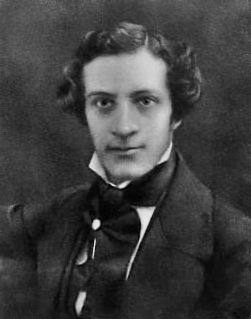
The copy of Gray’s Anatomy which I received is a facsimile of the 1901 version, the 15th edition of Henry Gray’s medical masterpiece of the human body. Not much has changed in human biology in the past 113 years, but Gray’s experiences as a physician and lecturer at the Royal College of Surgeons is probably somewhat different from what I experienced in the past six months… or perhaps not.

—–

Henry_Gray_bw_photo_portrait

—–

Day 1 of Residency I was assigned to our Internal Medicine service, responsible for running around the hospital admitting patients, providing them care, discharging them home, all while hoping I’d done a serviceable enough job teaching them about their medical ailment to prevent a hasty return to the Emergency Department.

Of the services we staff as Residents (service = four-week stint as a physician of a specific branch of medicine), Internal Medicine at my Residency is the most labor intensive, sleep-depriving, nerve-wracking, hair-splitting service of them all. The official name is Clinical Medicine, or Clin Med for short (or Clin Dred when you know the next four weeks are about to evaporate into the ether).

—–

—–

Somehow I became one of the two “lucky” lottery winners to be a first-year Resident assigned to Clin Med. My partner was a friend from medical school whom I had known since the beginning. We were paired with two senior Residents, who ostensibly had been the highest functioning first-year Residents on the Clin Med service the previous year and were thus chosen to be our medical mentors.

The ensuing four weeks were so busy that I spoke to my friend for exactly 8 minutes and 11 seconds during the entire month (that includes the time it took to type text messages).

I was told being chosen to start on the Clin Med service should be considered an honor… basically meaning that during my time as a student at the same program the previous year, they had come to the conclusion I would not be responsible for the early demise of any patients who would be placed under my care.

—–

—–

I thought it comparable to being told I would be allowed to be the first person to jump out of an airplane without a
parachute. Low and behold, not a single patient died under my care; or really had any significant downturn in their medical malady.

The days were filled with trying to learn how to navigate the choppy waters of a medical institution and its systems, and the computer programs which allowed me to chart on my patients, along with a physician’s responsibility of percussing my patients’ backs, feeling for pedal pulses, listening to a heart beat while gently pressing along a radial artery, writing perpetually changing orders, and allowing for my own bodily functions to occur when I had a moment.

—–

VARIOUS

—–

At the end of the month, I took a deep breath, realized I had survived my first service as a Resident, glanced at the
Gray’s sitting on my mantle, and wondered aloud, “what the hell just happened.”

—–

After a month of learning on the fly about how to be a functional physician in a fast-paced hospital environment, the following two weeks were a nice respite, a smattering of out-patient visits to social service providers in Columbus, office visits by established patients in our out-patient office… and a couple of shifts in the Gyn Clinic.

My experience as a medical student during the six week rotation of Obstetrics and Gynecology were by far the worst of my clinical training. I only survived it by forming a bond with two other colleagues who were equally averse to the responsibilities therein. After that rotation I spent the next two weeks traversing around the Eastern half of the US, visiting old friends, drinking away the memories on an adventure I called “The Journey to Reclaim My Soul.” Sticking a speculum, or even worse, my sterile-gloved fingers, inside women I had met only moments prior wasn’t exactly why I had decided to become a physician.

Stepping foot inside the Gyn clinic was a bit of a flash-back to days of yore. Days I would rather forget. But, I chose to become a Family Medicine physician because I wanted to experience a full-scope of practice, so I needed to use those memories to help the new women I would have asking me about their privates.

—–

—–

In the midst of those two weeks, there were a smattering of half-days in the office, where patients would come to their appointment expecting to see me; not some doctor who happened to be available. They had formally been told I would be their physician. It was a bit of a culture shock unlike what I experienced on the In-Patient service, where people arrived in the hospital hoping for someone with a medical background to cure their ails.

This time, they were expecting “Dr. B.” Whether or not they liked me or thought I was helpful would determine if they would think of me as “Dr. Bullshit” or “Dr. Badass.”

tricorder-0212-mdn

Two short weeks of community clinic visits, office appointments, and speculum insertions were followed by flipping my schedule and going on night-call for two weeks.

It evoked memories of my life for the six months prior to Residency, when I had worked overnight; Except I was traversing the ED, the emotional rollercoaster of my equally sleep-deprived senior Resident, and the perils of septic shocks and intubations at 3am, rather than deciding which return bin to toss some junk into at Amazon.

—–

—–

It had not started smoothly, as my transition back to nocturnal life stymied my brain’s ability to function on the level necessary for a physician. By the end of the second night (by night I mean at 6am, 12 hours into our shift), my senior Resident, 9 years my junior in age, and I had a tit-for-tat critique of each others performance.

—–

—–

And when I say “tit-for-tat” and “each others”, I mean, I got my ass handed to me and had to sit there and take it like a man. By the end of those two weeks though, he and I were having a nice breakfast reminiscing about all the crap we had successfully lived through together.

Gray certainly didn’t write anything about that in his book; I checked.

—–

The first two months of Residency seemed to last forever, but at the same time, it seemed to be over before I knew it. The next two months were spent down the street at the nationally recognized Children’s Hospital, where it is customary for the Interns of my Residency to spend back-to-back months there learning the medical art of Pediatrics.

—–

A-mother-with-a-sick-chil-001

—–

I was only starting to get the hang of being a Resident by that time, making the transition a bit of a shock to the system as I needed to learn all new faces and an all new electronic medical record; all while assimilating to the hierarchy of a whole new medical specialty.

The Residents of Children’s Hospital learn the ins and outs of treating babies, children, adolescents, teenagers, and the occasional grown adult still suffering from their pediatric medical maladies… I needed to become one of them quickly. The assimilation process when you are a physician is expected to occur over the course of a couple of hours; not a few days or weeks.

So of course I started on the Infectious Disease service right as a never-before experienced scourge affectionately known as “Asthmageddon” swept the Midwest.

—–

8RI8CAM

—–

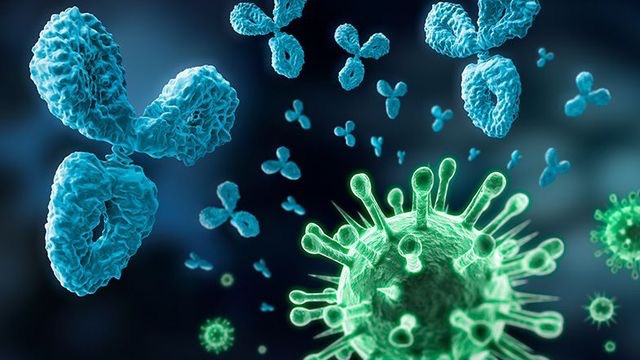
Asthmagedden was a region-wide exposure to a newly recognized virus, Enterovirus D68, which was causing babies and children of all ages, with and without previous asthma afflictions, to show up in the Emergency Department in Status Asthmaticus, a diagnosis indicating the inability of the respiratory tract to respond to front-line medical therapy, causing a constant difficulty in breathing.

http://www.wcpo.com/news/health/healthy-living/watch-respiratory-illness-ev-d68-found-in-ohio

Enterovirus typically affects the gastrointestinal tract, causing horrible diarrhea and concomitant dehydration, but as evolution has shown us, a few changes to a gene here or there and all of a sudden a new Enterovirus emerges, now equipped to attack the lower respiratory tract.

Children who had never wheezed, the most common sign of asthma, were having their bronchi inflamed by the virus, making it difficult for air to pass. As somebody who grew up with asthma, I can attest that this is a terrifying feeling.

—–

http://www.youtube.com/watch?v=7EDo9pUYvPE

—–

Some of these children were so sick they were immediately admitted to the Intensive Care Unit to receive the most minute-by-minute care to assure they would not suffocate from a blocked airway. These critically sick children by-passed our normal Infectious Disease unit, but as their symptoms resolved, they would be shuttled to our unit to continue their care alongside the children who were not as severely afflicted.

Of course, a Pediatrics Infectious Disease unit is also full of little tykes with butt abscesses, whooping-cough, diarrheal illnesses, crusty eyes, and non-remitting otitis media (ear infections); and a whole host of anxious parents, who typically become the biggest concern of Residents.

After seeing all of this, I’m re-thinking my plan of having children one day, if at least so I don’t need any psychotropic medications when my kids get sick.

—–

NCH night call

—–

The first three services were a whirlwind of cognitive adventure, psychological daring, and physical extremes. When I hung up my scrubs on the last day of Pediatric Infectious Disease, it was with the knowledge I was only a quarter of the way through Intern Year.

Gray’s Anatomy… continued