life


The Death of Magneto
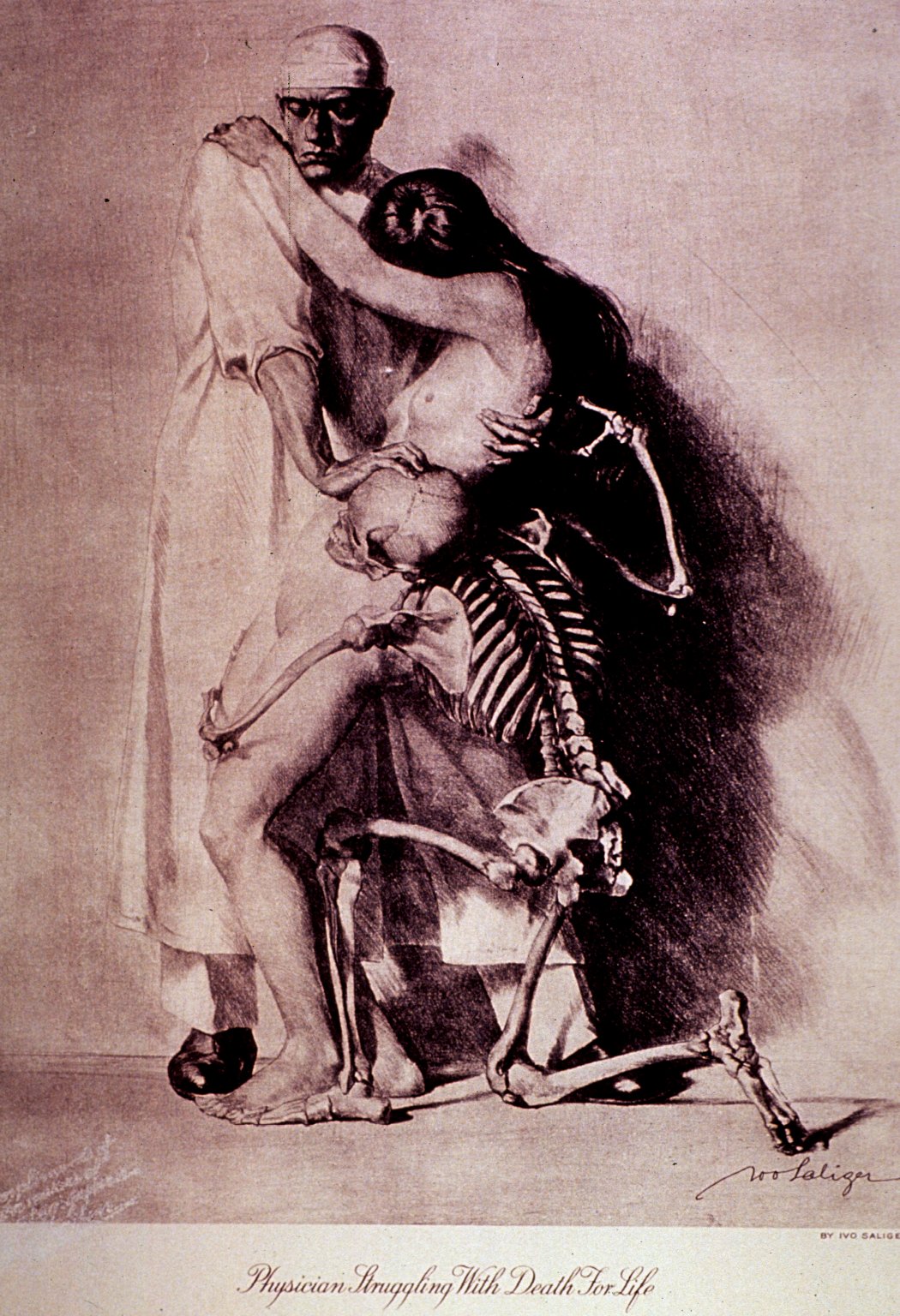
Magneto was beginning to feel a cool wave of energy course through him. So close as to almost be one with him, Dr. Bett calmly placed his left hand on Magneto’s shoulder and his right hand, with stethoscope resting in the palm, against Magneto’s chest.
As calmly as the placement of his hand, came the words from Dr. Bett’s mouth.
“Don’t be afraid. Don’t run away- stay where you are.”
Magneto, born from tireless experiences of Intern year, knew a last gasp struggle with Dr. Bett would be moot. The poison Dr. Bett had so effortlessly and stealthily placed on Magneto’s mucous membranes was already causing a microscopic cascade of cellular apoptosis.
“Et tu, Dr. Bett?”
It was all Magneto could think to say in the moment before his death.
“Only Magneto had to die for this ambition,” responded Dr. Bett, recalling Brutus in the moments after he joined the assassination of Caesar.
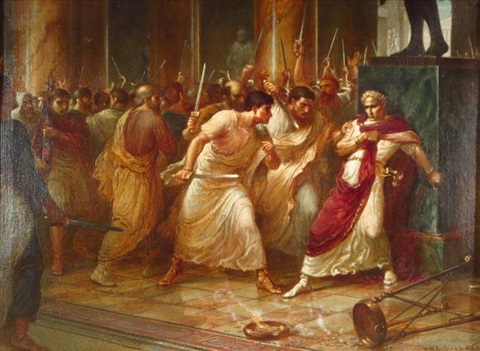
Since his birth, Magneto had anticipated the greatest threat to his existence to come from his progenitor, Ean the Intern. From Ean’s grueling experience, Magneto had arisen as a counterbalance to the unbridled instincts and passion necessary for survival in Medical Residency.
Magneto had provided the organization and realization necessary to prevent Ean the Intern’s passions from destroying himself from within and ending this fantastic journey in its infancy.

Inadvertently, Magneto became the genesis for the Super Ego, Dr. Bett, who would become the moral compass on their tenuous journey.
Having given rise to Dr. Bett, Magneto was astounded of his own capabilities, but even more so, he was in awe by the strides Dr. Bett had made.
Each step Dr. Bett had taken brought Ean and Magneto closer to their ultimate goal. It also provided them even greater strength. His passion increasing along every one of Dr. Bett’s strides, Ean became harder for Magneto to control.
Magneto’s sole purpose now seemed to revolve around keeping Ean’s passions in check and preventing them from obliterating their common purpose as the completion of Residency loomed ever closer.
Dr. Bett had entrusted this responsibility upon Magneto, from which he expected a long and successful existence.
His last moments, so close to the end of their journey, had not been anticipated.

As the end of Residency became a reality, Dr. Bett began to feel the weight of Ean and Magneto with each step he took. While both had been necessary for his own creation, he could not envision the next journey coming to fruition if he would have to be responsible for them both.
This misunderstanding, which blinded Dr. Bett ever increasingly, gave rise to The Death of Magneto.
While Ean could at times create trouble if not adequately balanced by Magneto, Dr. Bett believed Ean’s instincts to be invaluable to their next journey. Simultaneously, Magneto’s own strength, as a counterbalance and as his own entity, could not be overlooked.
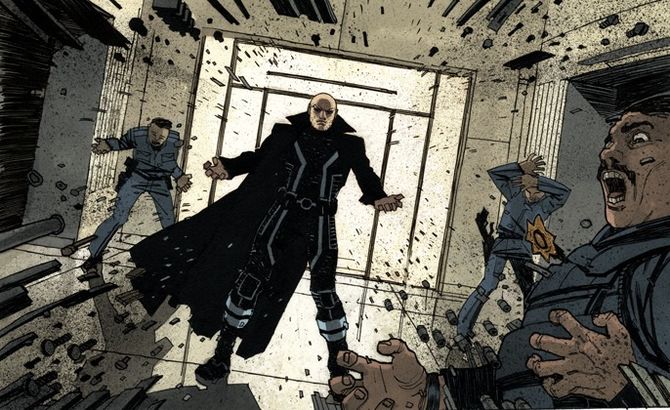
Dr. Bett, after painful deliberation, could see Magneto becoming too powerful to control due to the opportunities awaiting them on their next journey. Eventually, Magneto’s strengths could make Dr. Bett unnecessary.
More importantly, Magneto’s relationship with Ean, while needed at this stage, was not deemed to be necessary by Dr. Bett in the future. Dr. Bett could harness Ean’s energy on his own.
And if Magneto eventually realized that Ean was beholden to him, and not Dr. Bett, it would be Magneto, and not Dr. Bett, who would truly be in charge of this journey.

This was a reality Dr. Bett was not willing to allow.
There was a brief moment when Magneto looked into Dr. Bett’s eyes as his vision blurred and the sound of his own heart faded.
Dr. Bett looked as caring and thoughtful as ever.
It was a moment not foreseen by Magneto. But he was comforted by it.
That was the moment. The Death of Magneto.
When I Grow Up

One of the most common questions I have received in Residency has been, “What do you want to be when you grow up?”
I have heard it from every level of the medical machine in which I have existed for the last two-and-a-half years.
Attending physicians have asked me.
Nurses in the ICU.
Respiratory therapists in the ED.
Janitorial staff in the hallway.
Pharmacists in the trauma bay.
Senior residents on a multitude of services.
“What do you want to be when you grow up?”
It has been the most infuriating question I have received in Residency; I’ve been asked it more times than I can count.
And it is not as if the question has been some derivative thereof; the wording has been exactly that.
It hasn’t been “When you have finished your medical training, is there a specific focus you would like to have?”
Or “what made you decide to choose Family Medicine?”
Grown adults have asked me, “What do you want to be when you grow up?”
I have grey hairs in my beard. If that weren’t a dead giveaway that I’m an adult, I don’t know what is…

For all except one of the occurrences, I have politely responded with something about my desire to provide primary care in the Behavioral Health patient population.
In the lone outlier, I made reference to my age, as I was clearly older than the person asking me and unbelievably sleep deprived, which kept me from overriding my primordial desire to psychologically eviscerate them.
I apologized after my verbal carnage ended.
My ego has been kept in check for most of Residency, mostly due to my need to survive without making a multitude of personal and professional enemies, despite my innate desire to respond with an exasperated,
“Do you realize how condescending of a question that is?”
It’s not meant to be a condescending question. Perhaps it has simply infiltrated the ice-breaking vernacular of the medical field.
Perhaps it is appropriate, as a fair number of medical school graduates are still coming straight from an undergraduate campus without an iota of life experience with which to share their patients, much less their colleagues.
Maybe I look young? But I know I don’t. I’ve seen pictures of me before I grew up. And I certainly don’t look as young as I did when I was 24.

When I showed up to the first day of Residency, I was 34 years old.
While it’s true that every single senior resident in my Residency had a far superior grasp on medical knowledge and patient care than me, a vast majority were four to six years younger than me.
Embedded in that seemingly trivial age difference, are the fruits of my labor.
If I conservatively look back on the six years from when I moved to Boston at 24 and when I turned 30, I wouldn’t know where to start in order to describe the multitude of amazing things I experienced.
Perhaps I sound like an incredible asshole by saying that. You may not be wrong. But for the most part it is true.
I came to Residency with an open mind about being taught by men and women with far fewer life experiences from which to draw upon than me.
The converse could not be said to be true.
For each successful completion of one year of Residency, it is as if a Purple Heart has been awarded by the Surgeon General.

Without a year under your belt, the Medical Degree for which you worked so hard was like a Participation Certificate a child would receive for making an exploding volcano at the Science Fair.
Respect is based solely on your capability to perform the medical task set before you as a resident; everything else about you be damned.
It didn’t matter if every other person outside of the medical field who knows you would explain with awe in regards to what you had created for yourself; no one within medicine could care less.
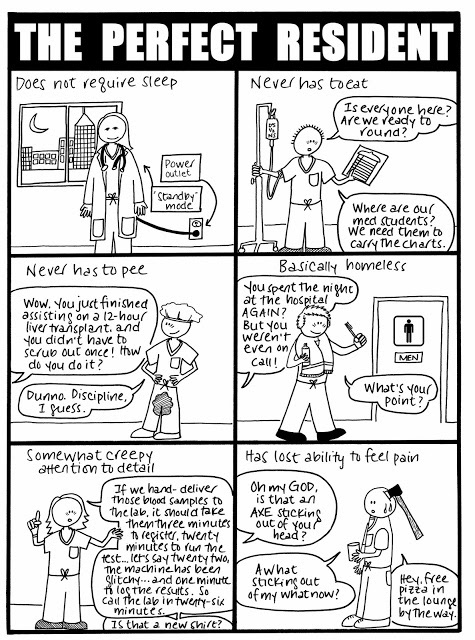
Medicine is a hierarchical beast. It has been that way for the past century since the dawn of modern medicine.
I am not perfect. I have fallen into that trap a few more times than I would care to admit during Residency, but I believe for the most part I have awarded everyone of my colleagues a Purple Heart for just making it to Residency.
Surviving the four years of Medical school without becoming disenfranchised, burned out, or overwhelmed by the cesspool of obstacles inherent in medical training, is an incredible achievement unto itself.
So each time I am asked “What do you want to be when you grow up?”, the part of my amygdala that houses my Pride, is set aflame.

I can imagine a PET scan of my brain glow bright red as each neuron would be firing at full tilt.
A sparkling fireworks display of my life flashes before my eyes:
I’ve been taking care of myself for the past 20 years.
I worked at the #5 University in the world. I attended the #6 University in the world.
I worked at the #3 Hospital in the US.
I’ve presented my own research at Columbia University.
I traveled all over the world with an amazing woman at my side.
I have lived in Boston, Chicago, Miami, and New York City.
I’ve sat on the Board of Directors of a Non-profit organization.
I spent two years living on an island in the Caribbean.
I have grown up.
I did all of these things before taking one breath as a physician.
Each of them was critical in my development. Each of them have allowed me to make connections with people all over the world.
Each of them brought me closer to my patients and colleagues than I ever could have otherwise.
And my pride, which allowed me to overcome every barrier I found in front of me while transitioning from a 24-year-old Midwesterner to a 36-year-old world traveled physician, can’t help but take offense to the assertion that I have yet to grow up.
“What do you want to be when you grow up?”
I want to be who I already am. I’m comfortable in knowing that I have been fortunate to live a charmed life; a life that I created, despite getting knocked down a few times.
I don’t want to grow up.
I did that years ago.
As I transition from a Third Year Resident to an Attending physician, the number of times I have been asked the aforementioned question has picked up steam.
Each time, my Id screams, my Ego broods, and my SuperEgo kindly responds: “I plan to provide primary care to the Behavioral Health population.”
And now that I have my first job after Residency lined up, contract signed, and start date on the calendar, I can respond with an actual job title.
But I still wonder if people will expect to me grow up. Unknowingly overlooking everything that brought us to the moment where they felt it appropriate to ask:
“What do you want to be when you grow up?”
The Allies of Magneto
Residency is a right of passage (and requirement) in the development of anyone altruistic, sadistic, or narcissistic enough to pursue a career as a physician in America.
The progression of each individual, man and woman, from naïve undergraduate pre-medical student to naïve medical student to overwhelmed Resident to newly-minted Attending Physician is a long and tiring process; Residency represents the final and most taxing leg in this pursuit.

Depending on the field of medicine pursued, the training in Residency will span 3 to 5 years, potentially longer if one desires even more specialized training.
Each of these years brings with it new challenges, burdens, and failures; these are buttressed by the highlights, accolades, and patients who refer to you as “my doctor.”
None of these are equal or in proportion to the amount of time invested.
Not everyone who starts Residency finishes.
The product of each and every Residency is the Resident it transforms from medical school graduate into Attending Physician. This metamorphosis is akin to the sluggish caterpillar being reborn as the majestic butterfly.
Though each Residency has a “class of Residents” representing each year of training, the outcome for each of these members may not be the same; certainly the process will not be the same, as individuals have their medical knowledge and clinical skills carved out with every moment of their individual training.
Only on the very last day of Residency will every member of each Resident class have completed, in differing sequences, the requirements to achieve the status of Attending Physician.
They will have encountered different patients, performed a myriad of diverse procedures, and possess thousands of hours of clinical experiences.
The Residency program in which I find myself is no different. I am now a member of the PGY-3 (3rd year) class; the last year of our training.
At this juncture, I have cared for thousands of patients, spent nearly 7000 hours practicing my craft, and been bestowed with a persona I could have never imagined.
Amongst my peers, I have become Magneto; born from the cauldron of uncertainty brewed during Night Float; and then battling amongst the other aspects of my developing psyche, every day inching closer to becoming an Attending Physician.
But there are others like Magneto, each whom have been submerged in the icy depths of a Code Blue, roared into the uncertain waters of a Septic Shock, withstood the calamity of a bezerk office patient, and succumbed to the simultaneous terror and awe of newborn’s cry.
They are The Allies of Magneto.

In our program, The Allies of Magneto have the opportunity to train in all aspects of medicine: obstetrics, gerontology, surgery, trauma, cardiology, nephrology, critical care, gynecology, pediatrics, acute care, neurology, and chronic disease management.
We each develop strengths and weaknesses, preferences and avoidances, as a means to mold our calling as society’s guardians of health and wellness.
Red Panda, The Prince, Joker, Doc O, Big Red, Jane Grey, and BeastMode, amongst others, have shared moments of fear, trepidation, joy, anxiety, and solace with Magneto.
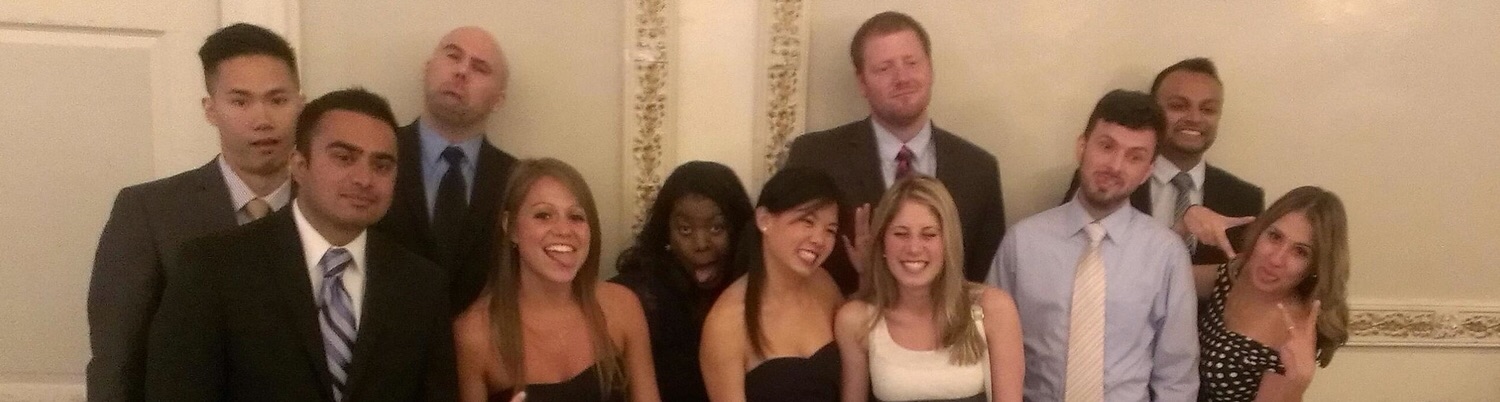
Each has toiled within the confines of a profession on the brink of meltdown and burnout. Each has contemplated a life outside of medicine. Each has longed for the ability to practice as they preach.
Each of them, now on the precipice of completing the journey to Attending Physician, having been taught to “Do No Harm”, have a host of decisions to make.
Who have they become amidst the countless hours of training?
How can they salvage their innate desire to do good, damn the barriers and obstacles placed in front of them?
Are they ready for what lay ahead?

For those who have joined Magneto on this winding journey, one chapter will soon come to an end.
But the author’s pen is patiently waiting, the next chapter slowly bubbling to the surface.
The Allies of Magneto, a group matured by the innumerable hours caring for those who seek their aid, hope to simultaneously shape their future and the future of those they serve.
No longer will the icy depths of a Code Blue, the uncertain waters of a Septic Shock, the calamity of a bezerk office patient, and the simultaneous terror and awe of newborn’s cry, cause them trepidation.
Instead, they will emerge from a 3-year-long cocoon to become the next generation of Family Physicians, forever remembered in my mind as The Allies of Magneto.

 Elbrecht's Corpuscle