The Opposition to Magneto
 

image


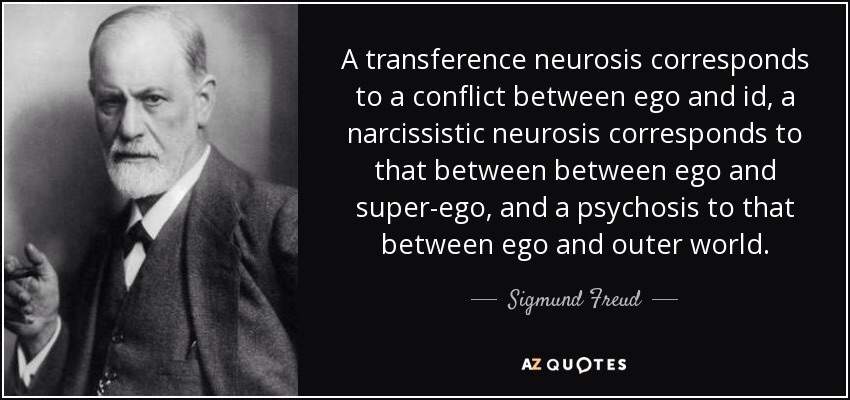
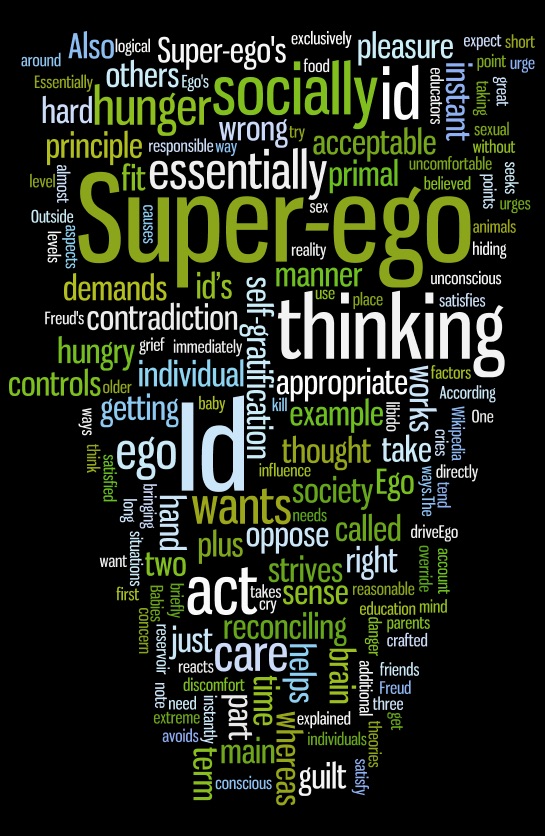
Almost 100 years ago, the world-renowned psychologist Sigmund Freud unleashed his theory of the human psyche. He theorized our being to be composed of three parts, each of which develops at different but early stages of our life; eventually, each is meant to interact simultaneously to help us navigate our world.

If Freud’s theory is accurate, my Id, Ego, and Superego completed their development nearly 30 years prior to my first day as a Resident Physician. But in the course of reflecting on the end of my second year of Residency, I have discovered a new wrinkle to Freud’s century-old theory.
 

image


In The Rise of Magneto, I thought about:

The transition from “medically knowledgeable but clinically deficient intern” to “clinically seasoned and seemingly knowledgeable Senior Resident” is fraught with pitfalls: sleep deprivation, anxiety-producing clinical scenarios, life-and-death struggles, and glaring holes in medical knowledge.

Nearly six months have passed since I described the The Rise of Magneto, the alter-ego bestowed upon me in the heat of a tussle with Black Betty (Night Float), and I have found the term “alter-ego” to be a slight misnomer; Magneto is my new Ego, not simply an alternate.

Freud described the Ego as ‘that part of the id which has been modified by the direct influence of the external world.’ In my case, Magneto is the result of my Id having experienced the responsibility, stress, failures, and successes of becoming a physician.

If Magneto is my Ego, then the other components of my psyche, the Id and Superego, are somewhere, developed and competing amongst the other experiences of Residency. If Freud’s theory is accurate, they are, in effect, The Opposition to Magneto.
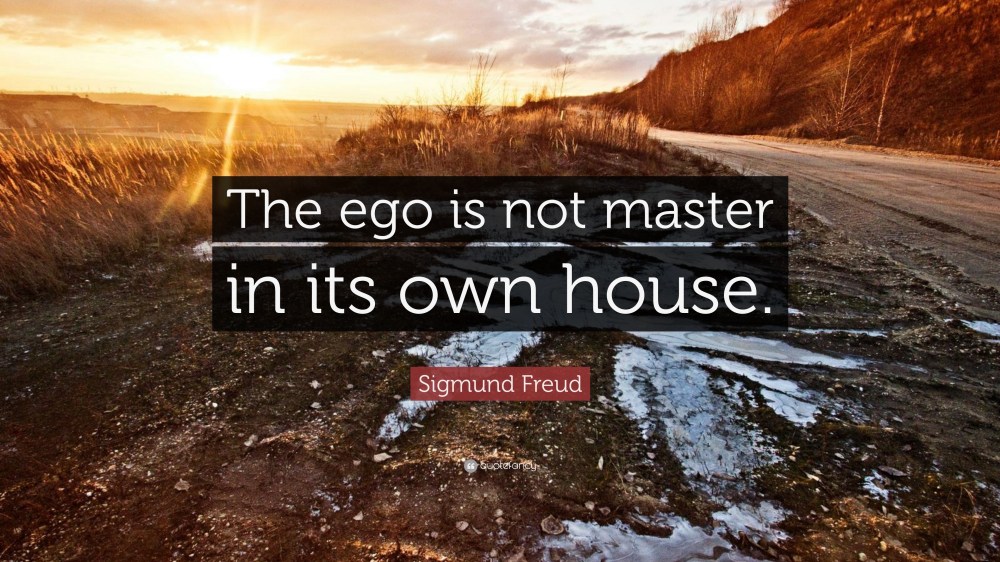
 

image.jpg


My Id was the primitive and instinctive component of who I was before Residency: Ean, a 34-year-old grown man who had completed medical school as part of a greater mission.

In his initial introduction to the responsibility of being a physician, Ean the Intern could engage in what Freud described as primary process thinking; an amalgamation of my primitive, illogical, irrational, and fantasy-oriented beliefs emboldened in medical school. (Ex. Engaging in a tit-for-tat with my senior Resident on my first go-round of Black Betty.)

 

image


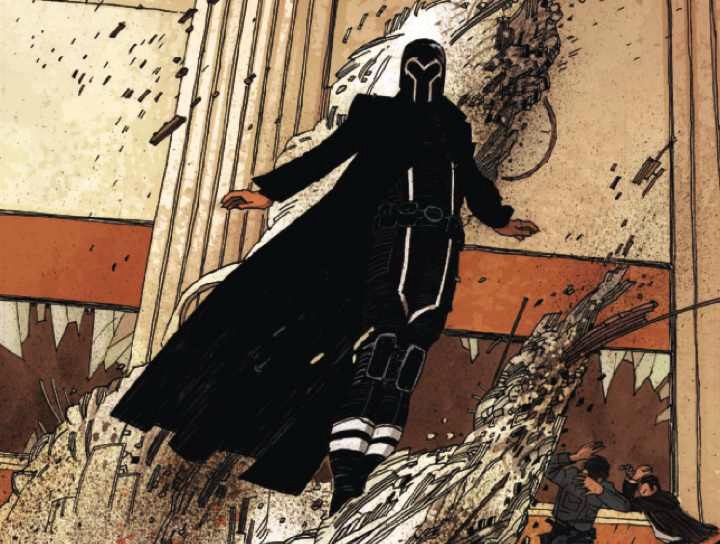
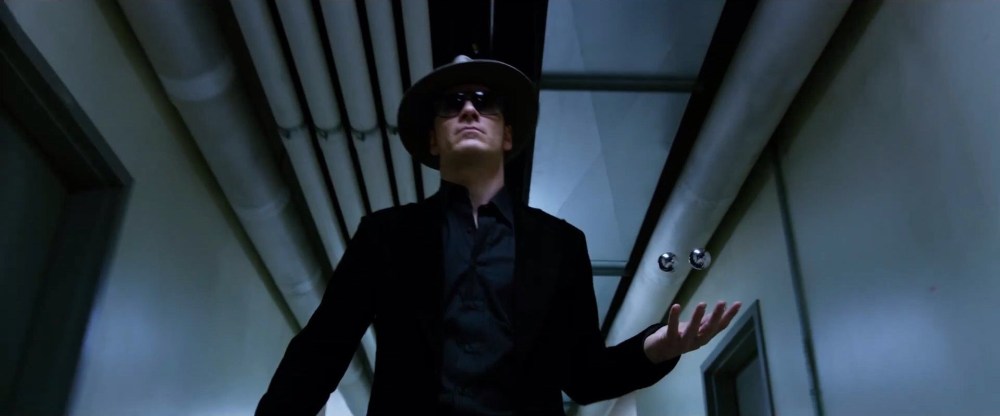
As Ean the Intern’s experiences in Residency began to mold him, Magneto developed to mediate the unrealistic Id and the external world. No longer was I left to the primary process thinking of Ean the Intern, relegated to the impulsive and unconscious desires of a newly-minted physician.

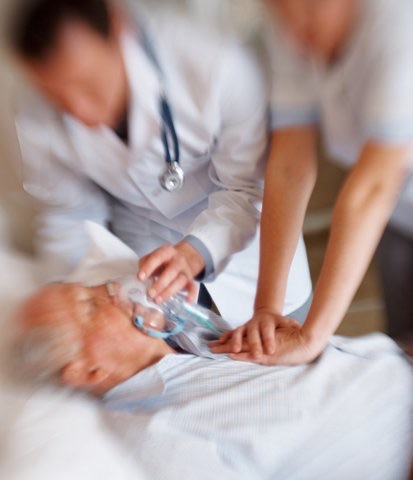
Instead, Magneto brought secondary process thinking, which is rational, realistic, and oriented towards problem-solving. (Ex. Strapping a magnet to the chest of a dying woman to deactivate her pacemaker so I could carry on with the multitude of other patients awaiting my care).
 

image


Now, as I become a PGY-3, my Superego, the last bastion of development per Freud, is taking shape in the form of Dr. Bett the Attending. My psyche’s most mature aspect, the Superego serves two purposes:

1) control the impulses of the Id (Ean, the primitive and fantasy-oriented Intern)
2) persuading my Ego (Magneto, the Senior Resident) to turn to moralistic goals and to strive for perfection

According to Freud, Dr. Bett the Attending incorporates the learned values and morals of medical society into the completed psyche, previously only constructed by Ean the Intern and Magneto, in order to create a fully-functional physician.
 

image


During this second year of Residency, Magneto has struggled to fulfill his obligations to the psyche; it is a constant uphill battle, trying to work out realistic ways of satisfying Ean the Intern’s demands, while simultaneously trying to live up to the expectations of Dr. Bett the Attending.

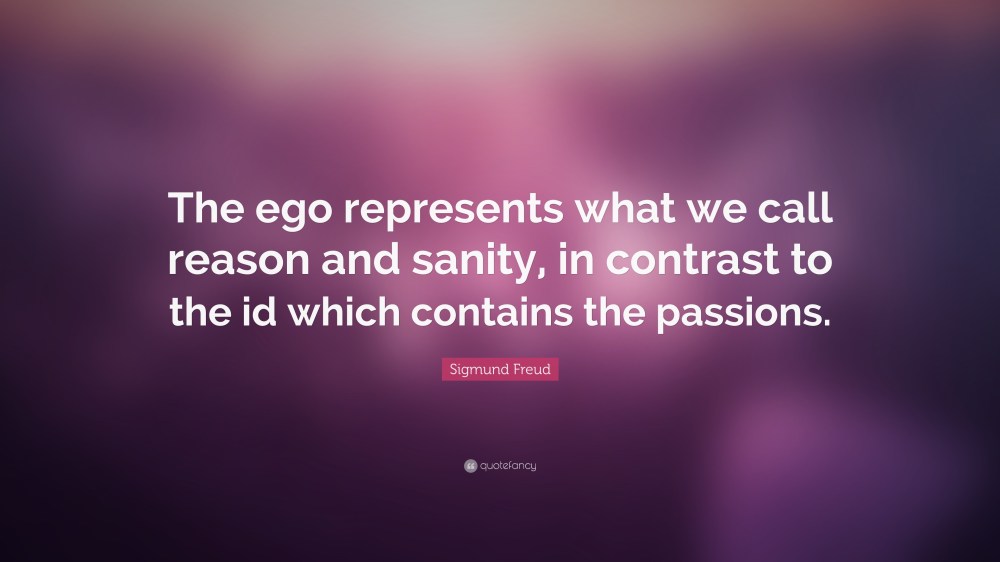
Freud made the analogy of the Id being a horse while the Ego is the rider. The Ego is ‘like a man on horseback, who has to hold in check the superior strength of the horse.’

In my case, Magneto, the Senior Resident, has to hold in check the primitive and unbridled passion, rage, joy, and false-beliefs of Ean the Intern. While harnessing the emotional energy of Ean the Intern, Magneto must institute a plan of action to carry forth the solution to whatever problem arises.

 

image


In the horse and rider analogy, Freud believed the Ego to be weak relative to the headstrong Id, simply doing its best to stay on; in effect, Magneto simply pointing Ean the Intern in the right direction, trying to claim some credit for the successes therein.

Meanwhile, in Freud’s psyche construct, the Superego, Dr. Bett the Attending, watches Magneto try to control Ean the Intern from afar, via his two components: The conscience and the ideal self.

Dr. Bett’s conscience can punish Magneto when he gives in to Ean the Intern’s demands by creating feelings of guilt.

Simultaneously, Dr. Bett’s ideal self exists as an imagined construct of who he should be, representing career aspirations and how to behave as an established member of the medical society.
 

image


Magneto is nearly constantly trying to live up to the expectations of Dr. Bett while attempting to prevent Ean the Intern from derailing Dr. Bett’s ideal self. And when successful, Dr. Bett rewards Magneto with feelings of pride.

In nearly every action, Magneto, the Senior Resident, reflects back on the do-or-die nights, the life-and-death days, the thankful patients, the grateful families, the new-born babies first squeal, and the meaningful and life-long relationships created in the cauldron of uncertainty that brought on his own existence…
 

image


The Id. The Ego. The Superego.

Each acting in concert, for perpetuity; the Id and Superego, tugging at Magneto, drawing on his energy, forever acting as the Opposition to Magneto.

The Rise of Magneto


image

The Birth of Magneto

—–

Since their inception, movies and television have glamorized the life of a physician, often intertwining personal stories of said physicians with the heroic acts they perform and the inherent braininess required therein.

This is only a mild reality.

—–

image.jpg

—–

Sure, physicians are by-and-large smarter than the average bear, but it is our tireless work ethic, attention to detail, and self-loathing which provides us the ability to make such a significant impact in the lives of our patients.

There is little glitz, even less glamour, and only the occasional heroic act in the life of a physician. But the combination of these traits keeps many of us going back to work every day.

No. I mean EVERY day. As in… working EVERY. SINGLE. DAY.

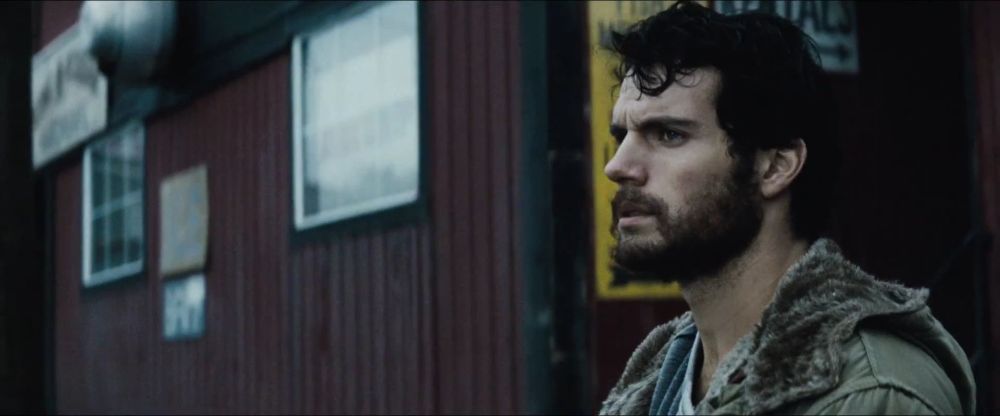
In case you can’t tell I’m currently smack dab in the middle of my second year of Residency (aka PGY-2)… a time I have affectionately termed, “The Rise of Magneto.”

—–

Man-of-Steel-Trailer-Images-Henry-Cavill-as-Clark-Kent

—–

Though some more recent medical dramas have included the lives of Residents, this middle ground in the hierarchy of medicine is poorly understood and recognized.

After completing medical school, newly-minted physicians in the US must complete a Residency before becoming a physician capable of practicing on their own.

In the US, simply completing medical school is not sufficient to become a physician; no hospitals or physician groups will hire you; no insurance will reimburse you.

—–

image.jpg

—–

Instead, you must prove your worth, knowledge, and skills by completing a Residency in the specialty of your choice.

Alas, the general public is not fully aware of this transitional stage in the professional life of a physician. There is either “you are a doctor” or “you are not a doctor”.

And if the patient is sitting in a gown, on an exam table or on a hospital gurney, while asking for medical help and you identify yourself as their physician, “you are a doctor.”

Which, in fact, you are.

Confused yet?

Well, I am too.

Because now that I’m half-way through my Residency, I am starting to find myself straddling the line between being a naive Intern and a full-fledged Attending.

—–

image

—–

The major reason Residencies exist in the US is due to the wide swath of information and skills needing to be honed in order to provide adequate medical care in the 21st century (and the 20th century before it.)

The sheer breadth of knowledge acquired during these training programs is paramount to fully understanding the capabilities, pit-falls, and intricacies of the human body.

It also introduces physicians to the longitudinal aspects of caring for patients and their families.

—–

image

—–

One night while I was an Intern (PGY-1), I responded to an overhead page from the Emergency room; my assistance was requested in the care of a critically ill patient.

Not exactly “my” assistance per se, but by being the Intern on-call, I was part of the team responding to patients who have such a severe infection as to be called “Septic“.

The woman was non-responsive, cool to the touch, and seemingly every square centimeter of her body was swollen with fluid.

Her vital signs on the monitor were tenuous. A quick scan of her body revealed a tube protruding from her pelvis, most likely a surgically placed catheter to drain urine from her bladder.

The daughter sat at the bedside, quickly describing the course of actions she believed could have led to the current predicament.

Despite her seated position at the bedside, her fear was palpable.

I thanked her for the explanation and informed her we would need to pursue aggressive measures to save her mother’s life. Without hesitation, she consented.

Over the next several days, her mother remained unresponsive in the Intensive Care Unit, her life supported by machines to keep her lungs delivering oxygen to her swollen body; medications kept her heart pumping that same oxygen to every fragile cell.

—–

image.jpg

—–

But one day shortly thereafter, I arrived in the ICU and the mother was no longer in the room.

The bed was barren, immaculately cleaned, and prepared for the next critically ill patient.

She had died overnight, her body unable to sustain life despite the most aggressive medical interventions, all while I attempted to regain my cellular integrity through several hours of sleep in my own poorly-cared-for apartment.

—–

image

—–

Six months later, I was working in the office of an Oncologist (a doctor who treats patients with cancer) preparing to see his next patient. While thumbing through her chart, he described the course of events leading her to seek his care.

When we entered the room, I saw a familiar face. The daughter of the non-responsive woman I just described. She smiled and greeted me, though I instantaneously recognized her palpable fear.

The Oncologist was surprised and said, “you two know each other?”

I responded, “yes, I cared for her mother.”

—–

There were no heroic acts which changed the outcome of the mother’s life. Unfortunately, there were no heroic acts to perform for the daughter either.

—–

In our current “illness-based” medical system, which more handsomely rewards interventions while people are ill, even Family Medicine docs like myself tend to more commonly encounter patients when they are in need, rather than when they are well.

{This is more a by-product of when people tend to seek out care, rather than a desire on most physicians part, as Family Medicine is predicated on prevention of illness.}

And sometimes the wellness and illness intersect.

—–

image

—–

Having completed two months of Obstetrics and Gynecology during my intern year, as a PGY-2 I have become “eligible” to work 24-hour shifts on the Obstetrics service.

The Rise of Magneto, indeed.

{By eligible, I mean the cap on my consecutive hours able to be worked is now 24… And I am assigned to work said shifts based on my availability. Which is truly, whenever. But that is Residency. So be it.}

Within the first hour of working my first OB-24, I delivered the baby of a woman I had never met, which is common on the Labor & Delivery service.

After ascertaining the baby’s general health and wellness while identifying the absence of suturing opportunities in the woman’s vaginal canal, I calmly congratulated her, welcomed her son to the world, and exited the room to tend to another pregnant woman.

—–

baby-after-being-born

—–

One week later I was working in the Pediatric Emergency Department, my latest assignment as a PGY-2, when my eyes were drawn to a patient’s Chief Complaint on the Patient Tracking Board.

It read “fever, decreased PO intake”. I scanned over to the patient’s age and read, “7 days.”

On my first night in the Pediatric ED I had seen another 7-day-old with fever and decreased PO (oral) intake. I ended up performing a lumbar puncture that night on that child due to a concern for meningitis.

Thankfully, the test results came back showing that the child did not have meningitis.  It recovered quickly and was home within two days.

—–

image

—–

But that experience had quickly alerted me to the need to act quickly and decisively in order to prevent a dire outcome.

So I clicked my name next to this latest 7-day-old child and quickly proceeded to the patient room to evaluate him.

When I opened the door and introduced myself, the mother and I instantaneously recognized each other. She was gently rocking the boy I had delivered only 7 days previously.

Doctor, please help him.”

—–

image

—–

I had only a week before assisted his exit from his mother’s womb. I assured his mother we would care for him and made my way back to the area where an Attending physician was awaiting my assessment and plan.

While I alerted my Attending to the intimate relationship I possessed with this child and his mother, a few of the other Residents and Attendings happened to overhear the predicament.

They all began to listen in as I outlined my plan to perform a Lumbar puncture to assure he was not rapidly deteriorating at the hands of a bacterial foe.

My Attending agreed, looked at me intently, all the while recognizing my whole-hearted investment in this patient.

—–

image.jpg

—–

There are few instances in medicine as intimate as the delivery as a child, and to have that same child fall ill and somehow end up back within your care in a completely different hospital on a completely different medical service only a few days later, is the essence Family Medicine.

We can be seemingly ubiquitous.

Thankfully, the young boy, only a week into his life, tolerated the Lumbar puncture; his cerebrospinal fluid was absent of life-eradicating bacteria or virus; he was sleeping comfortably in his own crib again within two days.

—–

image

—–

The transition from “medically knowledgeable but clinically deficient Intern” to “clinically seasoned and seemingly knowledgeable Senior Resident” is one fraught with pitfalls: sleep deprivation, anxiety-producing clinical scenarios, life-and-death struggles, and glaring holes in medical knowledge.

But at the moment of greatest despair, when the chips are down, the night can’t end, the day can’t come soon enough, and the struggle to become a good physician seems out-of-reach, the Intern becomes a Senior Resident.

And reflects back on the do-or-die nights, the life-and-death days, the thankful patients, the grateful families, the new-born babies first squeel, and the meaningful and life-long relationships created in the cauldron of uncertainty…

… bringing on The Rise from Intern to Senior Resident.

In my case, The Rise of Magneto.


Death Becomes Us…

image

—–

If everything goes as imagined, my final breaths will be exhaled several decades from now as I look out upon the Atlantic Ocean.

Watching the waves crash upon the shore, I will be alone. By choice. Not wishing anyone I love to see me as a dying corpse, gasping for my last breaths. Hopefully the tide will come crashing in, and, in its return to the ocean, take my body too.

I will have said goodbye to my surviving friends and family while still upright and mobile. Exchanging long embraces, we will depart each others presence to live another day.

My wife, ever accustomed to my eccentric nature, will have laughed, and cried, when the day came for me to leave her, just as I had promised her long before. We will have sat beside our parents, friends, perhaps one of our children, and other loved ones while they succumbed to life’s final crescendo. They not wanting to leave us, and we, not wanting to leave them.

But, Death Becomes Us.

—-

—–

The first time I crushed a man’s ribcage, I was furiously trying to save his lifeless body. As a third year medical student in the ICU, I was tasked with performing chest compressions on a corpse who had, in written certitude, asked for all measures be performed to save his life.

As I felt the brittle bones disintegrate beneath my force, I continued in rhythmic fashion, counting under my breath, and wondering to myself:

“Did anyone see my millisecond of hesitation after the first rib snapped?”

—–

image

—–

He did not survive. Despite medical science, unwavering will power, the love of everyone in his life, and perhaps a god somewhere in our cosmos, he died like everyone else who had ever lived before him.

He died. Just like I will. Just like you will.

In the three years since that time, I have been present for the deaths of innumerable people. I have lost count.

I don’t believe the number is actually any more than 50, but that’s enough for me to recognize I will die too.

—–

image

—–

As a physician, I have had the responsibility to pronounce the death of a once-living person. The first time I was called upon to do so, I walked to the patient’s room, and therein, found an elderly woman sitting beside her husband’s dead body, surrounded by her adult children.

The body was already in rigor mortis, laying in the bed, with a crisp white sheet covering the torso, the arms extended beside the chest, and the eyes and mouth closed; forever.

I politely introduced myself to the family, reached my arm out to hold the hand of the widow, and clasped it in my hands for a moment.

I informed the family I would need a moment to examine the body, but they were welcome to stay at the bedside. The widow rose from her seat, looked at her dead husband’s body, and asked to be excused. She stepped behind the room-dividing curtain; one of her daughters joined her.

—–

image

—–

The diaphragm of my stethoscope was placed over the Aortic region of the chest. My right hand made its way to the left wrist; the pads of my first and second fingers palpated for the radial pulse.

I closed my eyes and listened for a heart beat I knew I wouldn’t find. Simultaneously, my fingers pressed gently, trying to feel a pulse I knew wasn’t there. I moved my stethoscope around on the chest, never once hearing a heart beat or breath.

For completeness, I firmly pressed on the nail bed of a finger, trying to elicit the jerking motion a live man would provide. There was no response. I withdrew my penlight from my left chest pocket, spread the eyelids, and shone the light directly on the pupils. They were fixed and dilated; they did not react at all. I gently released the eyelids.

—-

—–

I respectfully informed the family my examination was complete and provided my condolences.

The widow appeared again and sat back down beside her lost love. I exited the room and proceeded to file my pronouncement of death. I entered a note in the now dead patient’s chart. I called the physician of record to inform he or she of the passing.

In the subsequent months, I have made similar appearances at the bedside, sometimes finding grieving family, other times a vacant room. Each time, the pronouncement was the same.

The time I spent in the ICU as a medical student was easily eclipsed by the four weeks I spent therein as a Resident Physician. Death was only an embolus, cardiac dysarrhythmia, antibiotic-overpowering infection, or apneic respiration away for each person. And on numerous occasions, those life-ending insults occurred simultaneously.

—–

image

—–

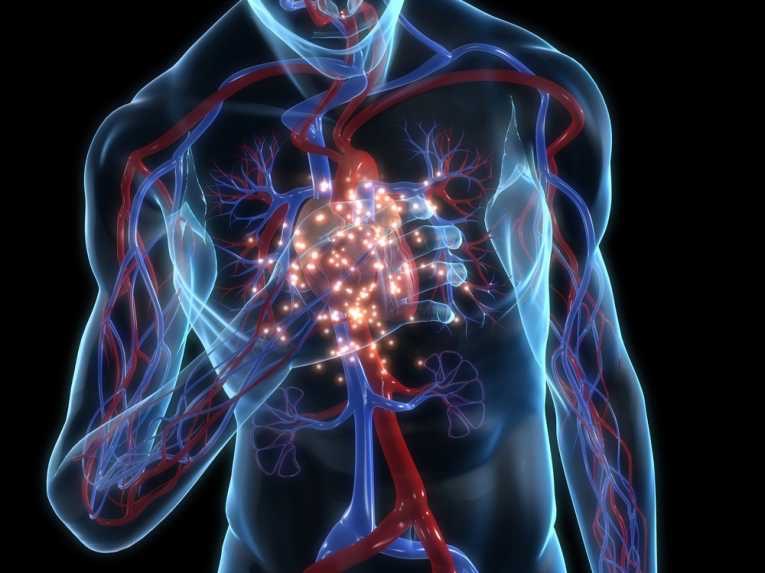
The four weeks of care I provided in the ICU was tempered by the realization that some of it would be futile. A concerned son, seated at the bedside of his father, stopped me one afternoon and asked, “Excuse me doctor, what does it mean if the brain waves are prolonged?” I took a hard look at his father, a man I had never met, who ended up as my patient that morning after a massive heart attack deprived his brain of its needed oxygen, and then looked back at the son, himself a grown man older than I, and took a deep breath.

Nothing I could explain would bring his father back. Nothing we could do in the ICU would change his outcome. We are here for a finite amount of time. And in essence, I explained to a son that his father’s time had come.

I did not feel relieved that I could near-effortlessly explain the basic inner working of the heart, brain, and circulatory system to this man; all of which I had acquired after countless hours of study and dedication. Instead, I felt emboldened to never have someone utter the same nuanced phrases to my own son.

—–

—–

Similar occurrences happened on a daily basis for four weeks. For the fortunate, the family would withdraw the aggressive machinations, which, if prolonged, would have provided a miniscule chance of survival. For the unfortunate, their own wishes (and sometimes their family’s) had been so misguided as to result in aggressive and invasive procedures, which, if successful, would provide only a miniscule chance of survival.

Yet, I know the final minutes, hours, and days provided to the loving members of those patients’ families was beyond worthwhile. To them. To the patient. And to me.

—–

image

That Afternoon in Dumbo

that afternoon in dumbo

[Dumbo is an acronym for Down Under the Manhattan Bridge Overpass.]

I think most people would prefer to fall in love only once in their life. It starts with meeting the man/woman of your dreams and ends with spending the rest of your life happily ever after. At least, I suppose that is how it works for some people.

I would argue that it is probably the best way to do it.

When you fall in love, you feel as if that person completes your life, gives it new meaning, makes you feel on top of the world, and you can’t imagine your life, as you know it, continuing on without them. From there, you build a life together; your lives overlap upon the same track until “death do us part.” Your life revolves around common beliefs, life goals, parenting desires, monetary expenditures, etc. Soon enough, your life would not be YOUR life without that person.

——

—–

There is plenty of sociological research to show that besides being the lead-in to the romanticized version of the “American Dream”, the path I outlined is the most likely to result in the success of you, your significant other, your children, your extended family, and your friends.

It is not only a romantic version of events, it is reality.

But what if your replace “death” with “You know what, you are great and all, but I think we’re done.” Such a change might signify that love never was the binding measure involved in the relationship. Maybe it was lust, which is a more transient feeling and can last for long periods of time, but is subject to the whims of “you got fat”, “you family pisses me off”, or “damn, is that good-looking girl/guy over there checking me out?”

—–

pieter_bruegel_the_elder-_the_seven_deadly_sins_or_the_seven_vices_-_lechery-lust

—–

I would suggest that in those cases, it was likely lust, not love, that led you to spend so much time with someone, maybe start a family, get a pet, or pool your resources and get a place together.

However, if you replace “death” with “something has changed”, it most likely means that your reciprocal love, the one thing that bound you together, has ended.

“Something” could be anything. Maybe it’s an identifiable entity like, “I decided I don’t want children”. Or a power-hungry grab resulting in, “my job means more to me than you do”. Or the abysmal and wishy-washy, “I love you, but I’m not IN love with you.”

Another replacement for “death” could be the painful recognition that the love you felt, which you could never truly qualify, isn’t there anymore. And when you go searching for it, trying to think back to what it was, identify it, and re-infuse it into your life, you can’t seem to catch it. The spark of lightning that started the whole thing is gone.

—–

——

Deep thoughts, I know.

On an afternoon in Dumbo, a cozy neighborhood on one side of the Brooklyn bridge, I fell in love for the third time in my life.

—–

osho-wake-up-dangerous-love

—–

If you are fortunate/unfortunate enough to fall in love multiple times in your life, you know love when it hits you again. You feel different. Your outlook on life is different. Your willingness to sacrifice is different. You are again able to share the things that you held as your own (your deepest thoughts, dreams, and desires) with this person.

Unlike the first time I fell in love, I didn’t fall in love with AB the first time we met, but she was beyond intriguing to me. I couldn’t quite capture my feelings for her on that day, but I knew she was different from any other woman I had ever met. She was immediately the person I wanted to spend as much time with as possible, a fact that could certainly not be said for every woman I have ever dated.

—–

—–

In retrospect, it had only held true for the two loves before her.

But that afternoon in Dumbo, between scoops of Peaches and Cream on a calm Sunday, we looked out upon the greatest city in the world, shared our hopes for each other, exchanged longing glances and affectionate kisses, and talked about how we should progress in our relationship.

Almost four years had passed since the most meaningful relationship in my life had ended, but by the end of that afternoon, I was thankful for not throwing myself into any of the other possibilities that had arisen since that time.

—–

LustThe_Seven_Deadly_Sins

—–

During those four years, I hadn’t lived a celibate life, but I had been careful to not mistake my lust for love. There had been two other women enter my life during that time whom I thought I could love, but neither of those materialized into any sort of relationship. Even so, I was grateful for fate intervening in those instances and allowing me to have that afternoon in Dumbo.

The end to my most meaningful relationship, with the woman I considered to be my wife, and the future mother of my children, was beyond painful. It came during a period of my life already teeming with enough uncertainty that even the best of my coping mechanisms were battered beyond belief when all was said and done. It haunted me for years, even though I was outwardly moving on with my life. She had been the second love of my life.

—–

—–

My first love defined my ability to love. What I mean by “ability to love” is that I discovered “love” by meeting her. Everything else I had ever experienced with other women was immediately demoted to something less than what I felt for her.

I felt compelled to protect her, to make her feel special, and I wanted to be with her. But I didn’t know it was  “love” when it happened. It appeared so incredibly out-of-the-blue that I couldn’t understand it. Instead, I waded into it cautiously and confusedly, eventually leaving only a longing, sometimes standoff-ish friendship. By the time I realized what I had done and told her how I felt, it was too late. She put up her own defenses, an act of self-preservation, and told me she no longer felt that way about me.

Yet, she became the blue print for all of my future relationships. I knew I wanted to feel such strong emotions for the woman I spent the rest of my life with; this kept me from lying to myself about my feelings for other women I dated. So when three years later I met the second love of my life, I knew exactly who I had standing in front of me.

—–

Why-woman-love-man-5

—–

That afternoon in Dumbo hadn’t swept across me like the night I met my first love or the afternoon I met my second, but my feelings were unmistakable. I had been waiting for them to return, like a switch begging to be flipped. When she grabbed me by the shirt, stood up on her tippy toes, and pulled me close to her lips, I knew she felt the same way.

But when you are fortunate/unfortunate enough to have fallen in love more than once, you know that it could end. You don’t want it to, but in the back of your mind, in the depths of your sub-conscious, you know that it can.

Perhaps it is this knowing that makes it possible for the love to end in the first place. If it never enters your mind that it could possibly end, then what sense does it make for it to end.

—–

Hate_and_Heartache_by_SeasonsofPast

—–

It’s kind of like having a favorite book, but the author comes out with a revised edition a couple of years later and adds another chapter that changes the entire point of the book; the plot has changed, the characters have a different context, and the ending no longer seems to fit the story. If you don’t bother reading the revised edition, then it is still your favorite book of all-time.

But if you get curious one day and step into a bookstore, pick up that revised edition, with its new glossy cover and updated photo of the author, and start reading the new chapter, by the time you finish, you promise to throw away the copy at home and find a new favorite book.

The end of my relationship with AB didn’t come with a “death do us part”, as both she and I are alive and well. Surprisingly, it came not long after that afternoon in Dumbo. Yet, its length doesn’t dismiss its reality. It simply reminded me of love’s delicacy.

—–

—–

Thankfully, having been in love before, I know that it can happen again; At the most unlikely of times. Maybe with the most unlikely of people. And perhaps, with the most unlikely of outcomes.