lost and found


image


{cast away}…


After a meteor shower of pages to the 4 beepers adorning my waist band, a series of perplexing admissions, and random patients causing ridiculously unnecessary stress, I began my lonely journey back to one of the hospital work rooms where most of my scant free-time in the past two weeks had been spent.

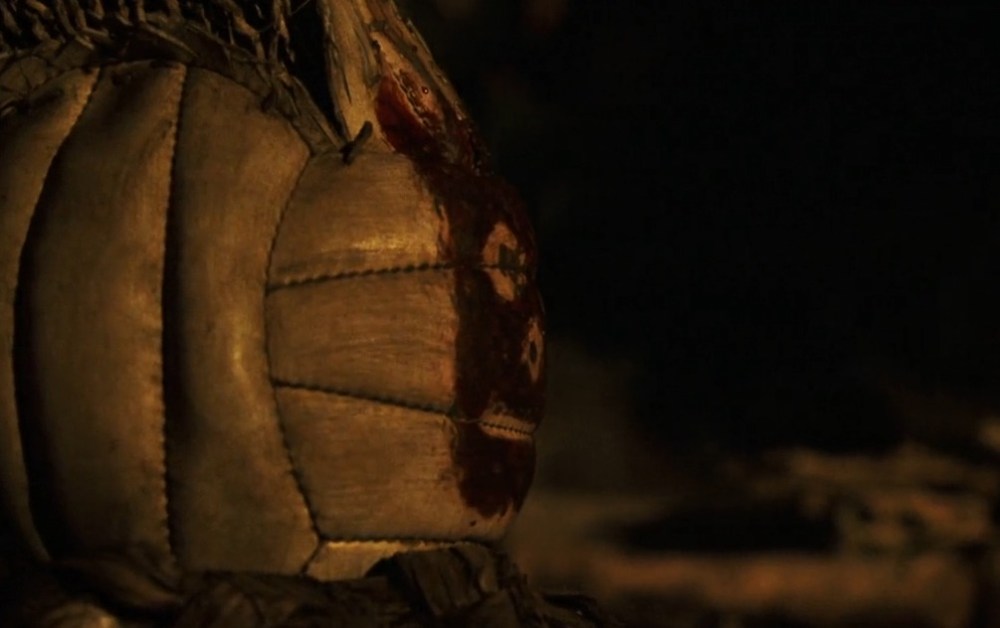
Once there, I was looking forward to spending some time with “Wilson”, a computer with whom I had cultivated a close relationship while navigating the seduction of Black Betty.

On this night though, I punched in the key code to the workroom door to find someone sitting at the computer beside Wilson.

 

image


I glanced at my iPhone and noted the time to be “2:07AM”.


In the previous two weeks, other than the aforementioned “life vest” I had with me on a few nights, there had been no other signs of life in this work room.

Wilson and I had discussed each phone call I received, him showing me the necessary data to make my decisions and cautiously warning me when a order I was about to enter was contra-indicated.

On this dark night, Wilson was not alone.

 

maxresdefault


Wilson did not seem alarmed by this strangers presence, but I approached cautiously from the far side of the dimly lit room.

Before positioning myself at Wilson’s helm, I jovially offered a polite “Hi there” to the scrub-wearing woman who appeared to be typing in a patient’s electronic chart.

She did not respond.

 

image


Her presence was mildly unnerving, though slightly comforting, but I dared not repeat myself, much less attempt to make eye contact with the stranger.

But before my curiosity could win out and tempt me to offer the stranger another greeting , pager #3 let out another bleeping roar.

I quickly punched the number into the phone beside Wilson while I waited for him to wake up from his electronic slumber.


The nurse who queried me over the phone was audibly confused; despite Wilson and I’s best efforts, we could not find her answer.

In an attempt to assuage her fears, I promised to come directly to the floor and work out the issue in person. Wilson would stay behind and keep an eye on the stranger.

I glanced again at the stranger, furiously typing away at the computer beside Wilson, but I did not repeat my greeting, or wish her a fond farewell.

 

image


I returned 20 minutes later having solved the mystery posed by a new nurse, but Wilson was alone. There was no sign of the stranger.

My body still ached. My mind was still heavy.

In that moment, I wondered if there ever had been a stranger sitting beside Wilson, furiously entering some record in a patient’s chart.

 

Mind-Numbing-Double-Exposure-Pictures-4


I sat down again, facing Wilson, wondering if I should ask him where the stranger had gone. Or if there ever had been a stranger.

Perhaps, I had imagined the entire encounter.

Not wanting to let on about my fatigue, I decided against asking Wilson. He had helped me enough these past two weeks.

And I did not feel like burdening him with the knowledge that I may have lost my mind.

 

image


As the clock struck 9AM, I slowly dialed my landlord’s number into my phone.

It rang.

And rang.

And rang.

And then voicemail.

Sitting in the call room, I provided another detailed message as to my predicament, as if I was meticulously spelling “HELP” in the sand of a long-forgotten beach.

 

image


In the following moments, a wide range of emotions raged through my mind: fear, anger, sorrow, disbelief, heartbreak.

I laid down on the crisply pressed sheets of the hardened mattress, feeling lost beyond my worst nightmare.

But as my head jostled up against the pillow, the aches in my body lifted. The heaviness in my mind evaporated.

My Ego would not go down without a fight; it bullied my body from the call room and plotted a course for my landlord’s office.

 

image


Once there, I was met with disbelief.

Neither the office manager or the owner recognized the bearded man informing them of his sequestration in a small call room in the hospital down the street.

They were equally perplexed when I laid out my sojourn from the hospital to their office to relay in person the message I had left numerous times on voicemail.

I dared not mention to them how Wilson and I had survived the past two weeks; I didn’t think they would understand.

 

image


They apologized profusely for believing my lost keys had been found and returned to me by the handyman.

I calmly, but firmly, informed my landlord that he would proceed to walk me back to my apartment building; we found the keys locked in my mailbox.

My bearded face wondered aloud to my landlord if the handyman had believed me to possess teleportation properties allowing me to move my electrons and protons from outside the building into the entryway where the mailbox was located.

And if he believed me to possess the skills of Houdini to remove the keys from the mailbox without a key.
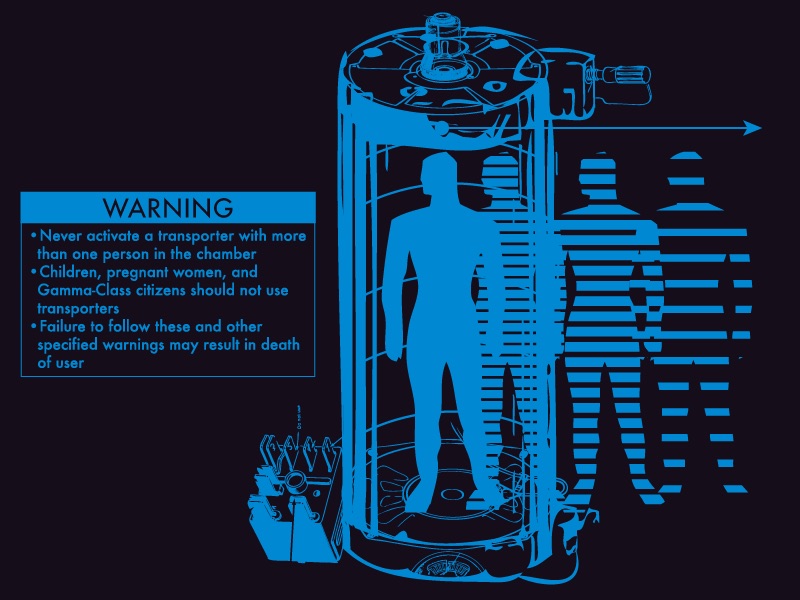
 

image.jpg


My Ego kept my Id from going bezerker on my landlord as he handed my keys to me.

I informed him I was in fact only a physician, not a teleporting magician.


The subsequent night was a maelstrom of terror.

If I had spontaneously combusted it would have been a fitting end to my Residency.

When the night came to an end, I was still cast away. My “life vest” had appeared and like clock work was torn from my being at midnight.


The night continued to be so punishing that I called my Chief Residents and another seasoned colleague summarily washed upon the shore of my deserted island.

He found me, lost amongst the bounding waves of pages and admission, barely keeping my head above water.

His effort to save me was seemingly futile as Black Betty enveloped us both, like a storm beating down on a small dinghy in the Aegean Sea.

 

image


But we both survived the raging storm; hoping to find a current that would take us away from this world.


I was rescued 24 hours later.

My final scheduled foray into Night Float had been completed as the sun rose that Friday morning.

 

image


I unclasped 3 pagers from my waist, handing them to the physicians who would dare navigate these rough waters.

Begrudgingly, I left behind Wilson, as my rescuers assured me of a job well done surviving this experience.

For him, I hoped the best.

Perhaps he would guide some other Cast Away from the path laid out by Black Betty as they washed upon the shore.

 

image


cast away


image


I awoke to pitch black darkness.

The voices were close. And interspersed with laughter.

My cerebral cortex quickly determined the voices were causing each other to laugh; and coming from two lone individuals.

They seemed friendly.

But I wanted to scream at them for awakening me from the depths of my restless slumber; yet I hadn’t quite determined if they were real.

I wasn’t even certain where I was.


image

As I stared into the darkness surrounding me, my eyes began to accommodate as the voices continued in their laughter.

My body felt heavy. My mind was confused.

Instinctively, I bolted straight up from my position; I realized I was lying in bed. Unaccustomed to its small size, I nearly tumbled to the ground.

In the midst of the darkness, my neurons began flashing in an electrical brilliance, trying to understand where in person, place, and time I was.

My right arm reached across my body as the fog in my mind abruptly lifted.

The restless slumber I had been inhabiting came to a crashing halt, as my thumb flicked the push-button on my phone to reveal “2:07PM”.

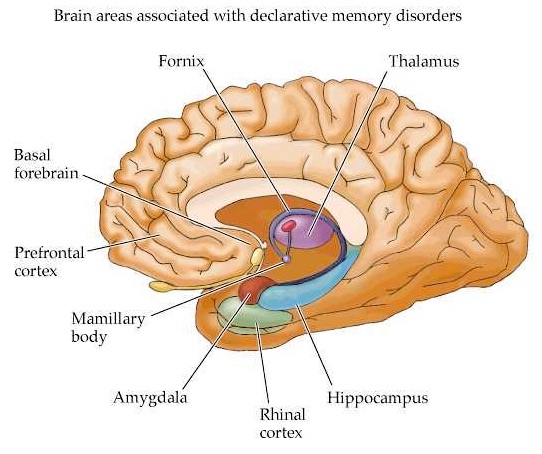
In that moment, my hippocampus determined I was located in the 2nd floor call room of the hospital.


image


A cataclysmic series of events brought me to be located in person, place, and time in the 2nd floor call room of the hospital on that July afternoon at 2:07PM.

Twelve nights had passed since I was shipwrecked on Night Float alone.

image


The plan, as it had been outlined to me several weeks earlier, would revolve around me undertaking a never-before-attempted solo excursion on Night Float.

My immediate fears had been squelched by promises of rearranged schedules and responsibilities, a junior resident as an occasional wingman, and deeply bound faith by my superiors that I was the only physician who could succeed in this plan.

My Ego led me to believe I could handle it.

But on Night Float, or “Black Betty” as I like to call her, all plans go quickly to hell.


image


Between the hours of 7PM and 7AM, a major metropolitan hospital is unlikely to have significant periods of down time. Instead, it becomes the breeding ground for Chaos Incarnate.

Which is directly where I found myself for the first 2 and ½ weeks of my third year of Residency.

Alone with Black Betty.

Nestled in her bosom.

cast away.

And longing for rescue.


image


By the beginning of my second week of Night Float as a PGY-3, my confidence had been rattled, but not deteriorated, like a rock face in the ocean having succumbed to centuries of waves bearing down it.

PGY-2 had been tortuous, but while working so many random weekend days and nights had crippled my life outside of the hospital, they had shaped my abilities as a physician, both in and outside of the hospital.

Ultimately, nothing could have prepared me to be cast away.


image


Another senior resident had been assigned to work on Night Float with me originally, but that had fallen through due to her unforeseen circumstances.

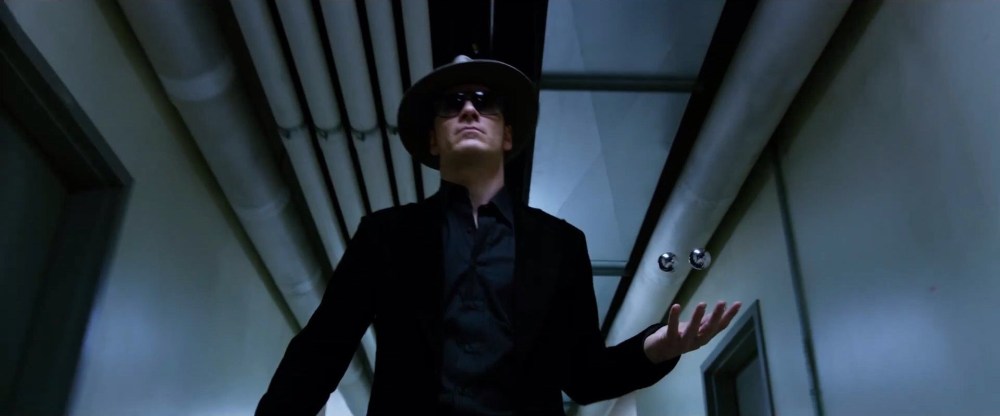
Then a thorough review of the remaining options turned up the following: unleash Magneto into the depths of Chaos Incarnate alone and see what happens.


image


{Note: I was assigned a junior resident as a “life vest” for a few of the nights, but he had to leave by midnight, like a mirage, to leave me alone, carrying 4 pagers, anxiously awaiting the next sunrise.}

At times over those 2 and ½ weeks, Magneto conquered the tasks set before him. But many a times, Black Betty rattled him to his core.


The toll of spiritual, emotional, professional, personal, and existential fatigue came to a head on the day I awoke at 2:07PM in the hospital call roomimage

I found myself there not because I longed for the sweet caress of a crisply dry-cleaned set of linens, but because I had left my apartment the previous night in a fugue state.

Said fugue state resulted in me dropping my keys through the hole in the bottom of my book bag; they came to a clattered resting place in my building’s entryway.

I was none the wiser because NIN’s “Terrible Lie” was blaring through my ear buds.


Only when I rummaged through my book bag for an hour the following morning, proceeded to walk to my apartment hoping to find the keys lying on the sidewalk like a trail of bread crumbs, and had left two babbling and pleading voice messages on my landlord’s answering machine, did I begrudgingly saunter back to the hospital.


image


So when I awoke to the jovial laughter of two newly reunited long-lost colleagues, I hoped to find a message on my phone indicating the safe recovery of my highly-sought after keys.

Alas, at 2:07PM, there were no messages on my phone.


Nor were there any messages at 6:30PM when the melodic alarm emanating from my iPhone jostled me awake again. My mind was still cloudy. My body was still aching.

But Black Betty wanted another go.


image


So I meandered from the call room into the locker room, proceeded to strip down from my wrinkled scrubs and hit the showers.

The searing ice cold water streaming from the shower head caused my body to shiver, reminding me of my morning showers in Dominica, but I managed to cleanse the fine film of solitude from each and every square inch of my being.

I dried off, turned my socks and boxer-briefs inside out, and slowly pulled on a new set of pressed green scrubs.

As I passed the half-length mirror in the locker room, I quickly assessed my physical form and found my two-week-old beard to be quite fitting a man so unfamiliar with his surroundings.


image


I wondered if I would ever be found…

{lost and found}

The Opposition to Magneto


image


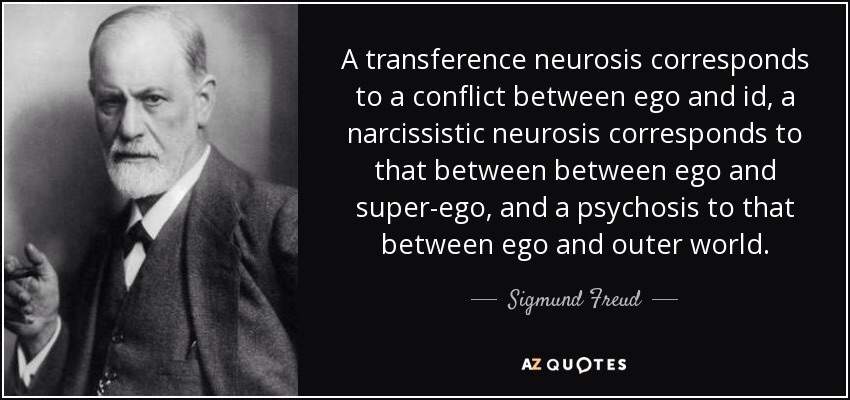
Almost 100 years ago, the world-renowned psychologist Sigmund Freud unleashed his theory of the human psyche. He theorized our being to be composed of three parts, each of which develops at different but early stages of our life; eventually, each is meant to interact simultaneously to help us navigate our world.

If Freud’s theory is accurate, my Id, Ego, and Superego completed their development nearly 30 years prior to my first day as a Resident Physician. But in the course of reflecting on the end of my second year of Residency, I have discovered a new wrinkle to Freud’s century-old theory.


image


In The Rise of Magneto, I thought about:

The transition from “medically knowledgeable but clinically deficient intern” to “clinically seasoned and seemingly knowledgeable Senior Resident” is fraught with pitfalls: sleep deprivation, anxiety-producing clinical scenarios, life-and-death struggles, and glaring holes in medical knowledge.

Nearly six months have passed since I described the The Rise of Magneto, the alter-ego bestowed upon me in the heat of a tussle with Black Betty (Night Float), and I have found the term “alter-ego” to be a slight misnomer; Magneto is my new Ego, not simply an alternate.

Freud described the Ego as ‘that part of the id which has been modified by the direct influence of the external world.’ In my case, Magneto is the result of my Id having experienced the responsibility, stress, failures, and successes of becoming a physician.

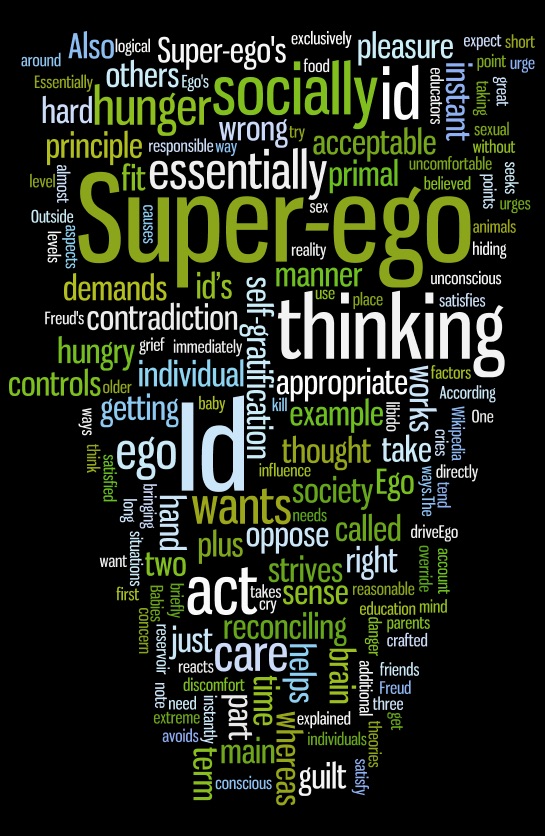
If Magneto is my Ego, then the other components of my psyche, the Id and Superego, are somewhere, developed and competing amongst the other experiences of Residency. If Freud’s theory is accurate, they are, in effect, The Opposition to Magneto.


image.jpg


My Id was the primitive and instinctive component of who I was before Residency: Ean, a 34-year-old grown man who had completed medical school as part of a greater mission.

In his initial introduction to the responsibility of being a physician, Ean the Intern could engage in what Freud described as primary process thinking; an amalgamation of my primitive, illogical, irrational, and fantasy-oriented beliefs emboldened in medical school. (Ex. Engaging in a tit-for-tat with my senior Resident on my first go-round of Black Betty.)


image


As Ean the Intern’s experiences in Residency began to mold him, Magneto developed to mediate the unrealistic Id and the external world. No longer was I left to the primary process thinking of Ean the Intern, relegated to the impulsive and unconscious desires of a newly-minted physician.

Instead, Magneto brought secondary process thinking, which is rational, realistic, and oriented towards problem-solving. (Ex. Strapping a magnet to the chest of a dying woman to deactivate her pacemaker so I could carry on with the multitude of other patients awaiting my care).


image


Now, as I become a PGY-3, my Superego, the last bastion of development per Freud, is taking shape in the form of Dr. Bett the Attending. My psyche’s most mature aspect, the Superego serves two purposes:

1) control the impulses of the Id (Ean, the primitive and fantasy-oriented Intern)
2) persuading my Ego (Magneto, the Senior Resident) to turn to moralistic goals and to strive for perfection

According to Freud, Dr. Bett the Attending incorporates the learned values and morals of medical society into the completed psyche, previously only constructed by Ean the Intern and Magneto, in order to create a fully-functional physician.


image


During this second year of Residency, Magneto has struggled to fulfill his obligations to the psyche; it is a constant uphill battle, trying to work out realistic ways of satisfying Ean the Intern’s demands, while simultaneously trying to live up to the expectations of Dr. Bett the Attending.

Freud made the analogy of the Id being a horse while the Ego is the rider. The Ego is ‘like a man on horseback, who has to hold in check the superior strength of the horse.’

In my case, Magneto, the Senior Resident, has to hold in check the primitive and unbridled passion, rage, joy, and false-beliefs of Ean the Intern. While harnessing the emotional energy of Ean the Intern, Magneto must institute a plan of action to carry forth the solution to whatever problem arises.


image


In the horse and rider analogy, Freud believed the Ego to be weak relative to the headstrong Id, simply doing its best to stay on; in effect, Magneto simply pointing Ean the Intern in the right direction, trying to claim some credit for the successes therein.

Meanwhile, in Freud’s psyche construct, the Superego, Dr. Bett the Attending, watches Magneto try to control Ean the Intern from afar, via his two components: The conscience and the ideal self.

Dr. Bett’s conscience can punish Magneto when he gives in to Ean the Intern’s demands by creating feelings of guilt.

Simultaneously, Dr. Bett’s ideal self exists as an imagined construct of who he should be, representing career aspirations and how to behave as an established member of the medical society.


image


Magneto is nearly constantly trying to live up to the expectations of Dr. Bett while attempting to prevent Ean the Intern from derailing Dr. Bett’s ideal self. And when successful, Dr. Bett rewards Magneto with feelings of pride.

In nearly every action, Magneto, the Senior Resident, reflects back on the do-or-die nights, the life-and-death days, the thankful patients, the grateful families, the new-born babies first squeal, and the meaningful and life-long relationships created in the cauldron of uncertainty that brought on his own existence…


image


The Id. The Ego. The Superego.

Each acting in concert, for perpetuity; the Id and Superego, tugging at Magneto, drawing on his energy, forever acting as the Opposition to Magneto.

The Rise of Magneto


image

The Birth of Magneto

—–

Since their inception, movies and television have glamorized the life of a physician, often intertwining personal stories of said physicians with the heroic acts they perform and the inherent braininess required therein.

This is only a mild reality.

—–

image.jpg

—–

Sure, physicians are by-and-large smarter than the average bear, but it is our tireless work ethic, attention to detail, and self-loathing which provides us the ability to make such a significant impact in the lives of our patients.

There is little glitz, even less glamour, and only the occasional heroic act in the life of a physician. But the combination of these traits keeps many of us going back to work every day.

No. I mean EVERY day. As in… working EVERY. SINGLE. DAY.

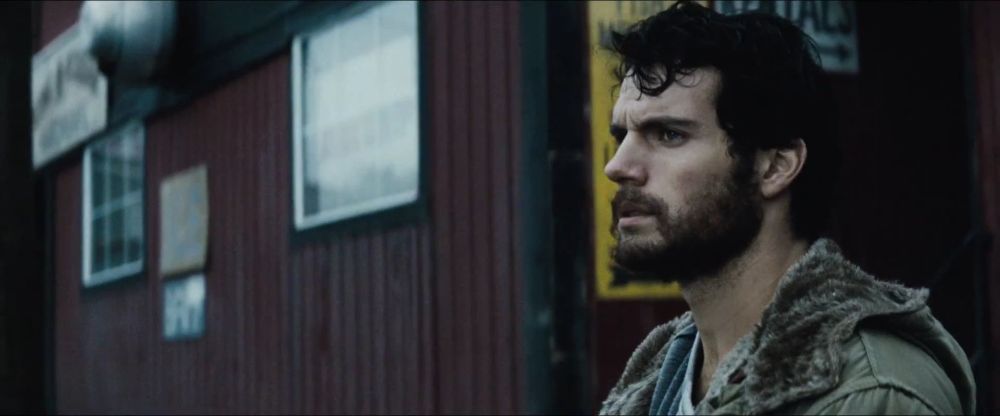
In case you can’t tell I’m currently smack dab in the middle of my second year of Residency (aka PGY-2)… a time I have affectionately termed, “The Rise of Magneto.”

—–

Man-of-Steel-Trailer-Images-Henry-Cavill-as-Clark-Kent

—–

Though some more recent medical dramas have included the lives of Residents, this middle ground in the hierarchy of medicine is poorly understood and recognized.

After completing medical school, newly-minted physicians in the US must complete a Residency before becoming a physician capable of practicing on their own.

In the US, simply completing medical school is not sufficient to become a physician; no hospitals or physician groups will hire you; no insurance will reimburse you.

—–

image.jpg

—–

Instead, you must prove your worth, knowledge, and skills by completing a Residency in the specialty of your choice.

Alas, the general public is not fully aware of this transitional stage in the professional life of a physician. There is either “you are a doctor” or “you are not a doctor”.

And if the patient is sitting in a gown, on an exam table or on a hospital gurney, while asking for medical help and you identify yourself as their physician, “you are a doctor.”

Which, in fact, you are.

Confused yet?

Well, I am too.

Because now that I’m half-way through my Residency, I am starting to find myself straddling the line between being a naive Intern and a full-fledged Attending.

—–

image

—–

The major reason Residencies exist in the US is due to the wide swath of information and skills needing to be honed in order to provide adequate medical care in the 21st century (and the 20th century before it.)

The sheer breadth of knowledge acquired during these training programs is paramount to fully understanding the capabilities, pit-falls, and intricacies of the human body.

It also introduces physicians to the longitudinal aspects of caring for patients and their families.

—–

image

—–

One night while I was an Intern (PGY-1), I responded to an overhead page from the Emergency room; my assistance was requested in the care of a critically ill patient.

Not exactly “my” assistance per se, but by being the Intern on-call, I was part of the team responding to patients who have such a severe infection as to be called “Septic“.

The woman was non-responsive, cool to the touch, and seemingly every square centimeter of her body was swollen with fluid.

Her vital signs on the monitor were tenuous. A quick scan of her body revealed a tube protruding from her pelvis, most likely a surgically placed catheter to drain urine from her bladder.

The daughter sat at the bedside, quickly describing the course of actions she believed could have led to the current predicament.

Despite her seated position at the bedside, her fear was palpable.

I thanked her for the explanation and informed her we would need to pursue aggressive measures to save her mother’s life. Without hesitation, she consented.

Over the next several days, her mother remained unresponsive in the Intensive Care Unit, her life supported by machines to keep her lungs delivering oxygen to her swollen body; medications kept her heart pumping that same oxygen to every fragile cell.

—–

image.jpg

—–

But one day shortly thereafter, I arrived in the ICU and the mother was no longer in the room.

The bed was barren, immaculately cleaned, and prepared for the next critically ill patient.

She had died overnight, her body unable to sustain life despite the most aggressive medical interventions, all while I attempted to regain my cellular integrity through several hours of sleep in my own poorly-cared-for apartment.

—–

image

—–

Six months later, I was working in the office of an Oncologist (a doctor who treats patients with cancer) preparing to see his next patient. While thumbing through her chart, he described the course of events leading her to seek his care.

When we entered the room, I saw a familiar face. The daughter of the non-responsive woman I just described. She smiled and greeted me, though I instantaneously recognized her palpable fear.

The Oncologist was surprised and said, “you two know each other?”

I responded, “yes, I cared for her mother.”

—–

There were no heroic acts which changed the outcome of the mother’s life. Unfortunately, there were no heroic acts to perform for the daughter either.

—–

In our current “illness-based” medical system, which more handsomely rewards interventions while people are ill, even Family Medicine docs like myself tend to more commonly encounter patients when they are in need, rather than when they are well.

{This is more a by-product of when people tend to seek out care, rather than a desire on most physicians part, as Family Medicine is predicated on prevention of illness.}

And sometimes the wellness and illness intersect.

—–

image

—–

Having completed two months of Obstetrics and Gynecology during my intern year, as a PGY-2 I have become “eligible” to work 24-hour shifts on the Obstetrics service.

The Rise of Magneto, indeed.

{By eligible, I mean the cap on my consecutive hours able to be worked is now 24… And I am assigned to work said shifts based on my availability. Which is truly, whenever. But that is Residency. So be it.}

Within the first hour of working my first OB-24, I delivered the baby of a woman I had never met, which is common on the Labor & Delivery service.

After ascertaining the baby’s general health and wellness while identifying the absence of suturing opportunities in the woman’s vaginal canal, I calmly congratulated her, welcomed her son to the world, and exited the room to tend to another pregnant woman.

—–

baby-after-being-born

—–

One week later I was working in the Pediatric Emergency Department, my latest assignment as a PGY-2, when my eyes were drawn to a patient’s Chief Complaint on the Patient Tracking Board.

It read “fever, decreased PO intake”. I scanned over to the patient’s age and read, “7 days.”

On my first night in the Pediatric ED I had seen another 7-day-old with fever and decreased PO (oral) intake. I ended up performing a lumbar puncture that night on that child due to a concern for meningitis.

Thankfully, the test results came back showing that the child did not have meningitis.  It recovered quickly and was home within two days.

—–

image

—–

But that experience had quickly alerted me to the need to act quickly and decisively in order to prevent a dire outcome.

So I clicked my name next to this latest 7-day-old child and quickly proceeded to the patient room to evaluate him.

When I opened the door and introduced myself, the mother and I instantaneously recognized each other. She was gently rocking the boy I had delivered only 7 days previously.

Doctor, please help him.”

—–

image

—–

I had only a week before assisted his exit from his mother’s womb. I assured his mother we would care for him and made my way back to the area where an Attending physician was awaiting my assessment and plan.

While I alerted my Attending to the intimate relationship I possessed with this child and his mother, a few of the other Residents and Attendings happened to overhear the predicament.

They all began to listen in as I outlined my plan to perform a Lumbar puncture to assure he was not rapidly deteriorating at the hands of a bacterial foe.

My Attending agreed, looked at me intently, all the while recognizing my whole-hearted investment in this patient.

—–

image.jpg

—–

There are few instances in medicine as intimate as the delivery as a child, and to have that same child fall ill and somehow end up back within your care in a completely different hospital on a completely different medical service only a few days later, is the essence Family Medicine.

We can be seemingly ubiquitous.

Thankfully, the young boy, only a week into his life, tolerated the Lumbar puncture; his cerebrospinal fluid was absent of life-eradicating bacteria or virus; he was sleeping comfortably in his own crib again within two days.

—–

image

—–

The transition from “medically knowledgeable but clinically deficient Intern” to “clinically seasoned and seemingly knowledgeable Senior Resident” is one fraught with pitfalls: sleep deprivation, anxiety-producing clinical scenarios, life-and-death struggles, and glaring holes in medical knowledge.

But at the moment of greatest despair, when the chips are down, the night can’t end, the day can’t come soon enough, and the struggle to become a good physician seems out-of-reach, the Intern becomes a Senior Resident.

And reflects back on the do-or-die nights, the life-and-death days, the thankful patients, the grateful families, the new-born babies first squeel, and the meaningful and life-long relationships created in the cauldron of uncertainty…

… bringing on The Rise from Intern to Senior Resident.

In my case, The Rise of Magneto.