Gray’s Anatomy… continued
1


Gray’s Anatomy… Part I


Other than the hub-bub of “gowning up” every time I needed to see a patient, I enjoyed the four weeks I spent on the Infectious Disease service for a few reasons. First off, our Attendings (the most senior physician who bears most of the underlying responsibility) had been stellar, taking the time and effort to teach us what we needed to recognize as physicians to take care of these growing humans.

Secondly, I enjoyed the day-to-day interaction with the 3rd year medical students who were on our service. I could remember being in their shoes only a few years earlier and had been fortunate to have a few interested Residents teach me how to become a physician. So in like mind, I put forth the effort to interject some critical thinking into their minds during rounds and support their own journey towards becoming a physician.


http://www.youtube.com/watch?v=-OSI-9fo_5o


Yet, after a month of slipping into a yellow contact precaution gown and sliding a droplet precaution mask over my face every time I entered a patient’s room, I was elated to transition to the Hospital Pediatrics service, a mini-Clin Med of sorts.

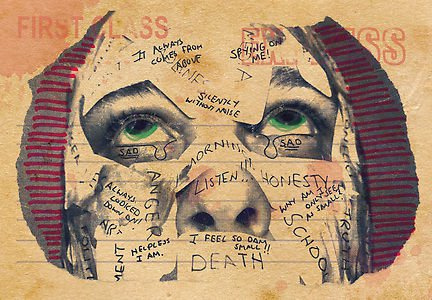
While I was excited to be on this new service, I was shocked to see the amount of behavioral medical issues that came pouring through the ED. Nearly every night, there would be one or two more suicide attempts, psychotic breakdowns, violent traumas, or kids with simply bizarre behavior admitted on to our service.

Even more concerning, was the existence of a second Resident-run Hospital Pediatrics service, who would also “take on” an equal number of similar admissions each night. The number of admissions became so high that at one point a 3rd service was initiated, run solely by Attendings, only for the behavioral medicine admissions.

—–
mental-illness-face-with-eyes-looking-up

—–

There is some messed up stuff going on in this world… And one of the points of identification is the Children’s Hospital Emergency Department.

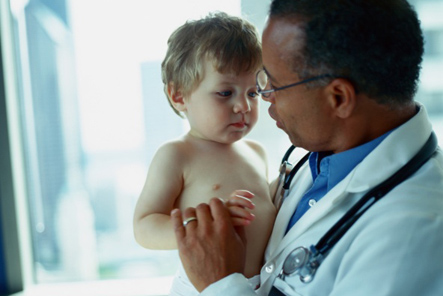
Thankfully, not all is lost and I cared for many children whose medical problems were cured by antibiotics, hydration, technologic advances, and surgical interventions. The look on a parent’s face when their child has survived a hospitalization is incomparable. The intimate relationship you can build over a few hours with another human being when you are their physician, or even more so their child’s, is at the core of why I chose this for my life.

—–
AA042255

—–

The next stop on the Internship Train was a month of Obstetrics and Gynecology. As I mentioned in Part I, my six weeks of Ob/Gyn as a student resulted in a two-week “Journey to Reclaim My Soul.” So I must admit, I came into the Ob/Gyn service as a resident with a bit of trepidation.

While I was excited to see the first breath of life for many new babies, when you know you are going to be the one sitting on a stool at the end of a bed as a woman pushes that oxygen-requiring baby towards you, there is a bit of responsibility that comes into play. Even armed with the knowledge that women have been delivering babies for centuries upon centuries with minimal medical intervention, when you are the one charged with helping the baby out of the vagina, it seems like the most monumental task in the history of mankind.


I had been allowed to assist in a couple of deliveries as a student, so I could roughly remember the feeling of a slippery newborn, but nothing prepares you (or specifically, me) to show up on Day 1 and deliver a baby.

But that is exactly what I did. And then again. And again. And again.


Each time it happened during the service was similar, but also dissimilar, to the last. My participation seemed to be the least natural thing I could possibly be doing at that given moment in time. Yet, I would go over and over in my head what I was supposed to be doing: where I should be putting my hands on the vagina, how I should cradle the baby’s head as it popped out, where I should clamp on the umbilical cord, who should I hand the baby to, and on, and on, and on.

—–
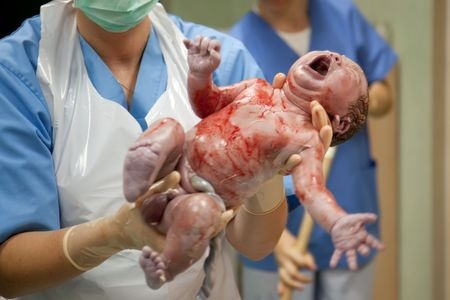
baby-after-being-born

—-

Until all of a sudden, the baby was resting on the mother’s stomach, I had delivered the placenta, cleaned the “birthing area”, counted the instruments and gauze pads, and was ready to tear off the sterile gown, gloves, face mask, and booties like Walter White leaving the meth lab.

—–
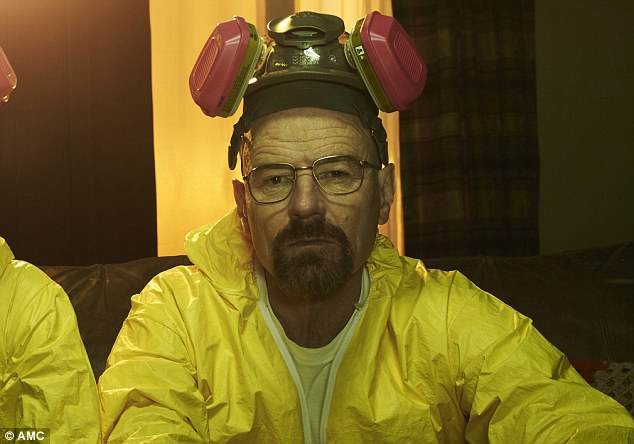
walterwhite

—–

Upon exiting the birthing suite, I would congratulate the mother and surrounding family again, flash a broad smile, and feel the cortisol levels dropping in my blood stream.

A fitting follow-up to Obstetrics and Gynecology was a four-week vacation on our Surgery Out-patient service. Of course, this wasn’t actually a four-week vacation, but when the hours go from roughly 6A-6PM and 6P-6AM to 8a-5p and there are no screaming babies popping out of vaginas, everything seems like a vacation.

Unlike Ob/Gyn where each day was roughly similar in its expectations, this service was filled with a hodge-podge of different surgical specialties. In the Colo-Rectal surgeon’s office I saw more anuses and hemorrhoids than I would care to admit. On Wednesday mornings the Podiatrist would quiz me on foot X-rays and show me how to wield a scalpel on nasty diabetic foot ulcers. The general surgeon had me poking and prodding at inguinal hernias and draining abscesses.

—–
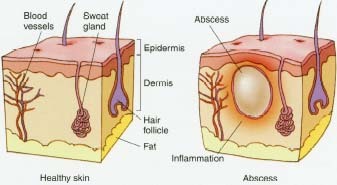
abscess

—–

In order to remind us we were not on vacation, but actually real-life-physicians, I also spent a two weekends that month covering the In-Patient surgical service. In effect, it was the Clin Med for Surgeons: replacing electrolytes, ordering pain medications, changing wound dressings, and evaluating patients for surgical emergencies. Not exactly the exciting life of a Trauma surgeon, but I’ve done worse.

My 7th service found me back on… Clin Med. During our Intern year, we spend two months apiece on Clin Med and OB/Gyn, so making it back to Clin Med represented a half-way point in my year… and gave me the feeling I might actually make it after all.
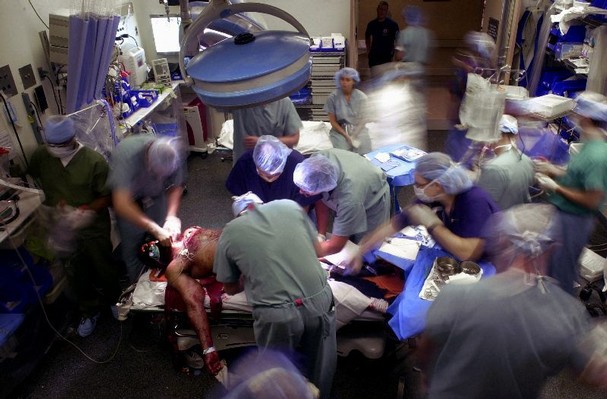
 

Trauma E

Trauma-Team-4

—–

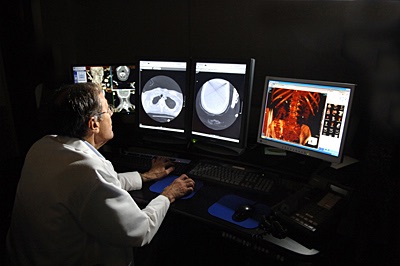
My final clerkship of medical school was a Trauma Surgery rotation in Columbus, OH. As a “Level 1” Trauma Center, I was certain to see all sorts of medical traumas. From horrific car accidents, penetrating stab wounds and life-ending gun shots, to suicide attempts, both successful and unsuccessful, sporting injuries, and the aftermath of violent beatings.

Rather than leaving Columbus and heading to Worcester, MA for a radiology clerkship where I could stay with some of my dearest friends and put in 4 hour days, I decided to stick around Columbus, have a 4:30A wake-up call, 9P bed-time, and expose myself to an aspect of medicine that I was unlikely to encounter in my future practice as a Family Medicine physician.

—–

image

—–

And that is exactly what happened, as the four weeks I was on the Trauma Service was the busiest month in the history of the hospital.

Anyone who knows me well, or has spoken to me about my experiences in medical school, knows that I typically don’t care for the attitudes of surgeons. While it is a profession that requires its practitioners to be exquisitely skilled, the god-like aura that typifies a surgeon, especially towards students, is enraging. (And completely unnecessary.)

—–

image

—–

But despite this behavior, I wanted to be a part of the care of patients who present to the hospital after a traumatic accident… Or as I was resoundingly corrected by one of the trauma surgeons when speaking of a motor vehicle accident (MVA), “it was a motor vehicle collision, as we don’t really know if it was an accident.” Thanks a**hole.

On the student’s first day of any clerkship, the other students, residents, and physicians will ask about the new student’s future career aspirations. This is done to determine the level of shit the student should be given over the course of the next four weeks.

If the student is interested in becoming a member of that medical profession, they will be held to a higher standard, given more grunt work, asked to work longer hours, and expected to know a ton more than someone who’s professional aspirations are 180 degrees different.

—–

image

—–

Thus I found myself having the following exchange with the Chief Resident two minutes into the rotation: “So what year are you?”

Me: “I’m a fourth year. And this is my last rotation of medical school.”

CR: “Are you going into Surgery?”

Me: “No. Family Medicine.”

CR: “What the hell are you doing here?”

Despite this inauspicious beginning to our medical relationship, the Chief Resident ended up being a terrific teacher, physician, and all-around good guy.

His “Surgeon’s Aura” was usually absent. In regards to surgeons, this guy was the proverbial medical zebra that you are taught to stop looking for… But in his defense, it’s simply not common place to see a 4th year medical student sign up for a grueling clerkship as their last hurrah of medical school. Typically, it’s something like… Radiology.

—–

—–

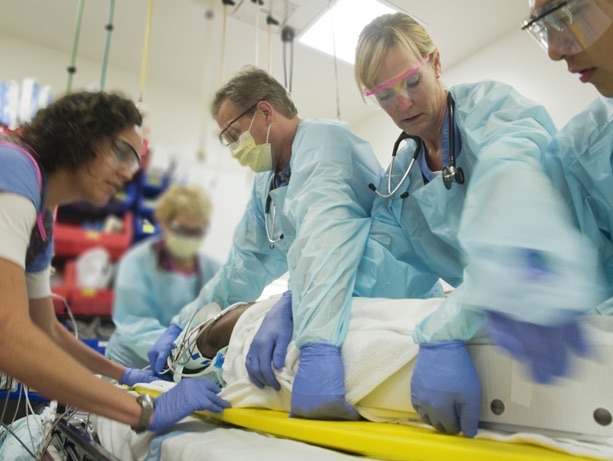
Several of the Family Medicine residents with whom I worked previously had suggested the clerkship, so I went into it with a positive attitude. I figured, if anything, that I could bring some humanity into the trauma bay… as by-in-large, the trauma bay is one of the least “human” experiences in medicine.

Upon a patient’s arrival, multiple people are poking, prodding, screaming, shouting, slicing, sticking, cutting, and tearing… at the life and limb of this latest entrant to the trauma bay.

—–

image

—–

Depending on their level of consciousness, the patient may or may not be screaming and shouting. If they are unconscious, the distractions are seemingly less, but the situation is quite significantly more dire. I preferred the screaming and shouting patients because it meant they were more likely to survive.

But the surgeons, they prefer the deafening silence of the patient because the stakes are raised, the opportunity to transport them to the surgical theater more likely, and their god-like skills are soon to be exercised.

—–

54cfd02ad5c02_-_heartsurgery-01-0611-xln

—–

Over the course of four weeks, I cut off my fair share of pants and underwear, placed innumerable Foley catheters [a tube into the urethra of both men and women], and stuck a gloved and lubed finger into the rectum of more people than I care to admit… but that was all done so that I could say to the patient, “We are going to take care of you”… and to mean it.

In a nutshell, that is the humanity that is absent from the trauma bay. It is a rarity for someone to ask for a patient’s name; no one states a desire to care for you; no one even thinks of doing either of those until the patient is either on the way to the CT scanner, surgical theater, or morgue.

—–

surgicaltheater

—–

But one of the clinical psychologists I encountered during a previous rotation had mentioned a quick anecdote that stuck with me. His father had recently been in an accident and while laying on his back, with numerous people he didn’t know poking and prodding him, he had some of the terrifying fear, anxiety, and uncertainty removed by someone who immediately stated upon his arrival in the trauma bay, “We are going to take care of you.”

—–

2X5_7306

—–

I carried that anecdote with me each time another Trauma was called over the hospital’s intercom system.

I think this kind of humanity becomes absent as a defense mechanism from the care-providers.

Because when someone is wheeled into the trauma bay, their next destination may be the CT scanner to determine the extent of their injury.

Or the surgical theater as a last-ditch effort to save their nearly life-less body.

Perhaps the morgue, because the extent of their injury was too great for even a god to cure.

—–

physiciangod

—–

And when the outcome could be either of the last two, I would imagine it becomes difficult to not simply view each new patient as a body on whom your craft can be practiced… until your craft has provided a life-sustaining result.

Then, after all is said and done, and the patient is alert and speaking to you, their worst day behind them, only then can you entertain the idea of knowing their name; Or offering to care about/for them. Until then, they are simply Trauma [A, B, C, D, etc].

—–

—–


But what if that next day never comes.

And in their final moments no one is calling their name.

No one is telling them that they care about them.

Then what?

—–

image

An Ode to Cincinnati

I never thought I would utter the following statement: “I was in Cincinnati this weekend… and I liked it.” I came to this conclusion while on the dance floor at Wade and Lindz’s wedding listening to The Black Eyed Peas “I Gotta Feeling.” It may not have been the most obvious thought, but at that instant, my 11 year disdain for the Queen City had come to a screeching halt.

Most of my ill-conceived repugnance for Cincinnati stemmed from my antagonistic approach to rooting against my college friends’ sports teams, namely the Cincinnati Reds and Bengals. A large portion of my college friends hail from Cincinnati and as a consequence, my unadulterated love for St. Louis sports teams created a stable base from which could be fostered a lasting friendship.  I simply rooted for the Reds to lose to any and every other Major League team and watched as my die-hard Bengals fans/friends endured over a decade of horrific mediocrity.

Their pain and anguish of watching Akili Smith interceptions, Wily Mo Pena strike outs, and Chad OchoCinco’s slowly disapating touch down dances, made me happy.  My joy stemmed from the fact that they could then retort with calling me a bandwagon Boston fan and pointing out the tragic deaths of Cardinals players. [Note: referencing the tragic death of a sports team’s player is only appropriate after enduring another 3-13 Bengals season.]

As a result, I came to view Cincinnati, the birthplace and/or home of Gib, Fat, Wade, Hern, Zelch,  Hoj, Jdawg, Wade, Cole and a myriad of other respectable Cincinnatians, as a desolate wasteland of losing and misery. Even after spending a few joyful holidays and the summer after college graduation in Cincinnati, I still viewed it with disdain. It didn’t matter to me that so many of my friends called it home. Some of this disdain may have subconsciously stemmed from my own hatred for my boring hometown, Wichita, KS, but despite this self-awareness, I still considered Cincy to be another boring example of Midwest America.

When I moved to Boston in the summer of 2004, I felt as if I had been jolted alive and awakened from some sort of zombie-like slumber in which I feel most of the Midwest is entrenched.  My return trips to Cincinnati were for the weddings of my friends, who had returned to Cincy after graduation to start their adult lives with jobs, to find lovely women with whom they could spend the rest of their days, and to start families. This is not what I had in mind. Even when I returned to Cincy to bear witness to these blessed events, I still couldn’t help but think of Cincinnati as a boring place to live, and while I didn’t begrudge the lives of my friends, I didn’t think that an existence in Cincinnati was for me.

So when I was getting my grove on to “I Gotta Feeling” and watching my friends and their wives dance around Wade and Lindz, imbibe alcohol with reckless abandon, and generally have an unbelievalbly happy time, I had another one of those jolts.

I looked out into the Cincinnati skyline from Paul Brown stadium and had my opinion of Cincinnati completely reversed. Maybe it was the heat of the moment and seeing the smiles and joy on the faces of people whom I love and respect, but when I woke up the next morning, it was still there. My opinion had changed and it was all seemingly because of The Black Eyed Peas. Indeed, I got a feeling.

Wade and Lindz are the second to last of my Cincinnati friends to get married. First it was Zelch and MJ right after college. Then Matt and Jo two years later. And then Jeremy and Tiff two years ago. Cole and Mary Lynn weren’t far behind. Gib and K-T tied the knot last fall and were followed quickly by Hoj and Kristin.  And now Wade and Lindz. [Note: Hern and Coll are getting married in 3 months, but I’ll be studying medicine on an island and won’t be able to make it back.]

As several friends made the observation that  they did not know when they would see me next, a stunning reality began to percolate in my brain and culminated in my “a-ha” moment on the dance floor.

No longer can I associate Cincinnati with losing and misery. No longer can I think of it as a boring example of Midwest life. No longer can I return once a year to see another friend get married and revel in old friendships renewed, starting up again where we had left off a year earlier, and eagerly looking forward to the next awesome occasion to celebrate.

Certainly, there will be more occasions to celebrate, as families are started and expanded upon, job promotions are achieved and companies are started, and maybe there will even be a Bengals Super Bowl party.

But I most likely won’t be there for those celebrations. I’ll be busy studying for a Pathology exam, reviewing flashcards on Psychopharmacology, or working late hours into the nite during clinical rotations or as a Resident. It would have been a comfortable excuse before that moment at Wade and Lindz wedding at Paul Brown stadium.

I might still have to use those excuses for some time as I begin the next portion of my life as a medical student, but I will truly miss those experiences. At that moment, Cincinnati was no longer the home of the Reds and the Bengals or a stifling example of the Midwest. It is the home of my friends, people with whom I created relationships with over a decade ago. So I can no longer use such a myopic view to cast opinions of Cincy. It is a bit disappointing in retrospect that I held such an idiotic and sophmoric opinion for such a long time, but it is definitely true: hindsight is 20/20.

Now I don’t have to “find a reason” to visit Cincinnati. Some of my best friends in the world are there. What other reason should I need?

I don’t have the opportunity to wait until another friend gets married. There won’t be a “Save the Date: Hoj’s Big Promotion Party 2011” coming in the mail. I won’t be getting a “Gib and K-T made their 1stMillion Dance-Party Extravaganza” or “Fat and Jo’s Triumphant Cincinnati Return House Warming”. Those aren’t the type of things my friends are going to be sending invitations for. Those events will occur, but when you have a close group of friends like mine, who have grown up together, been each others best friends for the last 11 years or longer, and see each other fairly regularly, those events won’t need much pre-planning. They will just happen. And I probably won’t be there.

No, don’t be thinking all crazy and believe that I’m seriously considering moving to Cincinnati any time soon. That thought has not entered my mind.  It is simply that my high-horse finally died and I can see my friends from Cincinnati for who they really are: a group of special people who happen to be fortunate enough to grow up together, involve other random people in their lives (thanks Gib!), and now have the wonderful opportunity to continue on into adulthood and parenthood as life-long friends.

I don’t think there are too many things more special than that. Except for maybe a Bengals Super Bowl victory. But I won’t be holding my breath on that one. Instead, I’ll make it a point to visit a great group of friends in the years to come, most of whom happen to live in Cincinnati.

Man & Machine

image

—–

The most difficult course I took as a college undergrad at Miami University was entitled “Robots and Humans.” It was a “senior capstone”; the purpose of “capstone” courses was to bring together several divergent subject matters in the realm of the major course of study of a student.

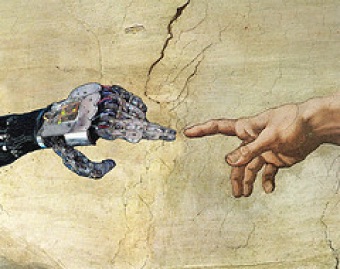
As a psychology major, the general idea of a capstone was to filter some idea through a psychological lens. “Robots and Humans” focused on the idea of technology, in the form of robots, and how psychology could understand the role of robots in human society and the potentiality of robots becoming human, or at the very least, human-like.

—–

image

—–

The difficulty of this course was in the wide scope of subject matter that was included: mathematics, philosophy, electronics, neural networks, sociology, economics, etc. But the basic premise of the course was to examine the questions of “what does it mean to be human?” and “can we blur the line between humans and robots so that they are indistinguishable?”

At the time, it was some pretty heady stuff and it required me to do the required readings at least twice in every case in order to fully grasp the subject matter. Obviously, the question “what does it mean to be human?” is limitless, but as a class we were legitimately trying to derive an answer to that question through conversation, readings, and experimentation.

I don’t believe we ever really “answered” the question, but I have recently found myself analyzing recent losses in my life through this same lens.

—–

image

—–

Over the course of the last weekend, I suffered two losses that were significant to my life. One was human [a cherished friend]. The other was a robot [my computer of nearly 4 years]. In some ways, the loss of both in the course of two days was quite poetic, as I had “known” both for almost the same amount of time.

These simultaneous losses allowed me to revisit the two major questions presented in “Robots and Humans” over the past week and to finally derive an answer to them.

The demise of my friend Broadway, as he was known to his friends in Cambridge, was a difficult, protracted, and confusing ordeal. The demise of my computer, a Dell Inspiron 2200, was a much shorter, but just as difficult and confusing ordeal.

—–

image

—–

Broadway was a 71-year-old gentleman whom I knew through the program that brought me to Cambridge. He was beloved by all who knew him because of his self-less attitude, charm, and love of music. I met Broadway my first day in Cambridge and made it a point of visiting him routinely even after I moved to the other side of town.

We usually spoke about sports, particularly the local teams, but he also told me about his days as a younger man and the varied experiences he had lived. As I’ve written about before, I don’t have any grandparents, so to have this wizened perspective was quite fulfilling.

—–

image

—–

Over the last 4.5 years, I had several enlightening experiences with Broadway, including a favorite where he and I caught the bus to the Asics factory store to find the best deals on high-quality athletic shoes [one of his specialties was finding the highest quality goods at the most affordable prices].

Inspiron 2200 arrived at my door nearly 8 months after I arrived in Cambridge, a replacement for my college laptop that had become too slow to run the latest programs and was too cumbersome to realistically take anywhere.

As a sleeker and faster model, it immediately improved my quality of on-line cabailities, software use, and mobility. It easily held all of the documents that had existed on my previous hard drive (I named one folder on it “old computer”), allowed me to effectively use the latest software necessary for work and play, and made me feel like I had purchased a new car in the level of care I gave it.

—–

image

—–

These two entities filled my life with innumerable joy and greatly improved my quality of life. One was a cherished friend who helped me understand my place in the world and motivated me to pursue my calling of becoming a physician. The other was a cherished assistant with whom I entrusted my most private secrets and most public of desires.

Both succumbed to a mysterious illness.

Broadway had been a model of health for the 70+ crowd. A wiry former-athlete, he used to tell me how he was a master on the hardwood back in the day, used to do hundreds of crunches a day, and did his very best to avoid processed sugars. His body was confirmation of those boasts.

—–

image

—–

When he began feeling a little ill seven months ago, I don’t think anyone who knew him felt that it was anything more than a cold. But he began sleeping more than usual. And his doctors’ visits concluded with more questions than answers.

Eventually, he had to leave his home to get more focused care in a rehabilitation hospital. The last time I saw him, he was a shell of the man I first met nearly 5 years ago. He was no longer the spry individual who would carry multiple gallons of milk several blocks to get some extra exercise or simply go out for a stroll to all corners of Cambridge. At this point, I was deeply concerned for his long-term welfare.

When he passed away last weekend, there still had been no determination as to what had begun the tortuous path to his demise.

—–

—–

Inspiron 2200 had been more than serviceable over the past 4 years. We had spent countless hours together and performed innumerable tasks for both work and leisure. Of course there had been minor hiccups here and there, but it could always handle the updated software, the multitude of simultaneous tasks I asked it to perform, and the occasional ride in an un-padded backpack before I got it its own neoprene sleeve.

Then, about three weeks ago, after updating my music service provider, it began to show alarming signs of a downturn. The Internet began to run slow. Then it wouldn’t boot up in its normal fashion. A few days later I got the dreaded “Safe Mode” warning. I could see the writing on the wall when I tried to run virus software or perform a “system restore.”

—–

image

—–

Inspiron 2200 was circling the drain; something had infected it terminally. I immediately transferred all of my pertinent documents and files onto a thumb drive and prepared for the worst.

When I awoke last Friday morning and tried to boot it up nothing happened. I powered it down and rebooted; again, nothing happened. Inspiron 2200 had flat-lined at 7AM that morning. I went to work knowing that Inspiron 2200 had performed its last task.

—–

image

—–

It might seem misguided to compare the final moments of Broadway and Inspiron 2200, but as I mentioned earlier, their simultaneous demises have allowed me to once again consider the questions first posed in my “Robots and Humans” class seven years ago.

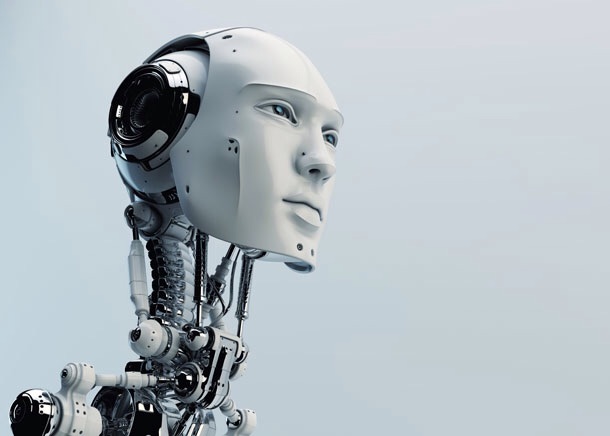
The difference between man and machine lies in the same difference that separates humans from almost every other animal on the planet: emotions. No matter the increased technology, the faster the processors, the more complicated programs, the more human-like exteriors, robots will not be able to express emotions.

—–

—–

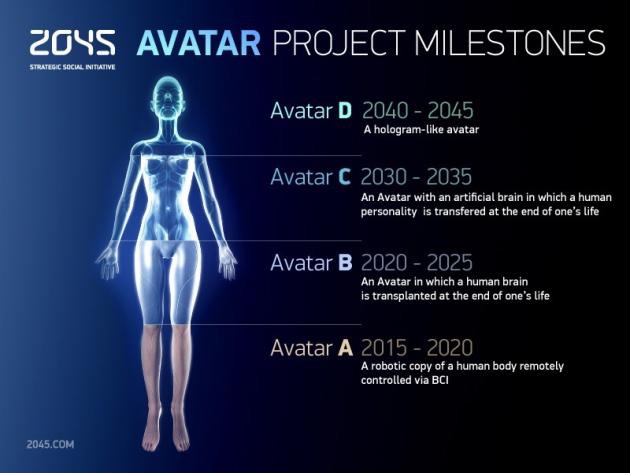
Some individuals who are on the cutting edge of robotic technology would probably disagree with that statement, but what they often neglect to consider is that humans themselves do not have a firm grasp on emotions. How could we instill emotions in a fabricated machine when we don’t even understand them?

In “Robots and Humans”, our professor made the argument that emotions could be boiled down to a simple software program, allowing for certain “emotional” responses dependent on the underlying circumstances. But the determination we made as a class was that emotions are so widely varied across individual experience and situation that no program could be written to encompass such possibilities.

—–

image

—–

I believe those on the cutting edge of robotics would disagree with our assessment. However, the underlying issue at hand is that humans themselves do not truly understand what causes some to differ in their emotional responses to similar situations. Experiences are too widely varied, histories too complex, and beliefs too individualized to accurately make an algorithm that would depict emotional responses.


I didn’t think I would cry when the rabbi read the sermon for Broadway; I teared up when he made mention of his nickname and I remembered first meeting him as he carried a box of things into my new home.

When Inspiron 2200 couldn’t be booted up on a Friday morning, I didn’t think twice about it, except that I’d have to check my e-mail at work.

I thought it would be uncomfortable to toss a shovel of dirt on top of the casket at Broadway’s burial site. Instead, I simply thrust the shovel into the mound of dirt and reflexively deposited it on top of the casket.

When I comfortably placed Inspiron 2200 in its leather carrying case and shipped it off on Saturday to be used for spare parts, I thought it was a fitting end.

—–

image

—-

The essential difference between man and machine is embodied in the comparison between Broadway and Inspiron 2200. There were no emotions involved in the demise of Inspiron 2200.  I had certainly spent countless more hours with it than Broadway over the last 4 years, but it had not provided me with anything that my next computer will not.

Broadway provided me with a relationship that words can not fully express.

—–

image

—–

The day a robot provides a human with the same relationship as another human we should all be worried. It will not be due to our ability to create a technology thatidentical and indistinguishable from humanity. Rather, it will be due to the fact that humans have devolved emotionally to the point of being indistinguishable from a computer program.