When I Grow Up

One of the most common questions I have received in Residency has been, “What do you want to be when you grow up?”
I have heard it from every level of the medical machine in which I have existed for the last two-and-a-half years.
Attending physicians have asked me.
Nurses in the ICU.
Respiratory therapists in the ED.
Janitorial staff in the hallway.
Pharmacists in the trauma bay.
Senior residents on a multitude of services.
“What do you want to be when you grow up?”
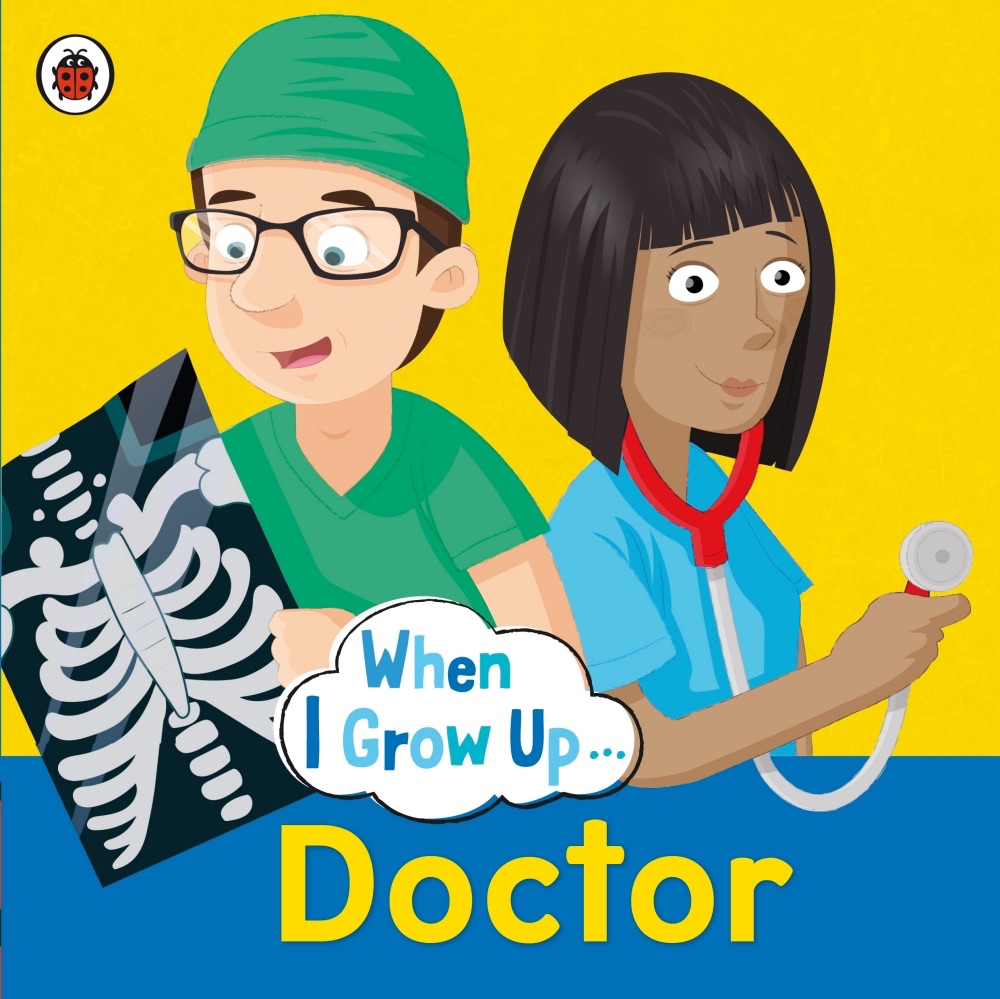
It has been the most infuriating question I have received in Residency; I’ve been asked it more times than I can count.
And it is not as if the question has been some derivative thereof; the wording has been exactly that.
It hasn’t been “When you have finished your medical training, is there a specific focus you would like to have?”
Or “what made you decide to choose Family Medicine?”
Grown adults have asked me, “What do you want to be when you grow up?”
I have grey hairs in my beard. If that weren’t a dead giveaway that I’m an adult, I don’t know what is…

For all except one of the occurrences, I have politely responded with something about my desire to provide primary care in the Behavioral Health patient population.
In the lone outlier, I made reference to my age, as I was clearly older than the person asking me and unbelievably sleep deprived, which kept me from overriding my primordial desire to psychologically eviscerate them.
I apologized after my verbal carnage ended.
My ego has been kept in check for most of Residency, mostly due to my need to survive without making a multitude of personal and professional enemies, despite my innate desire to respond with an exasperated,
“Do you realize how condescending of a question that is?”
It’s not meant to be a condescending question. Perhaps it has simply infiltrated the ice-breaking vernacular of the medical field.
Perhaps it is appropriate, as a fair number of medical school graduates are still coming straight from an undergraduate campus without an iota of life experience with which to share their patients, much less their colleagues.
Maybe I look young? But I know I don’t. I’ve seen pictures of me before I grew up. And I certainly don’t look as young as I did when I was 24.

When I showed up to the first day of Residency, I was 34 years old.
While it’s true that every single senior resident in my Residency had a far superior grasp on medical knowledge and patient care than me, a vast majority were four to six years younger than me.
Embedded in that seemingly trivial age difference, are the fruits of my labor.
If I conservatively look back on the six years from when I moved to Boston at 24 and when I turned 30, I wouldn’t know where to start in order to describe the multitude of amazing things I experienced.
Perhaps I sound like an incredible asshole by saying that. You may not be wrong. But for the most part it is true.
I came to Residency with an open mind about being taught by men and women with far fewer life experiences from which to draw upon than me.
The converse could not be said to be true.
For each successful completion of one year of Residency, it is as if a Purple Heart has been awarded by the Surgeon General.

Without a year under your belt, the Medical Degree for which you worked so hard was like a Participation Certificate a child would receive for making an exploding volcano at the Science Fair.
Respect is based solely on your capability to perform the medical task set before you as a resident; everything else about you be damned.
It didn’t matter if every other person outside of the medical field who knows you would explain with awe in regards to what you had created for yourself; no one within medicine could care less.
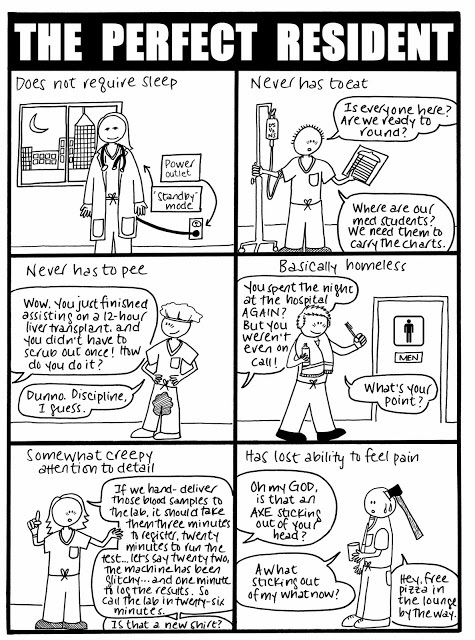
Medicine is a hierarchical beast. It has been that way for the past century since the dawn of modern medicine.
I am not perfect. I have fallen into that trap a few more times than I would care to admit during Residency, but I believe for the most part I have awarded everyone of my colleagues a Purple Heart for just making it to Residency.
Surviving the four years of Medical school without becoming disenfranchised, burned out, or overwhelmed by the cesspool of obstacles inherent in medical training, is an incredible achievement unto itself.
So each time I am asked “What do you want to be when you grow up?”, the part of my amygdala that houses my Pride, is set aflame.

I can imagine a PET scan of my brain glow bright red as each neuron would be firing at full tilt.
A sparkling fireworks display of my life flashes before my eyes:
I’ve been taking care of myself for the past 20 years.
I worked at the #5 University in the world. I attended the #6 University in the world.
I worked at the #3 Hospital in the US.
I’ve presented my own research at Columbia University.
I traveled all over the world with an amazing woman at my side.
I have lived in Boston, Chicago, Miami, and New York City.
I’ve sat on the Board of Directors of a Non-profit organization.
I spent two years living on an island in the Caribbean.
I have grown up.
I did all of these things before taking one breath as a physician.
Each of them was critical in my development. Each of them have allowed me to make connections with people all over the world.
Each of them brought me closer to my patients and colleagues than I ever could have otherwise.
And my pride, which allowed me to overcome every barrier I found in front of me while transitioning from a 24-year-old Midwesterner to a 36-year-old world traveled physician, can’t help but take offense to the assertion that I have yet to grow up.
“What do you want to be when you grow up?”

I want to be who I already am. I’m comfortable in knowing that I have been fortunate to live a charmed life; a life that I created, despite getting knocked down a few times.
I don’t want to grow up.
I did that years ago.
As I transition from a Third Year Resident to an Attending physician, the number of times I have been asked the aforementioned question has picked up steam.
Each time, my Id screams, my Ego broods, and my SuperEgo kindly responds: “I plan to provide primary care to the Behavioral Health population.”
And now that I have my first job after Residency lined up, contract signed, and start date on the calendar, I can respond with an actual job title.
But I still wonder if people will expect to me grow up. Unknowingly overlooking everything that brought us to the moment where they felt it appropriate to ask:
“What do you want to be when you grow up?”
 Elbrecht's Corpuscle