The Allies of Magneto


image


The Birth of Magneto

The Rise of Magento

The Opposition to Magneto

Residency is a right of passage (and requirement) in the development of anyone altruistic, sadistic, or narcissistic enough to pursue a career as a physician in America.

The progression of each individual, man and woman, from naïve undergraduate pre-medical student to naïve medical student to overwhelmed Resident to newly-minted Attending Physician is a long and tiring process; Residency represents the final and most taxing leg in this pursuit.


image.jpg


Depending on the field of medicine pursued, the training in Residency will span 3 to 5 years, potentially longer if one desires even more specialized training.

Each of these years brings with it new challenges, burdens, and failures; these are buttressed by the highlights, accolades, and patients who refer to you as “my doctor.”

None of these are equal or in proportion to the amount of time invested.

Not everyone who starts Residency finishes.

The product of each and every Residency is the Resident it transforms from medical school graduate into Attending Physician. This metamorphosis is akin to the sluggish caterpillar being reborn as the majestic butterfly.


image


Though each Residency has a “class of Residents” representing each year of training, the outcome for each of these members may not be the same; certainly the process will not be the same, as individuals have their medical knowledge and clinical skills carved out with every moment of their individual training.

Only on the very last day of Residency will every member of each Resident class have completed, in differing sequences, the requirements to achieve the status of Attending Physician.

They will have encountered different patients, performed a myriad of diverse procedures, and possess thousands of hours of clinical experiences.


image.jpg


The Residency program in which I find myself is no different. I am now a member of the PGY-3 (3rd year) class; the last year of our training.

At this juncture, I have cared for thousands of patients, spent nearly 7000 hours practicing my craft, and been bestowed with a persona I could have never imagined.

Amongst my peers, I have become Magneto; born from the cauldron of uncertainty brewed during Night Float; and then battling amongst the other aspects of my developing psyche, every day inching closer to becoming an Attending Physician.

But there are others like Magneto, each whom have been submerged in the icy depths of a Code Blue, roared into the uncertain waters of a Septic Shock, withstood the calamity of a bezerk office patient, and succumbed to the simultaneous terror and awe of newborn’s cry.

They are The Allies of Magneto.


image


In our program, The Allies of Magneto have the opportunity to train in all aspects of medicine: obstetrics, gerontology, surgery, trauma, cardiology, nephrology, critical care, gynecology, pediatrics, acute care, neurology, and chronic disease management.

We each develop strengths and weaknesses, preferences and avoidances, as a means to mold our calling as society’s guardians of health and wellness.

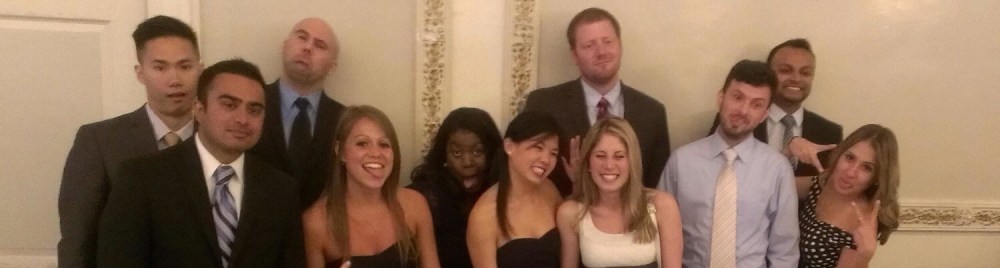
Red Panda, The Prince, Joker, Doc O, Big Red, Jane Grey, and BeastMode, amongst others, have shared moments of fear, trepidation, joy, anxiety, and solace with Magneto.


image


Each has toiled within the confines of a profession on the brink of meltdown and burnout. Each has contemplated a life outside of medicine. Each has longed for the ability to practice as they preach.

Each of them, now on the precipice of completing the journey to Attending Physician, having been taught to “Do No Harm”, have a host of decisions to make.

Who have they become amidst the countless hours of training?

How can they salvage their innate desire to do good, damn the barriers and obstacles placed in front of them?

Are they ready for what lay ahead?


image


For those who have joined Magneto on this winding journey, one chapter will soon come to an end.
But the author’s pen is patiently waiting, the next chapter slowly bubbling to the surface.

The Allies of Magneto, a group matured by the innumerable hours caring for those who seek their aid, hope to simultaneously shape their future and the future of those they serve.

No longer will the icy depths of a Code Blue, the uncertain waters of a Septic Shock, the calamity of a bezerk office patient, and the simultaneous terror and awe of newborn’s cry, cause them trepidation.

Instead, they will emerge from a 3-year-long cocoon to become the next generation of Family Physicians, forever remembered in my mind as The Allies of Magneto.


image


The Rise of Magneto


image

The Birth of Magneto

—–

Since their inception, movies and television have glamorized the life of a physician, often intertwining personal stories of said physicians with the heroic acts they perform and the inherent braininess required therein.

This is only a mild reality.

—–

image.jpg

—–

Sure, physicians are by-and-large smarter than the average bear, but it is our tireless work ethic, attention to detail, and self-loathing which provides us the ability to make such a significant impact in the lives of our patients.

There is little glitz, even less glamour, and only the occasional heroic act in the life of a physician. But the combination of these traits keeps many of us going back to work every day.

No. I mean EVERY day. As in… working EVERY. SINGLE. DAY.

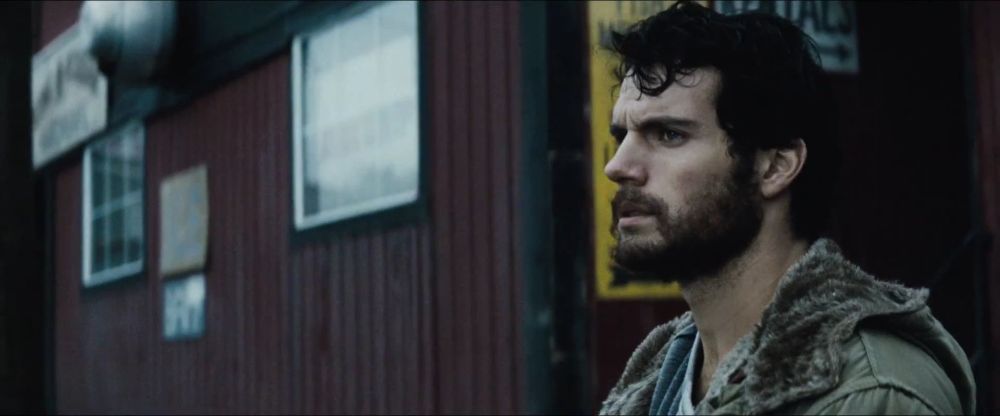
In case you can’t tell I’m currently smack dab in the middle of my second year of Residency (aka PGY-2)… a time I have affectionately termed, “The Rise of Magneto.”

—–
Man-of-Steel-Trailer-Images-Henry-Cavill-as-Clark-Kent

—–

Though some more recent medical dramas have included the lives of Residents, this middle ground in the hierarchy of medicine is poorly understood and recognized.

After completing medical school, newly-minted physicians in the US must complete a Residency before becoming a physician capable of practicing on their own.

In the US, simply completing medical school is not sufficient to become a physician; no hospitals or physician groups will hire you; no insurance will reimburse you.

—–

image.jpg

—–

Instead, you must prove your worth, knowledge, and skills by completing a Residency in the specialty of your choice.

Alas, the general public is not fully aware of this transitional stage in the professional life of a physician. There is either “you are a doctor” or “you are not a doctor”.

And if the patient is sitting in a gown, on an exam table or on a hospital gurney, while asking for medical help and you identify yourself as their physician, “you are a doctor.”

Which, in fact, you are.

Confused yet?

Well, I am too.

Because now that I’m half-way through my Residency, I am starting to find myself straddling the line between being a naive Intern and a full-fledged Attending.

—–

image

—–

The major reason Residencies exist in the US is due to the wide swath of information and skills needing to be honed in order to provide adequate medical care in the 21st century (and the 20th century before it.)

The sheer breadth of knowledge acquired during these training programs is paramount to fully understanding the capabilities, pit-falls, and intricacies of the human body.

It also introduces physicians to the longitudinal aspects of caring for patients and their families.

—–

image

—–

One night while I was an Intern (PGY-1), I responded to an overhead page from the Emergency room; my assistance was requested in the care of a critically ill patient.

Not exactly “my” assistance per se, but by being the Intern on-call, I was part of the team responding to patients who have such a severe infection as to be called “Septic“.

The woman was non-responsive, cool to the touch, and seemingly every square centimeter of her body was swollen with fluid.

Her vital signs on the monitor were tenuous. A quick scan of her body revealed a tube protruding from her pelvis, most likely a surgically placed catheter to drain urine from her bladder.

The daughter sat at the bedside, quickly describing the course of actions she believed could have led to the current predicament.

Despite her seated position at the bedside, her fear was palpable.

I thanked her for the explanation and informed her we would need to pursue aggressive measures to save her mother’s life. Without hesitation, she consented.

Over the next several days, her mother remained unresponsive in the Intensive Care Unit, her life supported by machines to keep her lungs delivering oxygen to her swollen body; medications kept her heart pumping that same oxygen to every fragile cell.

—–
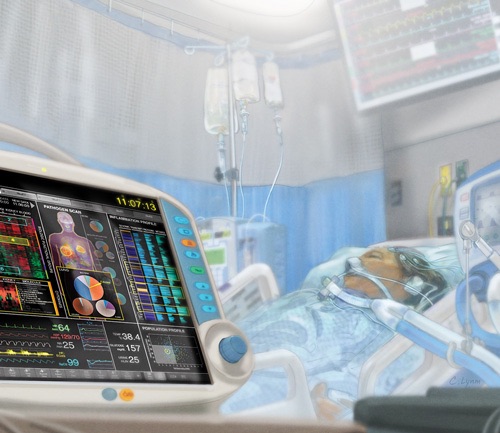
image.jpg

—–

But one day shortly thereafter, I arrived in the ICU and the mother was no longer in the room.

The bed was barren, immaculately cleaned, and prepared for the next critically ill patient.

She had died overnight, her body unable to sustain life despite the most aggressive medical interventions, all while I attempted to regain my cellular integrity through several hours of sleep in my own poorly-cared-for apartment.

—–

image

—–

Six months later, I was working in the office of an Oncologist (a doctor who treats patients with cancer) preparing to see his next patient. While thumbing through her chart, he described the course of events leading her to seek his care.

When we entered the room, I saw a familiar face. The daughter of the non-responsive woman I just described. She smiled and greeted me, though I instantaneously recognized her palpable fear.

The Oncologist was surprised and said, “you two know each other?”

I responded, “yes, I cared for her mother.”

—–

There were no heroic acts which changed the outcome of the mother’s life. Unfortunately, there were no heroic acts to perform for the daughter either.

—–

In our current “illness-based” medical system, which more handsomely rewards interventions while people are ill, even Family Medicine docs like myself tend to more commonly encounter patients when they are in need, rather than when they are well.

{This is more a by-product of when people tend to seek out care, rather than a desire on most physicians part, as Family Medicine is predicated on prevention of illness.}

And sometimes the wellness and illness intersect.

—–
image

—–

Having completed two months of Obstetrics and Gynecology during my intern year, as a PGY-2 I have become “eligible” to work 24-hour shifts on the Obstetrics service.

The Rise of Magneto, indeed.

{By eligible, I mean the cap on my consecutive hours able to be worked is now 24… And I am assigned to work said shifts based on my availability. Which is truly, whenever. But that is Residency. So be it.}

Within the first hour of working my first OB-24, I delivered the baby of a woman I had never met, which is common on the Labor & Delivery service.

After ascertaining the baby’s general health and wellness while identifying the absence of suturing opportunities in the woman’s vaginal canal, I calmly congratulated her, welcomed her son to the world, and exited the room to tend to another pregnant woman.

—–

baby-after-being-born

—–

One week later I was working in the Pediatric Emergency Department, my latest assignment as a PGY-2, when my eyes were drawn to a patient’s Chief Complaint on the Patient Tracking Board.

It read “fever, decreased PO intake”. I scanned over to the patient’s age and read, “7 days.”

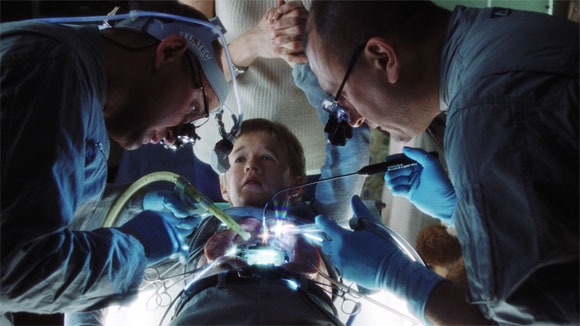
On my first night in the Pediatric ED I had seen another 7-day-old with fever and decreased PO (oral) intake. I ended up performing a lumbar puncture that night on that child due to a concern for meningitis.

Thankfully, the test results came back showing that the child did not have meningitis.  It recovered quickly and was home within two days.

—–
image

—–

But that experience had quickly alerted me to the need to act quickly and decisively in order to prevent a dire outcome.

So I clicked my name next to this latest 7-day-old child and quickly proceeded to the patient room to evaluate him.

When I opened the door and introduced myself, the mother and I instantaneously recognized each other. She was gently rocking the boy I had delivered only 7 days previously.

Doctor, please help him.”

—–

image

—–

I had only a week before assisted his exit from his mother’s womb. I assured his mother we would care for him and made my way back to the area where an Attending physician was awaiting my assessment and plan.

While I alerted my Attending to the intimate relationship I possessed with this child and his mother, a few of the other Residents and Attendings happened to overhear the predicament.

They all began to listen in as I outlined my plan to perform a Lumbar puncture to assure he was not rapidly deteriorating at the hands of a bacterial foe.

My Attending agreed, looked at me intently, all the while recognizing my whole-hearted investment in this patient.

—–
image.jpg

—–

There are few instances in medicine as intimate as the delivery as a child, and to have that same child fall ill and somehow end up back within your care in a completely different hospital on a completely different medical service only a few days later, is the essence Family Medicine.

We can be seemingly ubiquitous.

Thankfully, the young boy, only a week into his life, tolerated the Lumbar puncture; his cerebrospinal fluid was absent of life-eradicating bacteria or virus; he was sleeping comfortably in his own crib again within two days.

—–
image

—–

The transition from “medically knowledgeable but clinically deficient Intern” to “clinically seasoned and seemingly knowledgeable Senior Resident” is one fraught with pitfalls: sleep deprivation, anxiety-producing clinical scenarios, life-and-death struggles, and glaring holes in medical knowledge.

But at the moment of greatest despair, when the chips are down, the night can’t end, the day can’t come soon enough, and the struggle to become a good physician seems out-of-reach, the Intern becomes a Senior Resident.

And reflects back on the do-or-die nights, the life-and-death days, the thankful patients, the grateful families, the new-born babies first squeel, and the meaningful and life-long relationships created in the cauldron of uncertainty…

… bringing on The Rise from Intern to Senior Resident.

In my case, The Rise of Magneto.


Am I Going to Die?

David_-_The_Death_of_Socrates

[The Death of Socrates, 1787, by Jacques-Louis David]

After only a few instances in the Emergency Department of seeing someone hopped up on meth, crashing from a heroin overdose, or complaining their heart is about to burst from their chest because of cocaine use, most medical care providers quickly lump them all together.

Drug abusers.

To the general public, there are few groups of people more repugnant than drug abusers. The prevailing view is that the damage is largely self-inflicted and the efforts and treatment going towards helping these people is often unwanted and unsuccessful.

—–

effects-of-drug-abuse-1

—–

Even physicians, who are trained to take every medical situation seriously, get annoyed when drug abusers show up in the ED, clinic, or office.

Those feelings develop because the damage IS self-inflicted. The treatments ARE often unsuccessful. And the efforts CAN be unwanted.

Then why do we go through such great measures to help those who do not want it? Even the medical determination that these individuals have a disease is often brushed aside when a known junkie arrives in the ED for the 20th time in a year.


The reason we go through such great measures is that none of us are truly far from a similar existence.

No.

Even you are not immune to addiction and the perilous spiral your life would become if a moment of weakness crossed paths with an opportune chance.

Some of us are insulated from having weakness and opportunity cross paths by an unrelenting fear of the consequences, from the wrath of the almighty God that would befall us, an emotionally privileged upbringing, or a will that would be unbent by the hottest solar flare.

—–


Prescription-Drug-Addiction

—–

But a moment of weakness and opportunity is all it takes for the disease of addiction to grab hold and attempt to wrestle your life from you…

—–

The last time I saw Aaron, he was in the Intensive Care Unit (ICU) for the 2nd time in what had now been a five-week hospital stay. Completely unconscious, he was hooked back up to the ventilator and had tubes draining fluid from either side of his chest.

As I approached, adorned in scrubs and nearing the end of a 24-hour shift, the ICU nurse asked, “Is this your patient?” She was patting his head and adjusting his pillow, ever careful to not change the positioning of the tube protruding from his mouth and leading back to the ventilator.

The day before, he and I had spent 20 minutes on our daily pow-wow, talking about how he was feeling and looking. Two weeks earlier, during his first stay in the ICU, I was certain he would be dead by now. But the interceding two weeks had seen him make remarkable improvement. Though he was needing dialysis three times a week, his kidney function was slowly returning to normal, he had begun a liquid diet, and he was able to walk a short distance. His initial presentation, nearly five weeks earlier, had now become a secondary concern.

“No, technically he is not my patient. But I met him the first day he was in the hospital. And, I wish I wasn’t seeing him here again.”

The nurse nodded. All I could do was grasp his right hand and wish I weren’t leaving the hospital in a few hours, unlikely to ever return to his side, whether he lived or died.


http://www.youtube.com/watch?v=jDvIkqapC84


—–

I met Aaron five weeks earlier while on the cardiology consult service. The physician caring for him called asking for guidance on his next course of action. Knowing nothing about Aaron, other than his name and medical record number, I pulled up his file from the safety of computer in a different wing of the hospital. I quickly scrolled through the course of events that brought him to the hospital as well as the events that transpired overnight.

He had been carried into the hospital by his father the previous night, so weak and sick, that he couldn’t do it himself. He had been suffering from periodic fevers and worsening shortness of breath over the past two weeks, but had not wanted to seek out medical care.

—–

278130-33218-21

—–

Aaron had a long history of heroin abuse, spanning 13 of his 27 years of life, and despite the efforts of his father, and the prospect of leaving his 7 children fatherless, he never could overcome his addiction.

What was found over the course of his work-up in the Emergency Department was not shocking. He had a bacterial infection in his blood, bringing on the fevers, chills, and weakness. He was septic.

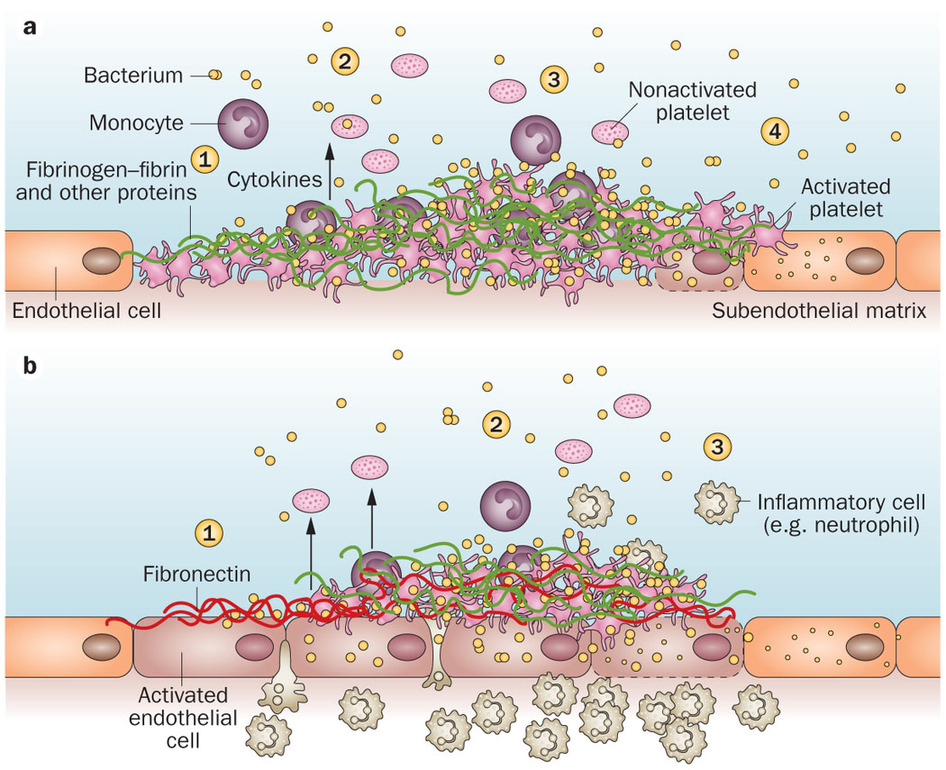
Even worse, an echocardiogram of his heart revealed that his shortness of breath was being caused by an accumulation of gunk on one of his heart valves. This gunk was likely a build-up of the same bacteria that was causing him to be septic. It was so thick that blood could not adequately flow through it and become oxygenated in the lungs. {The gunk is more appropriately described as a heart valve “vegetation” and was unquestionably caused by his IV heroin use.}

—–

nrcardio.2013.174-f2

—–

His story, what had brought him to the ED, was real life emerging from a textbook. Unfortunately, there is no text-book for real life, despite the best efforts of many physicians to describe it; Variables and algorithms go hay-wire outside of the vacuum of medical texts.

By the time I reached his room, he had been notified of his dire situation. He had been told about his vegetation and the need for heart surgery. He was terrified.

I could sense that he was overwhelmed. As he lay there, his facial expression gave away the disappointment in himself. I am certain  he wished to be able to get up out of the bed and march out of the hospital under his own power.


Knowing other physicians had already spoken to him, but wanting to give a thorough report to my attending, I decided to start our interaction by asking what he understood about what was going on.

He asked, “Am I going to die?”

The fear visibly swept over him as his lip trembled. His fear jumped off the bed and landed directly on my white coat. My chest tightened as if someone had buttoned the coat a little too tightly.

—–


975937300c186e2b320b6e59a465a071

—–

He began to softly sob. I sat down beside him and offered him my hand. He clutched it with both of his.

His nurse entered the room, saw I was there with him, nodded to me, and turned right back around.

He began collecting himself and his sobbing subsided.

“Why do you think you are going to die?”

In the section of the medical textbooks reserved for instructing future physicians on how to interview patients, I had clearly veered off course. However, such a question turned out to be paramount to uncovering the genesis of Aaron’s own demon.

He revealed that his mother had died during open-heart surgery, 13 years earlier, when he was only a teenager. This information was not lost on me;  I had read in his ED notes about the use of heroin since the age of 14.

—–

grief

—–

I would guess suffering such a catastrophic loss must have left him an unmanageable amount of grief. And when the opportunity to leave grief behind and enter a world without it, even if only for the length of a high, he took it… and his own life had begun spiraling out of control since then.

I can not imagine such a level of grief and loss. No amount of reading in a book can prepare you for it or provide you with the skills to overcome it. I believe it is something that can only be understood when you are in the heat of it, facing it, and hoping to not be swept under by it.

—–

Honestly, I am no different from the other medical providers I alluded to earlier. I can become easily annoyed by the behavior and drama arising from drug abusers.

But I’m also careful to quickly remind myself that there is something awful and tragic behind their behavior and drama. Perhaps a situation so dire and all-consuming that I would not be able to resist if a moment of weakness intersected with opportunity.

I don’t know if Aaron is alive or dead.

I hope that the tubes drained the fluid from his chest. I hope they removed the ventilator from his room. I hope his kidneys are working properly again. I hope the surgeon removed the vegetation from his heart. And I hope he is at home, playing with his children, filling the grief that sent him into a downward spiral with the love of his family.

—–

alive

—–

I hope Aaron is alive.

The Accidental Patient

the accidental patient


I caressed her hair as she held me tightly.

Her call had come a half hour earlier.

“Ean, please come over. I have cancer.”

I quickly closed my Chemistry book and bolted downstairs and out the front door. There was a torrential rain, but I didn’t bother grabbing my umbrella.

The contents of her message and its tone were so dense that I felt numb. The umbrella would do nothing other than to weigh down my strides.

By the time I had bridged the two miles separating us, not a single thought had crossed my mind.

I rang her buzzer and she emerged moments later; a blank look scrawled across her face. She trudged up a flight of stairs and I quickly followed, only stopping to peel off my clothing and drop them in the stairway outside her apartment.

I followed her into the bedroom, where she sat on the bed, emotionless. I sat down beside her. She buried her face in my chest and began to cry.

I caressed her hair as she held me tightly.

—–

On the previous Sunday evening, while laying in bed, I had run my hands through her hair and down her neck. My hand encountered something new and I paused as I felt it beneath my fingers again: a hard marble-sized ball resting at the base of the left side of her neck.

She teasingly slapped my hand away. I didn’t dare feel it again. Terrible thoughts began racing through my head.

But I gave her a sly grin to distract her from my concern. We turned off the lights and readied for bed.


I caressed her hair as she held me tightly.

—–

When we awoke the next morning, I cautiously suggested she should go see her doctor first thing. A light-hearted soul who always smiled, she flashed her own sly grin at me.

I followed her smile with a look which revealed my overwhelming concern. “Please. For me.”

An uncommonly serious look came across her face and she promised to go immediately.

The doctor performed a biopsy of the lymph node and summoned her for the results three days later. She had Hodgkin’s Lymphoma, the same diagnosis her mother had received five years earlier.

—–

At the time, our relationship was still in its hot and fast stage, having been together for less than a year. On one fateful day, I had summoned the courage to give her my number. We had been nearly inseparable since.

We were scheduled to leave for Prague in only a few weeks. But on that night, as the rain streamed down her windows and her tears streamed down my chest, time seemed to stand still; the uncertainty of life reverberating through every one of her cries.

A few days before our trip, she dropped me off at home and as I paused to kiss her good-bye, she took a deep breath. It was as if she was sneaking some of the life out of me, knowing what lay in store for her.

Then she whispered words I could not believe. She said she was willing to undergo this battle on her own. If I wanted to end our relationship after our trip, she would understand.

I froze in shock and climbed back into the car.


I caressed her hair as she held me tightly.

—–

The next six months were a cauldron of emotion, marked by fear, anxiety, and sadness… for both her and I. Feeling overwhelmed by the magnitude of the situation, I did my best to be strong and caring for her.

I often failed.

Though universally beloved, she was an intensely private woman. She was able to tell only a select few co-workers and friends about the diagnosis because her treatment would “only” be every-other-Friday. And she told them only in case something turned for the worse.

Outside of work, she was active in coaching, a natural gift that made her a pied piper to the college kids. Her treatment would likely leave her ill and weak on the weekends, so she took a semester hiatus. Being away from the game and people she loved was agonizing for her.

In preparation for what was deemed inevitable, she used my hair trimmers and cut her locks short. For Christmas I bought her two trendy hats I thought would make her feel cute. But she never got around to wearing them; perhaps because she received so many compliments about her new look.

—–

Unlike her, I told everyone.

I had to. I was overwhelmed with uncertainty. I could feel the stress percolating in my body. I wanted to be Superman for her.

Her privacy kept her from allowing anyone else who loved her from coming and sitting with her at chemotherapy. Only I was allowed to see her in such a vulnerable state.

On those Fridays, as the clock neared 10AM, I would catch a cab from across town, and arrive as the infusion was beginning.

We would play cards and talk about what we would do over the weekend. She would declare with pride to the nurses that I was studying to be a doctor. And that she was my patient.

When the session was over, we would drive back to her apartment, sit down in front of the TV, and wait for the nausea to come.

She would run to the bathroom, return a few minutes later, give me a sly grin, and start chewing some gum.

Then she would lay down across the couch and rest her head in my lap.


I caressed her hair as she held me tightly.

—–

Her athletic frame and wide smile prevented most people from noticing the side effects of chemotherapy, even those whom she had been comfortable telling about her illness.

But they were awful. At night, she would vacillate between hot flashes and cold night sweats, often tearing clothes from her body only to hurriedly put them back on a few moments later.

In the middle of the night, her dry mouth left her gasping for water.

She craved physical intimacy, but the pain was unbearable.

I would awake to her crying and could not console her.


I caressed her hair as she held me tightly.

—-

After six months of treatment, she was free of cancer, with many people in her life none-the-wiser to everything she endured.

When nearly two years later I asked her to attend a cancer survivors event put on by the hospital where I was working, she shook her head no.

I don’t think she wanted to be reminded of those days.

—–

The end of her treatment and my birthday occurred within a week of each other in the summer of 2006. She reluctantly agreed to have a birthday/post-chemo celebration at her apartment. Friends from all of our walks of life stopped in, shared a drink, and made her feel special.

At the end of night she and I shared one last private drink and crawled into her bed, happy to have it all behind us. She looked relieved and smiled at me.

I caressed her hair as she held me tightly.