Sportsworld
—–
My father was sitting beside me the first time I had a naked woman in my lap. I was 16.
We were supposed to be going to Sportsworld, one of my favorite places to go during what I thought was my relatively normal childhood. My father informed my step-mother we were going to use the batting cages, ride the go-carts, and play some skeeball on a Saturday night; turns out one of my father’s favorite places to go during what I thought was my relatively normal childhood was Jezebel’s.
Both Sportsworld and Jezebel’s were on the outskirts of the ever-expanding city limits, but they were in completely opposite directions from my father’s home. After driving a mile in the “wrong” direction, it dawned on me Sportsworld was no longer our final destination. I simply sat in the passenger’s seat as Sportsworld got further and further away.
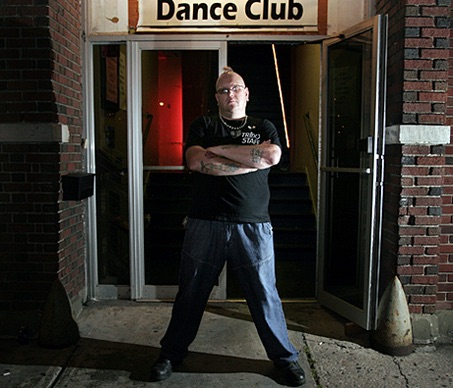
When we arrived, my father calmly told the bouncer, “This is my son. He’s 21.” The bouncer only glanced at me. By the age of 16, I had already been mistaken for a grown man several times, but typically it was while wearing slacks, a button-down shirt, and tie; not while wearing mybaseball cap, glasses, and cargo shorts.
—–
—–
The bouncer waved me through; identification was unnecessary. Ending up at Jezebel’s that evening, rather than Sportsworld, was simply another example in a long list of why I had learned to distrust my father.
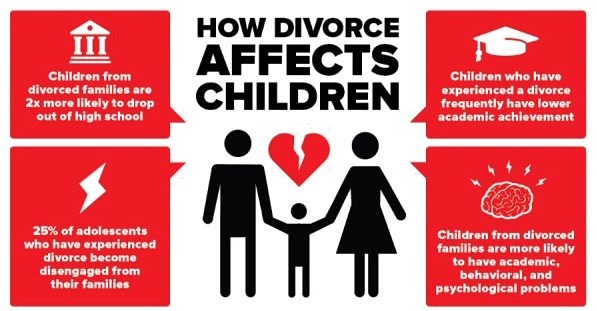
As a concept, distrust had been carefully weaved into our relationship several years prior. At the age of 7, my father entered my bedroom, put his hand on my shoulder and told me he was leaving our family. He was blunt and unapologetic, laying the blame at someone else’s feet and talking to me as if I could possibly understand his rationale; I did not.
—-
—–
The TV was on in the background and my eyes darted from the screen to his face as he relayed how he would not be there in the morning. As he lifted his hand from my shoulder and exited the room, his words were searing into my brain.
Somehow, I slept soundly that evening, but when I awoke the next morning, he was there. It was as if the previous night had been a dream. I wondered if I had misunderstood what he said; the weight of his hand on my shoulder had been so heavy. And so real. My 7-year-old brain wondered what changed. Only years later would I identify the feeling I had when I saw him the next morning as trust being smashed like a mandolin with a sledgehammer.
—–
 —–
—–
Distrust was brewing. Eventually, he did leave. Seven years later. And the morning when I awoke and he wasn’t there, I knew why. He hadn’t come into my room the night before and repeated his reasoning to me. And I didn’t need him to. I still remembered his words, the weight of his hand on my shoulder, from when I was a child. If he had come to me again, I would have waved him through, as calmly and coolly as the bouncer at Jezebel’s.
—–

—–
As I was being directed to a table near the main stage by my father, nearly six months had elapsed since I had moved away from my hometown of Wichita. My mother had decided to leave the place I had always known as home, forcing a decision to be made individually by each of her children as to where we would live. At 15, my options were limited.
I could stay and live with my father and my new step-mother or pack-up my life, leave my friends, and embark down a path of no return. The concept of trust, having germinated from an unrecognized emotion, which I had been unable to identify at the age of 7, was fully functional by this time.
Subsequently, when my father got married to a woman I had only met twice, I was completely aware that I did not trust him. He had not even bothered to invite us to the wedding, a civil ceremony in another state.
He simply relayed it as a fact one morning while dropping my brother and I off at school. This certainly factored in my decision as to whether I should stay in Wichita or embark to parts unknown; it made the decision to leave that much easier.
—–

—–
Thus, my father must have viewed my six-week stay in Wichita during the summer of 1996 as a bit of a homecoming, but also as a chance to recover something he had lost; Me.
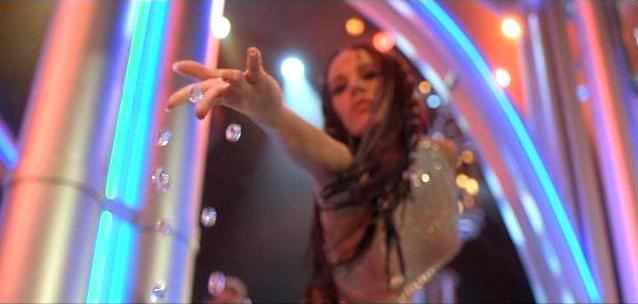
Driving the go-carts and playing video games seemed to me like a reasonable way to spend a Saturday night. But my father thought watching naked women grind on his son was a better idea. And perhaps a way to win me back. In the blink of an eye, I went straight from green-as-can-be to strip club veteran. By the time we left, I had put a dollar bill in places only possible if a woman weren’t wearing any clothes.
I suppose it was his own version of “The Birds and the Bees” speech.
—–
—–
I roughly translated it as: “Have money. Women will get naked. And sit in your lap.”
Not too much in there about birds or bees. When I was living in nYc a couple years ago, a woman I was dating asked about my parents and my father in particular. Over the course of my sharing, the story of my night at Jezebel’s with dear ‘ol dad cropped up. It probably wasn’t the best example of his parenting, but it was a close approximation.
I believe her response was, “Holy shit.”
Alas, it wouldn’t be the last time he would suggest we visit Jezebel’s together. But by the next time he offered I was a grown adult, and didn’t feel like it fit with the holiday spirit after spending the morning feeding the less fortunate. When he suggested we go back to “Sportsworld”, I politely declined, despite his pleas.
As we pulled into the driveway on that humid summer night in 1996, fresh off a once-in-a-lifetime Dad and Son outing to the strip club, my father looked at me with his sheepish grin: “Remember, if she asks, we were at Sportsworld.” Naked women snatching up dollar bills is not exactly what I expected from my night. When we left his house I was prepared to a re-enact Death Race 2000 on the go-cart track, not witness fully-nude Flash Dance on the Main Stage.
—–
—–
Then again, I had already learned all I needed to know about trust from this man.
 Elbrecht's Corpuscle