Am I Going to Die?

[The Death of Socrates, 1787, by Jacques-Louis David]
After only a few instances in the Emergency Department of seeing someone hopped up on meth, crashing from a heroin overdose, or complaining their heart is about to burst from their chest because of cocaine use, most medical care providers quickly lump them all together.
Drug abusers.
To the general public, there are few groups of people more repugnant than drug abusers. The prevailing view is that the damage is largely self-inflicted and the efforts and treatment going towards helping these people is often unwanted and unsuccessful.
—–

—–
Even physicians, who are trained to take every medical situation seriously, get annoyed when drug abusers show up in the ED, clinic, or office.
Those feelings develop because the damage IS self-inflicted. The treatments ARE often unsuccessful. And the efforts CAN be unwanted.
Then why do we go through such great measures to help those who do not want it? Even the medical determination that these individuals have a disease is often brushed aside when a known junkie arrives in the ED for the 20th time in a year.
The reason we go through such great measures is that none of us are truly far from a similar existence.
No.
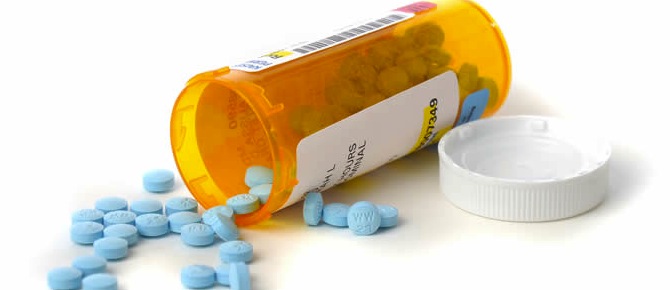
Even you are not immune to addiction and the perilous spiral your life would become if a moment of weakness crossed paths with an opportune chance.
Some of us are insulated from having weakness and opportunity cross paths by an unrelenting fear of the consequences, from the wrath of the almighty God that would befall us, an emotionally privileged upbringing, or a will that would be unbent by the hottest solar flare.
—–
—–
But a moment of weakness and opportunity is all it takes for the disease of addiction to grab hold and attempt to wrestle your life from you…
—–
The last time I saw Aaron, he was in the Intensive Care Unit (ICU) for the 2nd time in what had now been a five-week hospital stay. Completely unconscious, he was hooked back up to the ventilator and had tubes draining fluid from either side of his chest.
As I approached, adorned in scrubs and nearing the end of a 24-hour shift, the ICU nurse asked, “Is this your patient?” She was patting his head and adjusting his pillow, ever careful to not change the positioning of the tube protruding from his mouth and leading back to the ventilator.
The day before, he and I had spent 20 minutes on our daily pow-wow, talking about how he was feeling and looking. Two weeks earlier, during his first stay in the ICU, I was certain he would be dead by now. But the interceding two weeks had seen him make remarkable improvement. Though he was needing dialysis three times a week, his kidney function was slowly returning to normal, he had begun a liquid diet, and he was able to walk a short distance. His initial presentation, nearly five weeks earlier, had now become a secondary concern.
“No, technically he is not my patient. But I met him the first day he was in the hospital. And, I wish I wasn’t seeing him here again.”
The nurse nodded. All I could do was grasp his right hand and wish I weren’t leaving the hospital in a few hours, unlikely to ever return to his side, whether he lived or died.
—–
I met Aaron five weeks earlier while on the cardiology consult service. The physician caring for him called asking for guidance on his next course of action. Knowing nothing about Aaron, other than his name and medical record number, I pulled up his file from the safety of computer in a different wing of the hospital. I quickly scrolled through the course of events that brought him to the hospital as well as the events that transpired overnight.
He had been carried into the hospital by his father the previous night, so weak and sick, that he couldn’t do it himself. He had been suffering from periodic fevers and worsening shortness of breath over the past two weeks, but had not wanted to seek out medical care.
—–
—–
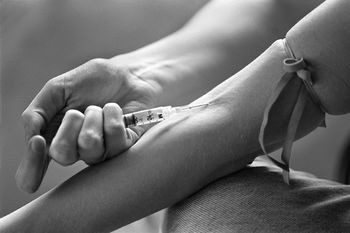
Aaron had a long history of heroin abuse, spanning 13 of his 27 years of life, and despite the efforts of his father, and the prospect of leaving his 7 children fatherless, he never could overcome his addiction.
What was found over the course of his work-up in the Emergency Department was not shocking. He had a bacterial infection in his blood, bringing on the fevers, chills, and weakness. He was septic.
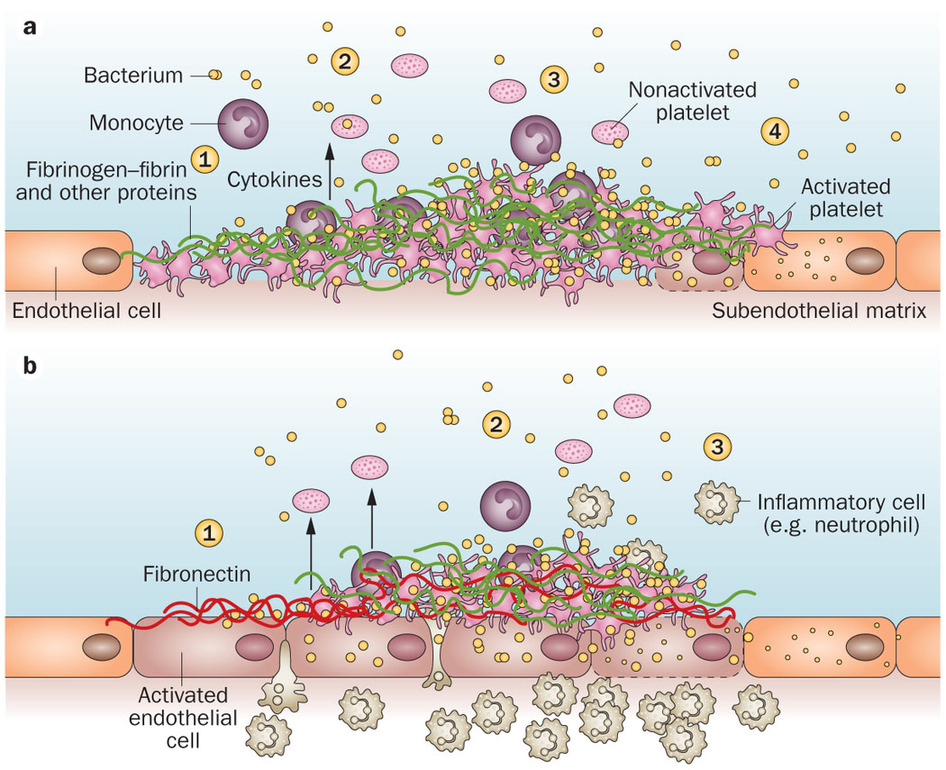
Even worse, an echocardiogram of his heart revealed that his shortness of breath was being caused by an accumulation of gunk on one of his heart valves. This gunk was likely a build-up of the same bacteria that was causing him to be septic. It was so thick that blood could not adequately flow through it and become oxygenated in the lungs. {The gunk is more appropriately described as a heart valve “vegetation” and was unquestionably caused by his IV heroin use.}
—–
—–
His story, what had brought him to the ED, was real life emerging from a textbook. Unfortunately, there is no text-book for real life, despite the best efforts of many physicians to describe it; Variables and algorithms go hay-wire outside of the vacuum of medical texts.
By the time I reached his room, he had been notified of his dire situation. He had been told about his vegetation and the need for heart surgery. He was terrified.
I could sense that he was overwhelmed. As he lay there, his facial expression gave away the disappointment in himself. I am certain he wished to be able to get up out of the bed and march out of the hospital under his own power.
Knowing other physicians had already spoken to him, but wanting to give a thorough report to my attending, I decided to start our interaction by asking what he understood about what was going on.
He asked, “Am I going to die?”
The fear visibly swept over him as his lip trembled. His fear jumped off the bed and landed directly on my white coat. My chest tightened as if someone had buttoned the coat a little too tightly.
—–
—–
He began to softly sob. I sat down beside him and offered him my hand. He clutched it with both of his.
His nurse entered the room, saw I was there with him, nodded to me, and turned right back around.
He began collecting himself and his sobbing subsided.
“Why do you think you are going to die?”
In the section of the medical textbooks reserved for instructing future physicians on how to interview patients, I had clearly veered off course. However, such a question turned out to be paramount to uncovering the genesis of Aaron’s own demon.
He revealed that his mother had died during open-heart surgery, 13 years earlier, when he was only a teenager. This information was not lost on me; I had read in his ED notes about the use of heroin since the age of 14.
—–

—–
I would guess suffering such a catastrophic loss must have left him an unmanageable amount of grief. And when the opportunity to leave grief behind and enter a world without it, even if only for the length of a high, he took it… and his own life had begun spiraling out of control since then.
I can not imagine such a level of grief and loss. No amount of reading in a book can prepare you for it or provide you with the skills to overcome it. I believe it is something that can only be understood when you are in the heat of it, facing it, and hoping to not be swept under by it.
—–
Honestly, I am no different from the other medical providers I alluded to earlier. I can become easily annoyed by the behavior and drama arising from drug abusers.
But I’m also careful to quickly remind myself that there is something awful and tragic behind their behavior and drama. Perhaps a situation so dire and all-consuming that I would not be able to resist if a moment of weakness intersected with opportunity.
I don’t know if Aaron is alive or dead.
I hope that the tubes drained the fluid from his chest. I hope they removed the ventilator from his room. I hope his kidneys are working properly again. I hope the surgeon removed the vegetation from his heart. And I hope he is at home, playing with his children, filling the grief that sent him into a downward spiral with the love of his family.
—–
—–
I hope Aaron is alive.
 Elbrecht's Corpuscle